
DIY AC maintenance: what to leave to a pro
On this page · 8 sections
A lot of the calls we get could have been a five-minute fix the homeowner handled alone: a filter so packed with dust it collapsed into the return, a thermostat with dead batteries, or a condenser buried in a season's worth of leaves. Just as many of the calls we get started with a well-meaning DIY job that made things worse, like a can of refrigerant from the auto parts store, a capacitor swapped with the power still on, or coil fins flattened by a pressure washer.
The line between the two is not about how handy you are. It is about what is behind the panel. Anything you can do with the power off, without tools, and without opening the equipment is usually yours. Anything involving wiring, refrigerant, or the inside of the cabinet is ours. Here is how we break it down for homeowners around Portland, Gresham, and Beaverton.
The short answer
Bottom Line Up Front
Change the filter, clear the debris around the outdoor unit, keep the vents open, and replace the thermostat batteries yourself. Leave refrigerant, wiring, capacitors, and anything inside the cabinet to a technician.
The dividing line is what sits behind the panel. If a job can be done with the power off, with your hands, and without opening the equipment, it is a safe DIY task that prevents real breakdowns. Once a job needs a meter, gauges, or the cabinet opened up, a mistake costs more than the service call would have.
or night
we make it right at no charge
(terms apply, call for details)
The rest of this post walks through the jobs that belong to you, the jobs that belong to a technician, and a decision matrix at the end for the gray areas.
What you can safely handle yourself
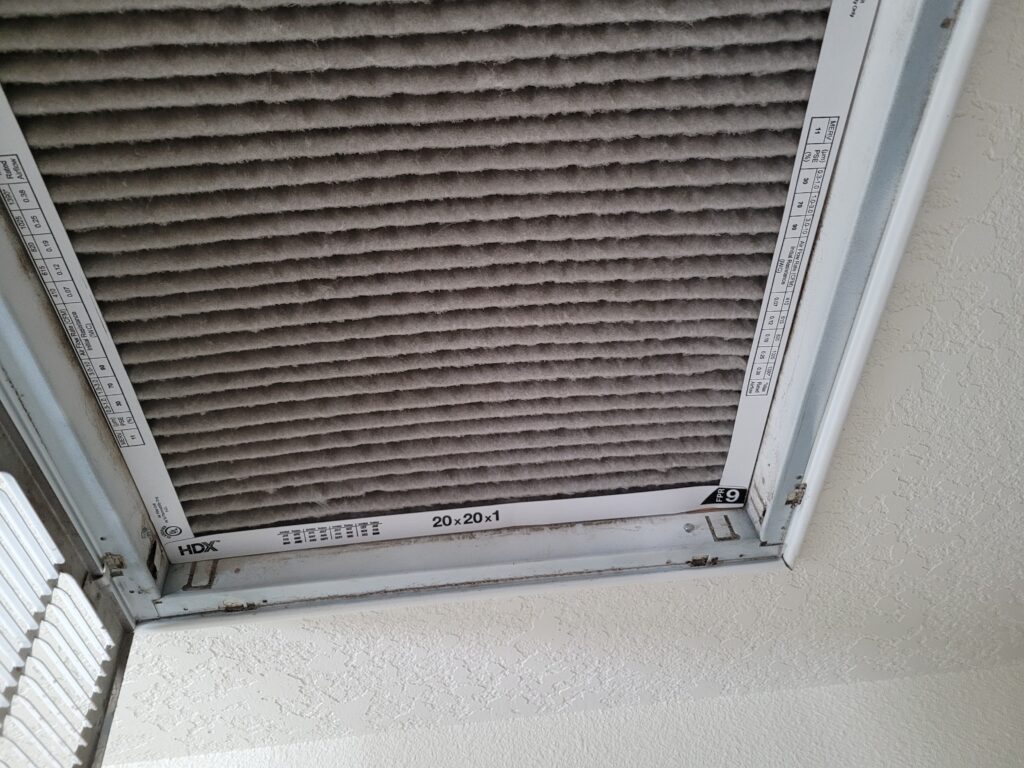
Start with the air filter. It is the single most common problem we find on maintenance visits, and it is the easiest to prevent. Check it monthly when the AC is running hard. If it looks gray, swap it. A filter that is overdue does more than restrict airflow. Once it buckles out of its frame, dust bypasses it entirely and coats the coil you cannot see.
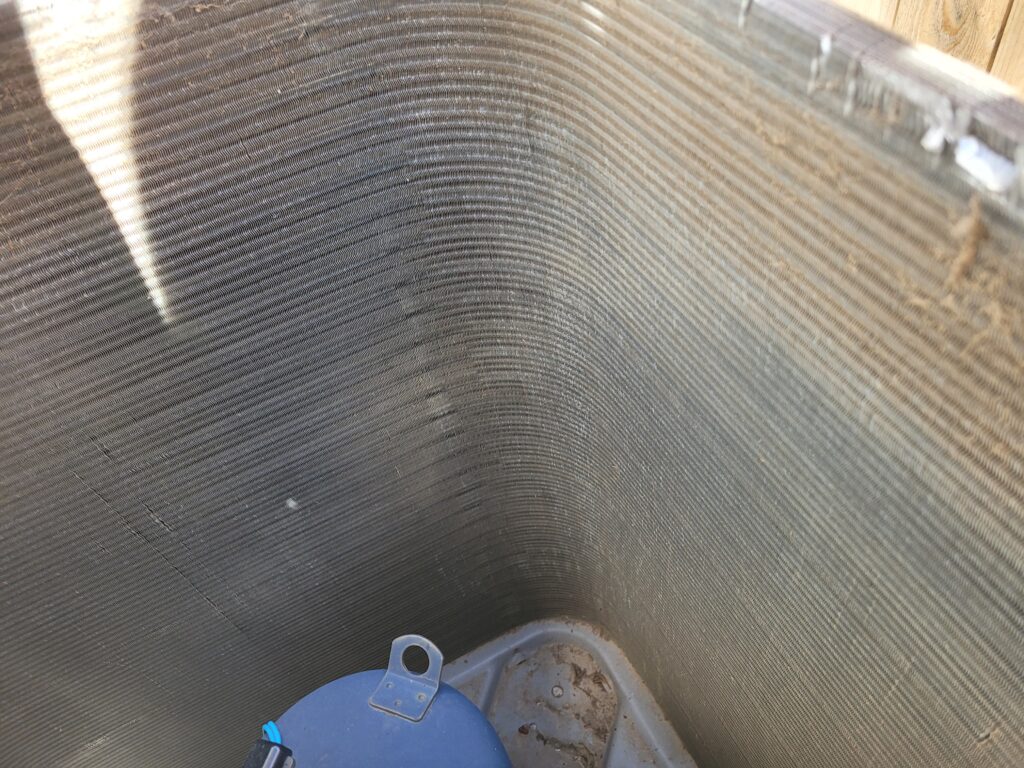
Outside, keep the condenser breathing. Rake leaves and grass clippings away from the unit, trim shrubs back so air can move around all sides, and keep stored lumber, bins, and tools off the top. Inside, make sure rugs, furniture, and boxes are not sitting on supply registers or returns. And when the thermostat goes blank or stops responding, fresh batteries are always the first thing to try.
When the AC quits, give us a call before you start taking panels off. We can walk you through checking the fan, the thermostat, and the breaker box over the phone, and sometimes that is all it takes. If it is not, we will know a lot more about the problem before anyone heads your way.
What belongs to a technician, and why
Refrigerant is the clearest line. If your system is low, it has a leak, because refrigerant is not used up the way fuel is. Adding more without finding the leak just means you are paying to vent it again next month. A proper fix means locating the leak, repairing it, pulling a vacuum, and weighing in the correct charge. That takes recovery equipment, gauges, and a scale, not a can with a hose on it.
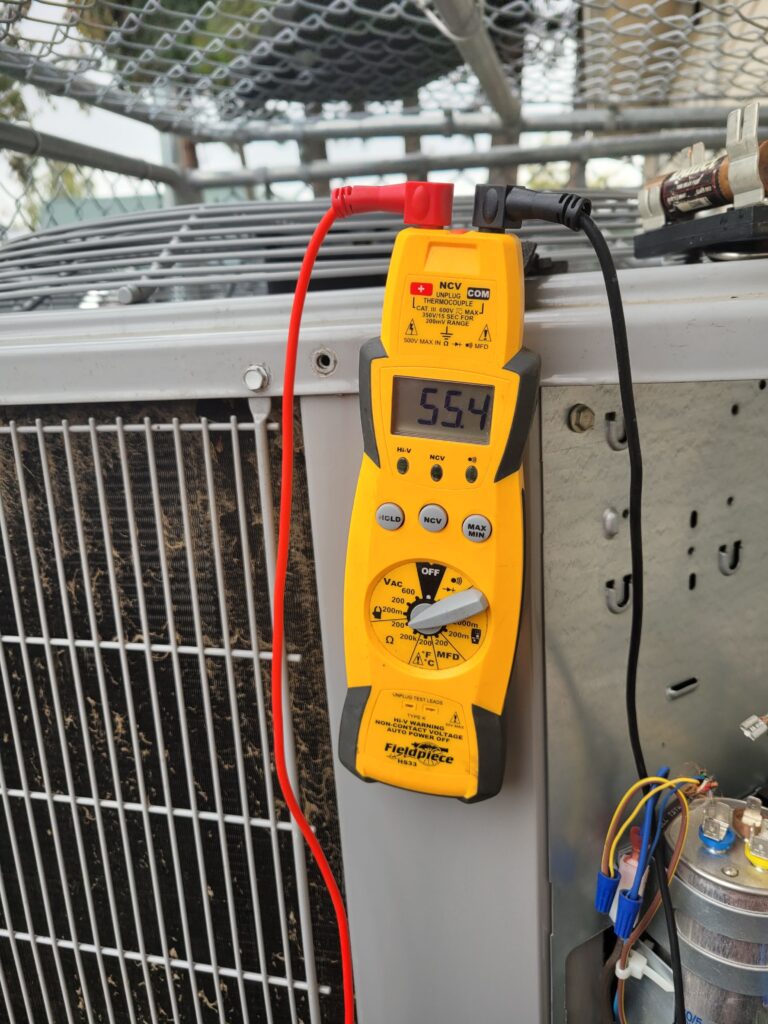
Electrical parts are the second line. Capacitors store a charge even after the power is shut off, and contactors and control boards sit inches from live wiring. A weak capacitor is one of the most common reasons an air conditioner hums but will not start, and it is a quick test with a meter. It is also one of the easiest ways for a homeowner to get hurt. If your unit is acting up, our AC repair service starts with testing before replacing anything.
DIY vs. pro at a glance
Here is the whole list in one place. Each row is a common maintenance task, and the highlighted column is the one that should be doing it.
| Task | You Can Handle | Call a Technician |
|---|---|---|
| Air filter | Check monthly, swap when gray | Collapsed or hard-to-reach filter |
| Outdoor unit surroundings | Rake leaves, trim plants back | Debris inside the cabinet |
| Vents and returns | Keep clear of rugs and furniture | Weak airflow with vents wide open |
| Thermostat | Fresh batteries, check settings | Wiring faults or no response |
| Condenser coil | Gentle hose rinse, power off | Deep cleaning from inside |
| Condensate drain | Watch for water or odors | Clogged trap, line, or pump |
| Electrical parts | Reset a tripped breaker once | Capacitors, contactors, and boards |
| Refrigerant | Never | Leak repair and weighed charge |
Based on what we find on maintenance and repair calls across the Portland metro. Where a task sits in both columns, the power-off rule decides it.
The gray areas: coils, drains, and debris inside the cabinet
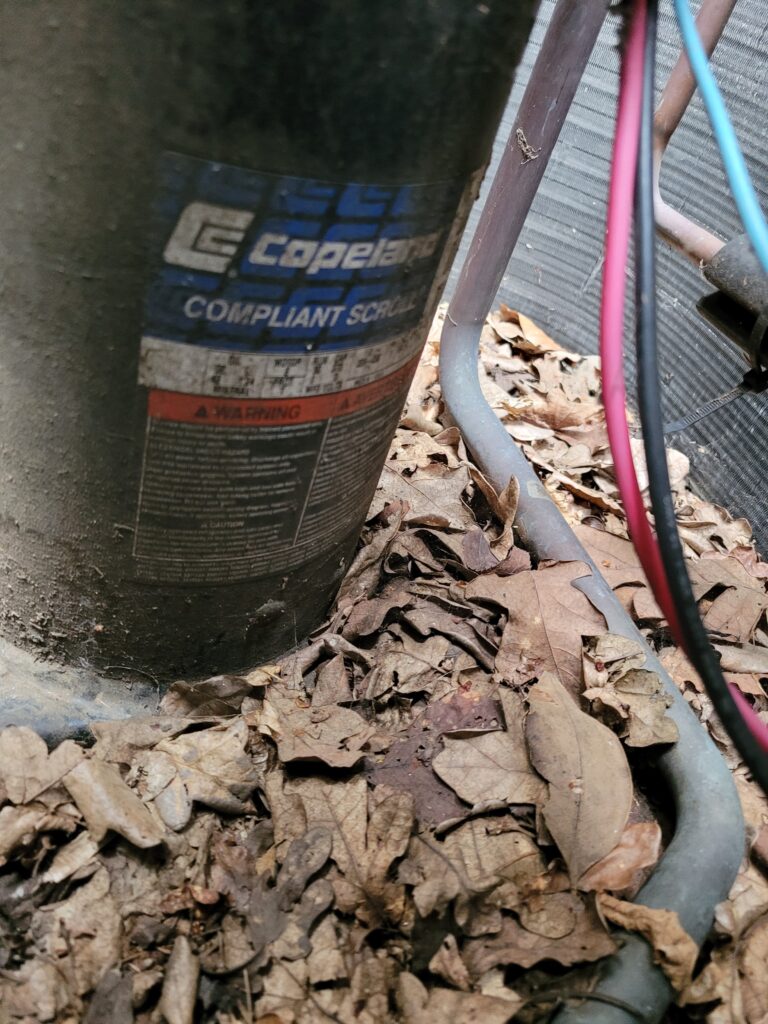
Some jobs are half yours and half ours. With the power off at the thermostat and the outdoor disconnect, a gentle rinse of the condenser coil with a garden hose is fine. Never use a pressure washer, which folds the fins flat and blocks the very airflow you were trying to restore. But when leaves have worked their way inside the cabinet and piled up around the compressor, getting to them means pulling the top off the unit and lifting the fan assembly out of the way. That is a technician's job.
The condensate drain is the same story. Noticing water around the indoor unit, a musty smell, or a system that shuts itself off is worth a look from you. Clearing a clogged trap, servicing a condensate pump, or tracing why the drain pan is rusting through is worth a call to us. For the full seasonal list of what a homeowner can check, see our pre-summer tune-up checklist.
Safe to do yourself
Low-risk jobs that keep air moving and prevent the most common breakdowns.
Your checklist
- The filter is gray, dusty, or past the date you wrote on its frame.
- Leaves, grass, or stored items are piled against or on top of the outdoor unit.
- A rug, couch, or stack of boxes is sitting over a supply register or return.
- The thermostat screen is blank or flashing a low-battery warning.
Time to call a technician
The problem is behind a panel, on a line, or in the wiring. Guessing here gets expensive.
Signs it's past DIY
- The outdoor unit hums or clicks but the fan does not spin.
- There is ice on the refrigerant lines or the indoor coil.
- The breaker trips again after you have reset it once.
- Water is pooling around the indoor unit or the drain pan is rusting.
A lot of companies send a salesperson, not a technician. If a routine maintenance visit ends with "your system is old, replacing it is your only option," that is a red flag. Cooling problems are often something specific, like an electrical fault or a low charge, and a technician can find it. Get more than one quote, and trust your gut if the story does not sound sincere. Our post on getting a second opinion before replacement covers what to ask.
Why professional maintenance still matters if you do your part
Your filter changes and yard work keep the system from getting worse. A professional visit catches what is already going wrong where you cannot see it: a blower belt starting to crack, a coil packed with dust behind the cabinet panel, a capacitor drifting out of range, or a refrigerant charge that is slowly dropping. Measuring the temperature split between return and supply air tells us whether the system is actually cooling the way it should. If you want to understand what all those parts do, how your AC works is a good place to start.
“Most companies are going to give you a salesperson. You’re better off talking to a technician — someone who will look at the unit and tell you what is actually wrong with it.”— Talon Mechanical
Portland summers add one more reason. When wildfire smoke settles over the valley, filters load up much faster than usual, and the system works harder to move air through them. Our guide to wildfire smoke and your HVAC explains what to watch for during smoke season.
The decision matrix
If you only use one part of this post, use this table. Find the row that matches what you are looking at, and it will tell you whether to pick up the task or pick up the phone.
| If the job… | Do It Yourself | Call a Technician |
|---|---|---|
| Is leaves or grass on the outside fins | Yes | Overkill |
| Is a dirty or overdue filter | Yes | If it collapsed |
| Is a breaker that tripped once | Reset it once | If it trips again |
| Is a breaker that keeps tripping | Stop resetting | Yes |
| Shows ice on the lines or coil | Shut it off to thaw | Yes |
| Means opening a panel with wires behind it | Not safe | Yes |
| Involves refrigerant or gauges | Never | Yes |
| Is water pooling near the indoor unit | Shut it off | Yes |
The bottom line
Filters, debris, vents, and thermostat batteries are yours, and doing them regularly prevents a surprising number of breakdowns. Refrigerant, wiring, capacitors, and anything inside the cabinet belong to a technician. When you are not sure, the rule is simple: if the job needs the power on, a tool behind a panel, or a gauge on a line, leave it to us.
If your AC is already struggling, our AC repair starts with a diagnosis, not a sales pitch, and every repair carries our 30-day guarantee. If we fixed it incorrectly, we come back and make it right at no charge. And if it quits in the middle of a heat wave, you can call us any time for emergency HVAC service.