Wildfire smoke and your HVAC: what to check, and when to call
On this page · 8 sections
When wildfire smoke settles over the Portland metro, most people close the windows, crank the air conditioning, and hope the house stays breathable. That instinct is right. But the same system you're leaning on to keep the smoke out is also the one catching it. Every bit of ash and fine particle that doesn't end up in your lungs ends up somewhere in your HVAC system: in the filter, on the coils, and in the blower.
None of that means your system is ruined. It means smoke season asks more of it, and a few simple checks keep a hard-working system from turning into a broken one. Here's what we look at on calls in Gresham, Portland, Beaverton, and the rest of the metro, what you can safely handle yourself, and what's worth a phone call.
The short answer
Bottom Line Up Front
While smoke is in the air, check your return filter often and replace it the moment it looks gray. If airflow drops, the outdoor coil is coated in ash, or the house won't cool even with a clean filter, book a maintenance visit or an AC repair instead of waiting for the system to fail.
Smoke doesn't break an air conditioner on its own. What it does is load the filter, coat the coils, and make every part of the system work harder. A fresh filter handles the first problem. A cleaning and an honest diagnosis handle the rest, and catching it after the smoke clears is far easier than catching it on the hottest day of the year.
fixed right at no charge
for emergency calls
terms may apply; call for details
The rest of this post walks through where smoke goes inside your system, what a struggling system looks and sounds like, and a decision table at the end that sorts the do-it-yourself fixes from the ones that need a technician.
Where wildfire smoke actually goes in your system
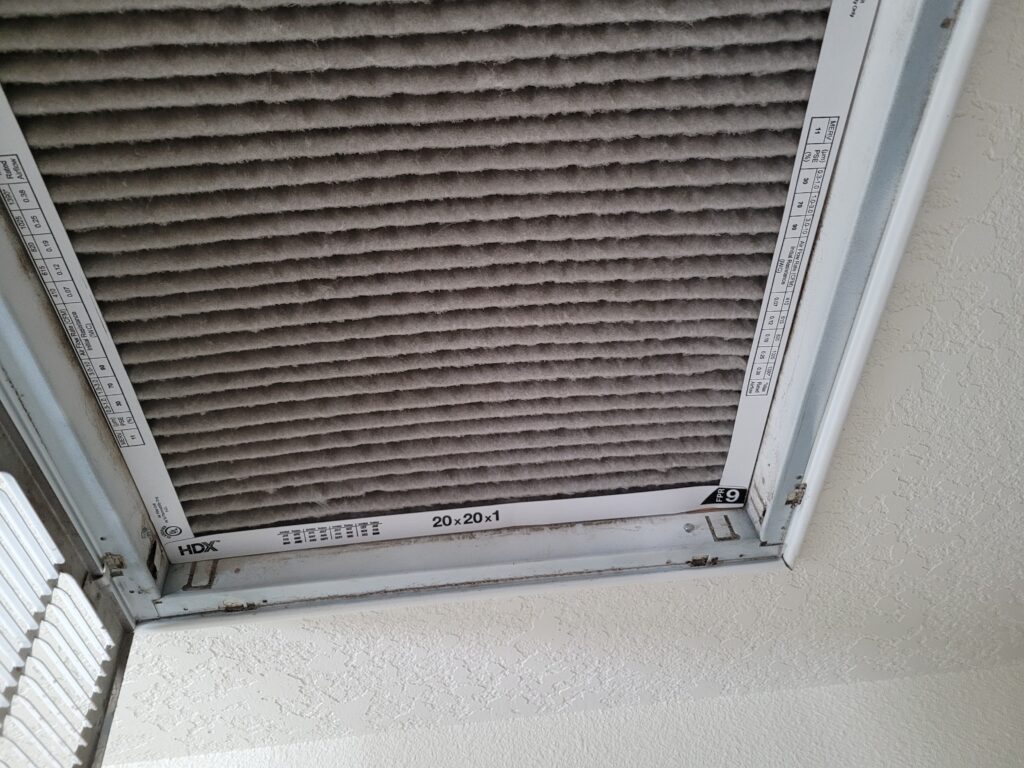
Your system pulls air from the house through the return grille, pushes it through the filter, across the indoor coil, and back out the supply vents. During a smoke event, that filter is the front line. It catches ash and fine particles that sneak in through doors, gaps, and the occasional open window, and it fills up much faster than it does in a normal summer.
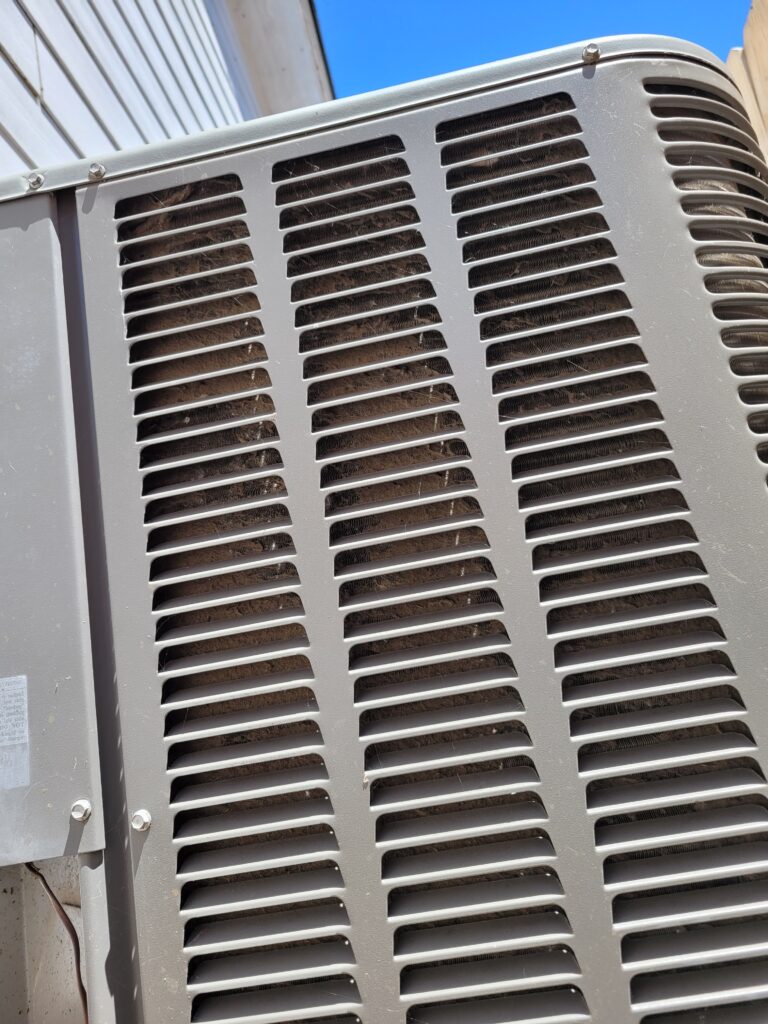
Outside, the condenser has its own problem. Its fan pulls outdoor air straight through the coil fins to shed heat, and when that air is full of ash, the fins collect it. A coated coil can't release heat the way it should, so the system runs longer, works harder, and cools less. That combination of a loaded filter inside and a dirty coil outside is behind a lot of the smoke-season calls we take.
What you can handle and what to leave to us
Plenty of smoke-season care is homeowner work. Some of it isn't, mostly because the parts involved bend, break, or carry electricity. Here's how we'd split it up.
| If you notice | You can handle it | Leave it to us |
|---|---|---|
| A gray, dusty return filter | Swap in a fresh filter of the same size | Not needed unless it keeps loading fast |
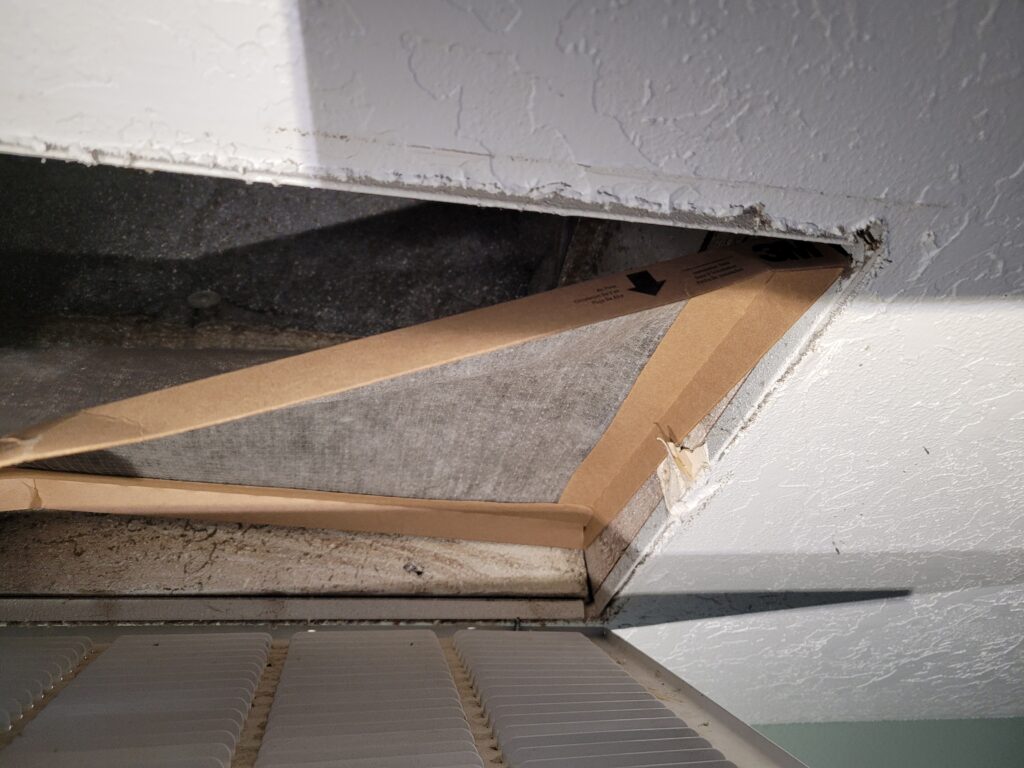
| A filter bent or out of its frame | Replace it and seat it firmly | Check the rack and duct opening for bypass |
| Leaves and debris around the outdoor unit | Clear the area around the cabinet | Not needed for loose debris |
| Ash caked into the coil fins | Leave the fins alone | Clean the coil without bending the fins |
| Weak airflow at the vents | Make sure vents are open and unblocked | Test static pressure and check the blower |
| House won't cool with a clean filter | Check thermostat settings and batteries | Diagnose the coil, charge, and electrical |
| Smoky smell indoors with windows shut | Run the fan to circulate through the filter | Look for duct leaks pulling in outside air |
| Rooftop unit at a business | Note when smoke rolls in | Check economizer and outdoor air settings |
Plenty of homes in the Portland area have their filter in a ceiling or hallway return grille, not at the furnace, and some have more than one. Find yours now, write down the size printed on the frame, and keep a spare or two on hand. When the air turns orange, the stores tend to run short on the common sizes.
Signs your filter is keeping up, and signs it isn't
You don't need any tools to read a filter. Pull the grille, look at the face of the filter, and compare it to a new one. The checks below are things you can see, hear, or feel from inside the house.
Signs the filter is keeping up
The filter is catching smoke and the system is moving air normally. Keep checking it.
What you'll see
- The filter is darker than new but still sits flat and tight in its frame.
- Air from the vents feels as strong as it did before the smoke arrived.
- The house cools down and the system cycles off the way it usually does.
- There's no dust building up on the return grille or around the filter edges.
Signs smoke is getting past it
The filter is overloaded or bypassed, and the system is paying for it.
What changes the answer
- The filter is gray across the whole face, sagging, or pulled out of its frame.
- Dust is collecting on the grille and inside the duct opening behind it.
- Airflow at the vents feels weaker than it did a week ago.
- The system runs almost nonstop and the house still feels warm.
The outdoor unit takes a beating too
After a long smoke event, walk out to the condenser and look through the side grille. A light film of ash is common. A coil that looks gray and fuzzy, with the metal fins hard to see, is restricting airflow. Clearing leaves and debris from around the cabinet is fine to do yourself. Cleaning the coil itself is where it gets tricky: the fins bend easily, a hard spray can flatten them, and the cabinet holds live electrical parts.
That's why we recommend a maintenance visit once the smoke clears. We clean the coil, check the filter rack for bypass, look at the blower, and confirm the system is moving air the way it should. If the system can't keep the house cool even with a clean filter, that points to something more, and it's a job for AC repair rather than another filter change.
A system that struggled through a smoky summer can look worn out, and some companies will tell you replacement is your only option. If that's the only thing they offer, don't go with them. A loaded filter and a dirty coil are maintenance problems, and a cooling issue is often isolated to something electrical or an undercharged system. Get more than one opinion, ask what they actually found, and trust your gut if the story doesn't add up.
Businesses and rooftop units
Commercial rooftop units often bring in outside air on purpose through an economizer, which normally saves energy by using cool outdoor air when conditions allow. During a smoke event, that same feature can pull smoky air straight into the building. How the outdoor air settings are configured, and whether the intake sensor is reading correctly, matters a lot more in smoke season than the rest of the year.
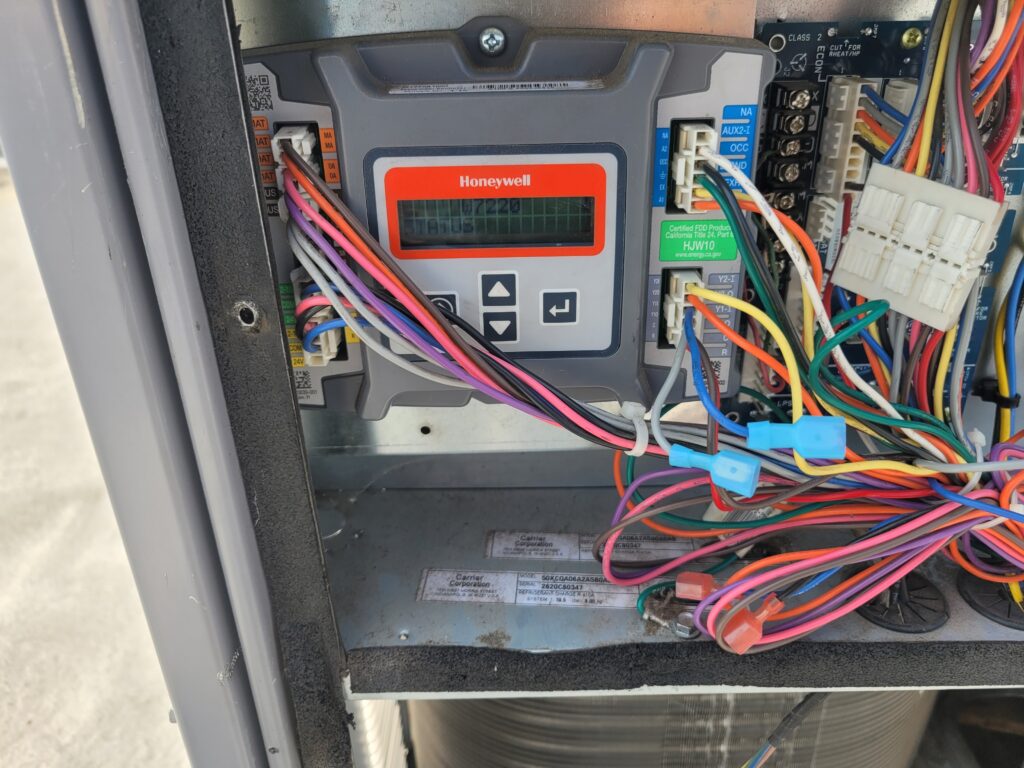
Intake filters on rooftop units load up just like residential ones, only there are more of them and they're on the roof. If you manage a building, our commercial HVAC service covers filters, economizer controls, and the coil cleaning that keeps a rooftop unit running after a smoky stretch.
“A filter full of smoke ash isn't a reason to buy a new system. It's a reason to change the filter and have someone take an honest look at the coil.”— Talon Mechanical
The decision table
Read down the left column to whatever your system is doing right now. The two columns tell you whether a fresh filter is enough or whether it's time to book a visit.
| If your system… | Fresh filter | Book a visit |
|---|---|---|
| Has a gray filter but cools fine | Yes | Not yet |
| Loads a new filter within days | Keep swapping | Check for leaks |
| Has weak airflow with a clean filter | Won't fix it | Yes |
| Has an outdoor coil coated in ash | Wrong part | Coil cleaning |
| Runs nonstop and the house stays warm | Check it first | Yes |
| Trips the breaker more than once | No | Call us |
| Made it through smoke season with no trouble | Start fresh | Tune-up is smart |
The bottom line
Wildfire smoke is hard on an HVAC system, but most of the damage is the kind maintenance undoes: a loaded filter, an ash-coated coil, and a blower that worked overtime. Check the filter often while the smoke is heavy, keep the outdoor unit clear, and schedule a tune-up once the air clears. If you'd like a refresher on what's safe to do yourself, our post on DIY AC maintenance covers it.
If your system is struggling, call us. We'll start by talking it through over the phone, looking at things like the fan and the breaker box, to figure out whether a visit is even needed. When it is, onsite diagnostics are free (terms and conditions may apply, so call for details), and if we fix something incorrectly, our 30-day guarantee means we come back and make it right at no charge. You can call us any time, and if the system quits outright, our emergency HVAC service is there for it.