How Your AC Works and Why Maintenance Matters
On this page · 9 sections
Most people only think about their air conditioner on the first hot afternoon of the year, when they switch the thermostat to cool and wait. If cold air comes out, the system disappears from their mind again. If it doesn't, the questions start: is it broken, is it old, or is it something simple? Knowing how the system actually works makes those questions much easier to answer, and it explains why a little maintenance does more for an AC than any single repair.
This post walks through what happens inside a central air conditioner from the thermostat to the outdoor unit, which parts take the most wear, and what we check on a maintenance visit. It's the same explanation we give customers across Portland, Gresham, and Beaverton when they want to know where their money is going and why.
The short answer
Bottom Line Up Front
Your AC doesn't make cold air. It moves heat out of your house, and it can only do that as well as its filter, coils, refrigerant charge, and electrical parts allow. Maintenance keeps those four things in shape, so the system cools the way it was built to and small problems get caught before they become a breakdown.
Most AC failures we see don't start as failures. They start as a clogged filter, a coil packed with dirt, a weakening capacitor, or a slow refrigerant leak, and they quietly make the system work harder every week until something gives. A maintenance visit finds those early, while the fix is still small.
the work we do
included
measured on one AC call
The rest of this post explains how the system moves heat, where it wears out, and what a real maintenance visit measures. There's a table at the end that tells you whether your AC needs a tune-up or a repair call.
How an air conditioner actually moves heat
When the thermostat calls for cooling, it sends a low-voltage signal to the system. Indoors, the blower starts pushing your home's air across the evaporator coil, a block of thin metal fins that usually sits on top of or beside your furnace. Outdoors, a contactor closes, the compressor starts, and the condenser fan begins pulling air through the outdoor coil.
The two coils are connected by a loop of copper line filled with refrigerant. The refrigerant runs cold through the indoor coil and soaks up heat from the air passing over it, which is why the air coming out of your vents feels cool. The compressor then pumps that warmed refrigerant outside, where the condenser coil and fan release the heat into the yard. The refrigerant cools, flows back inside, and the loop starts over. Your AC never makes cold. It carries heat out of the house.
A second job happens at the same time. As warm, humid air crosses the cold indoor coil, moisture condenses on the fins, drips into a drain pan, and runs out through a condensate line or pump. That's how your AC dries the air as well as cooling it, and it's why a clogged drain can put water where you don't want it.
The parts that do the hard work
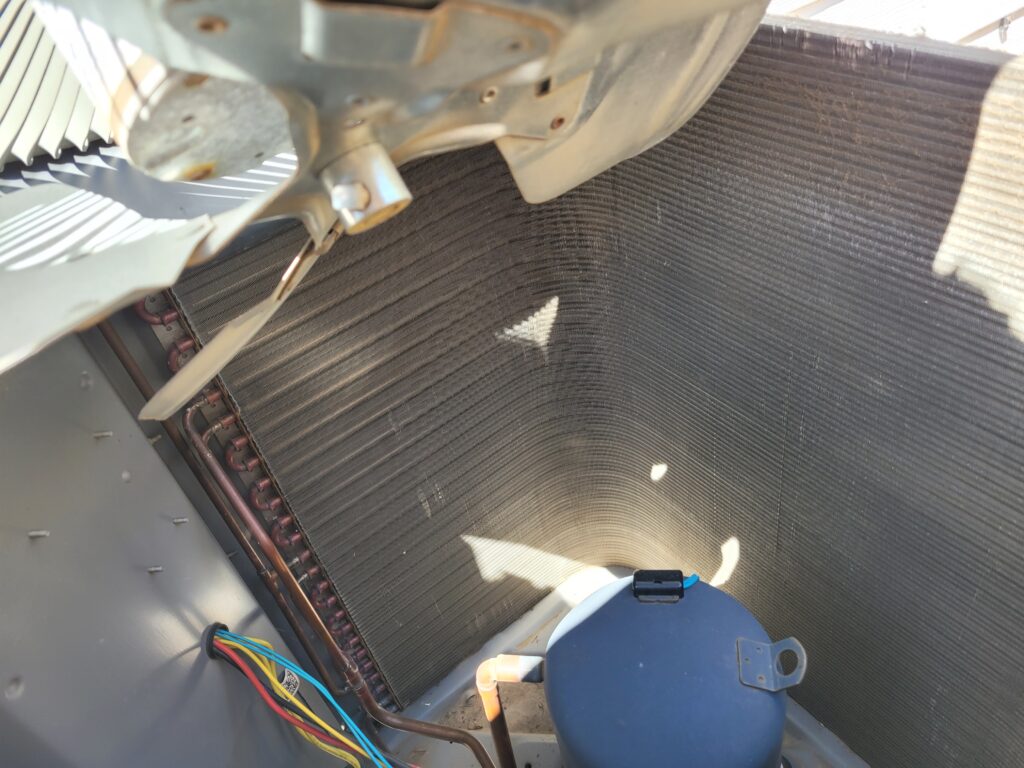
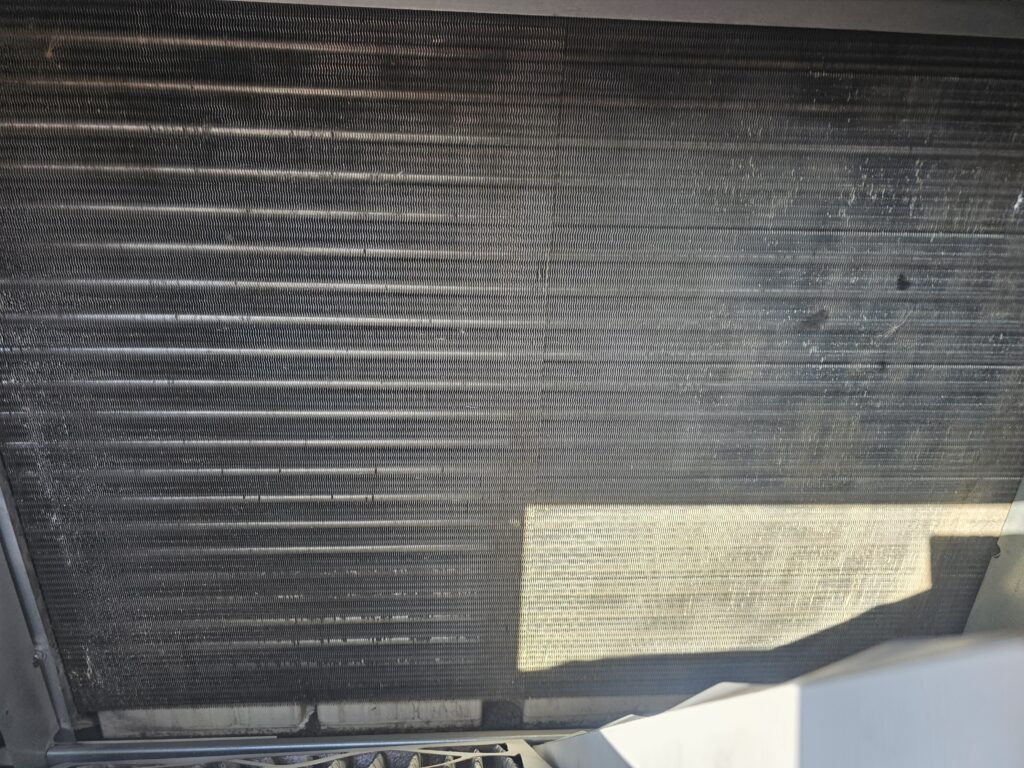
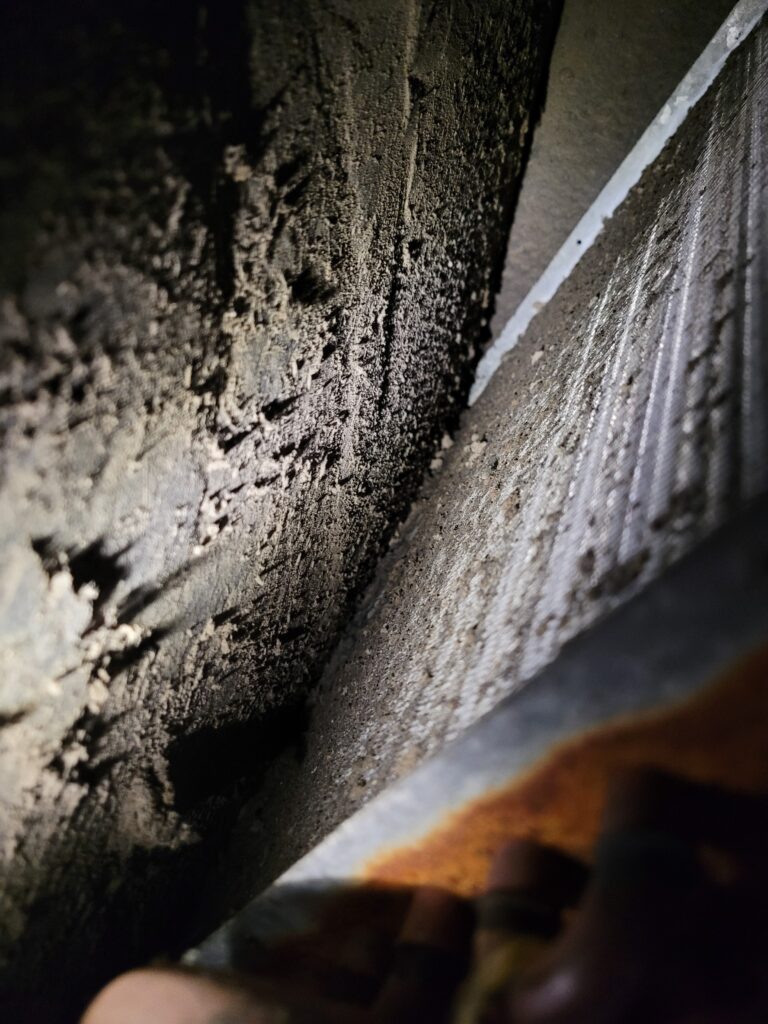
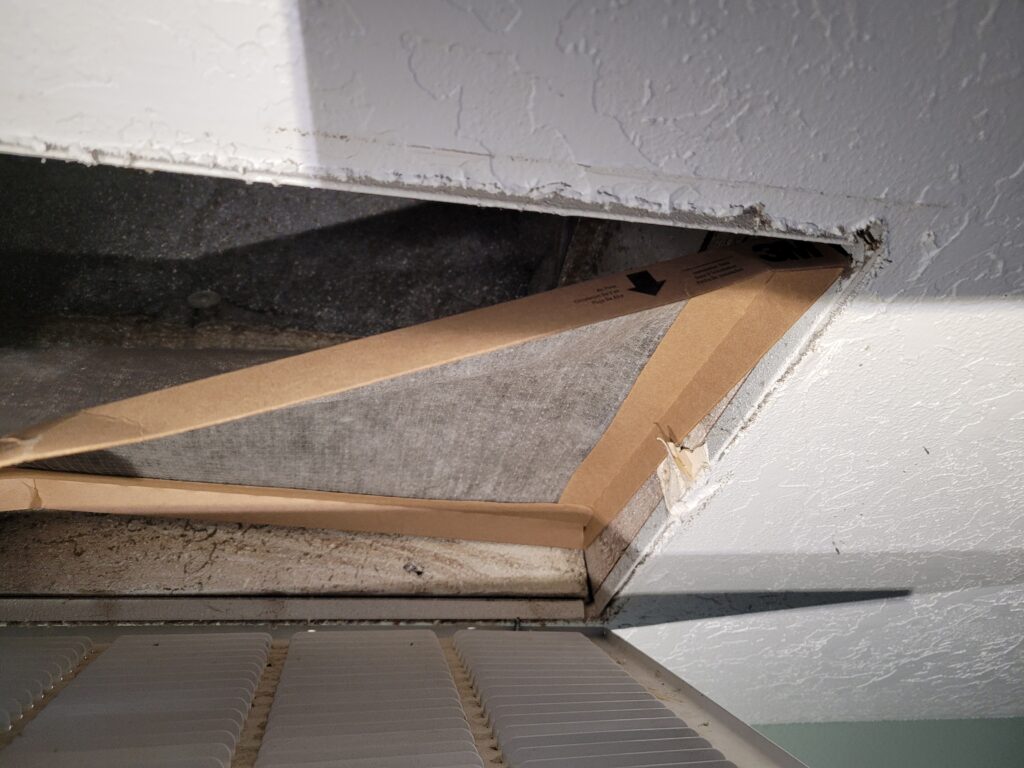
The air filter protects the indoor coil and blower from dust. When it clogs, airflow drops and the whole system strains. The evaporator coil can only absorb heat from air that reaches its fins, so a layer of dust works like a blanket over it. The condenser coil outside has the same problem in reverse: leaves, dirt, and debris keep it from releasing heat into the yard.
The capacitor gives the compressor and fan motors the jolt they need to start. It weakens with age and heat, and a weak one is one of the most common reasons an AC struggles to start or stops cooling. The contactor is the switch that turns the outdoor unit on and off, and its contacts wear over time. The refrigerant charge is sealed in and doesn't get used up, so if it's low, there's a leak somewhere. And the condensate drain has to stay clear, or water backs up into the pan, the cabinet, or the floor around it.
Maintained vs. run until it breaks
Here's the difference between a system that gets looked at every season and one that only gets attention when it quits. The highlighted cell in each row is the side that comes out ahead.
| Factor | Maintained Every Season | Run Until It Breaks |
|---|---|---|
| Airflow | Clean filter, open coils | Filter and coils choked with dust |
| Run time | Runs only as long as it needs to | Longer cycles to reach the same temperature |
| Compressor strain | Normal pressures and temperatures | Working harder against a dirty outdoor coil |
| Electrical parts | Weak capacitors caught on a meter | Found when the unit won't start |
| Refrigerant leaks | Spotted early from pressure readings | Found after the cooling is gone |
| When problems surface | On a scheduled visit | On the hottest day of the year |
| Spending this month | A maintenance visit | Nothing, until something fails |
| Repair-or-replace decisions | Planned, with time for a second quote | Made in a hurry with no cooling |
Based on what we find on maintenance and repair calls across the Portland metro. Every system is different, so treat this as a guide rather than a promise.
Why small problems turn into big ones
An AC rarely fails all at once. A dirty filter cuts airflow, so the indoor coil runs colder than it should and can start to freeze. A dirty outdoor coil keeps heat trapped in the system, so the compressor works harder and runs hotter. A weak capacitor makes every start rough on the motor it's helping. None of those stops the system on day one. They stack up, and the breakdown usually comes on the hottest day of the year, when the system is working its hardest and everyone else is calling too.
Small parts cause big calls on the heating side too. One customer's furnace had been called cracked by another company, which tagged the system out, shut off the gas, and recommended a replacement. When we looked, the real problem traced back to the condensate pump: after ten years, the contacts and circuitry inside had corroded until it couldn't provide 24 volts downstream. We jumpered it, verified the system was not breaching, and got the furnace running again. That's a drain component, not a dead furnace, and it's exactly the kind of part routine maintenance keeps an eye on.
If your AC stops cooling, look at the breaker panel and the outdoor unit. Has the breaker for the AC tripped? Is the outdoor fan spinning when the thermostat calls for cooling? When you call (503) 334-9584, we'll go over those with you on the phone, and sometimes that's enough to tell whether a visit is needed at all.
What a maintenance visit actually checks
A real maintenance visit is measurement, not a quick once-over. On our maintenance visits, we check and change the filter, inspect and clean the indoor and outdoor coils, test the capacitor and contactor with a meter, tighten and check electrical connections, clear the condensate drain, and look over belts, fan motors, and the line set. Then we read the system while it runs: refrigerant pressures on digital gauges and the temperature of the air going in and coming out.
That last reading tells a lot. On one call, our gauges showed return air at 70.2°F and supply air at 52.6°F, a 17.6°F split that confirmed the system was cooling and pulling moisture out of the air the way it should. When the split is off, it points toward airflow, charge, or a failing component, and we keep testing until we know which one, instead of guessing and swapping parts.
If you want to get ahead of summer, our pre-summer tune-up checklist lays out the order we work in, and our guide to DIY AC maintenance covers which jobs are safe to handle yourself and which ones need a meter and gauges.
Signs it's due for maintenance
The system still cools, but it's working harder than it should. A tune-up is the right first step.
What you might notice
- The AC keeps up, but it runs longer than it used to on a warm afternoon.
- The filter is gray with dust, or you can't remember the last time it was changed.
- Leaves, debris, or stored items are crowded around the outdoor unit.
- Nobody has opened the system up since last summer, or ever.
Signs it needs a repair call
Something has already stopped working. A tune-up won't fix a failed part.
What changes the answer
- Warm air comes from the vents even though the outdoor unit is running.
- The outdoor unit hums or clicks but the fan and compressor never start.
- There's ice on the copper lines or water pooling around the indoor unit.
- The breaker for the AC trips again after you reset it.
Refrigerant: why topping it off isn't a fix
Refrigerant runs in a sealed loop. If a system is low, the refrigerant went somewhere, and adding more without finding where only buys time until it leaks out again. The right fix is to locate the leak, often with a nitrogen pressure test and leak-detection solution at the joints, repair it, pull a deep vacuum to clear out air and moisture, and then weigh the correct charge back in. It takes longer than a top-off, and it's the version that holds.
Older systems that run on R-22 deserve a closer look, because that refrigerant has been phased out and recharging gets more expensive every year. That's where an honest repair-or-replace conversation starts, and our post on when to replace your AC walks through it. If you want to know the usual suspects first, see the most common AC failures we get called for.
A friend's heat pump quit, so the house was running on the furnace's electric heat, and the breaker kept tripping. Two companies told him the system was old and needed replacing. The real problem was an undersized breaker. We verified everything, tuned up the electric furnace, and recharged the R22 in the heat pump, and it saved him at least $400 a month on the heat bill alone. If a company tells you replacing the whole system is your only option, get multiple quotes, talk to a technician rather than a salesperson, and trust your gut. Our post on getting a second opinion covers what to ask.
“If we fixed it incorrectly, we come out and make it right at no charge. That's what our 30-day guarantee means.”— Talon Mechanical
Maintenance visit or repair call?
Find the row that matches what your AC is doing right now. If more than one fits, the repair column wins: a tune-up won't fix a part that has already failed.
| If your AC… | Maintenance Visit | Repair Call |
|---|---|---|
| Runs fine but hasn't been serviced this year | Yes | Not needed |
| Runs constantly to keep up | Start here | If a tune-up doesn't fix it |
| Blows warm air with the outdoor fan running | Not enough | Yes |
| Hums outside but won't start | No | Yes |
| Has ice on the lines or indoor coil | Often the cause | Yes, turn it off and call |
| Has water around the indoor unit | If it's just the drain | Yes |
| Trips its breaker | No | Yes, diagnose it |
| Is older and runs on R-22 | Keeps it going | Ask about replacement |
The bottom line
Your air conditioner is a heat mover, and it moves heat only as well as its filter, coils, refrigerant charge, and electrical parts allow. Keep those in shape and the system cools the way it was built to, runs no longer than it needs to, and tells you about problems while they're still small. Skip it, and the system keeps running right up until the day it doesn't.
If your system is already acting up, our AC repair service starts with real readings, not a sales pitch. If it's running fine and you'd like to keep it that way, book a maintenance visit before the heat arrives. Either way, call (503) 334-9584 or send your question through our contact form.