The hidden costs of neglecting your HVAC
On this page · 8 sections
Most heating and cooling systems don't fail all at once. They wear down quietly: a filter loads up with dust, a coil gets caked in lint, a belt stretches a little more every season. The system keeps running, so nobody looks. The bill for that shows up later, and it never arrives as a line item labeled “neglect.”
We work on furnaces, heat pumps, and air conditioners across the metro, from Gresham to Portland and out to Beaverton, and a lot of what we find on repair calls started as something a routine check would have caught. Here are the costs that hide behind a system nobody has looked at in a while, and how to tell whether yours is simply due for a tune-up or already costing you money.
The short answer
Bottom Line Up Front
If nobody has looked inside your system in the last year, it's probably already costing you: in energy, in worn parts that fail together, and in a breakdown that picks the coldest night to happen. A maintenance visit catches most of it while it's still a small fix.
Neglect is rarely one dramatic failure. It's a dirty filter, a caked coil, a stretched belt, and a rusting drain pan, each one making the others worse. Catch them on a maintenance visit and they're small, cheap fixes. Let them run until the system quits and you're paying for the repair, the damage it caused, and possibly a replacement pitch you didn't need.
proper diagnosis on a real job
we make it right at no charge
emergencies included
The rest of this post is the five places that money goes, a quick way to read your own system, and a decision matrix at the end that tells you whether you need a maintenance visit or a repair call.
Cost 1: Higher energy bills you stop noticing
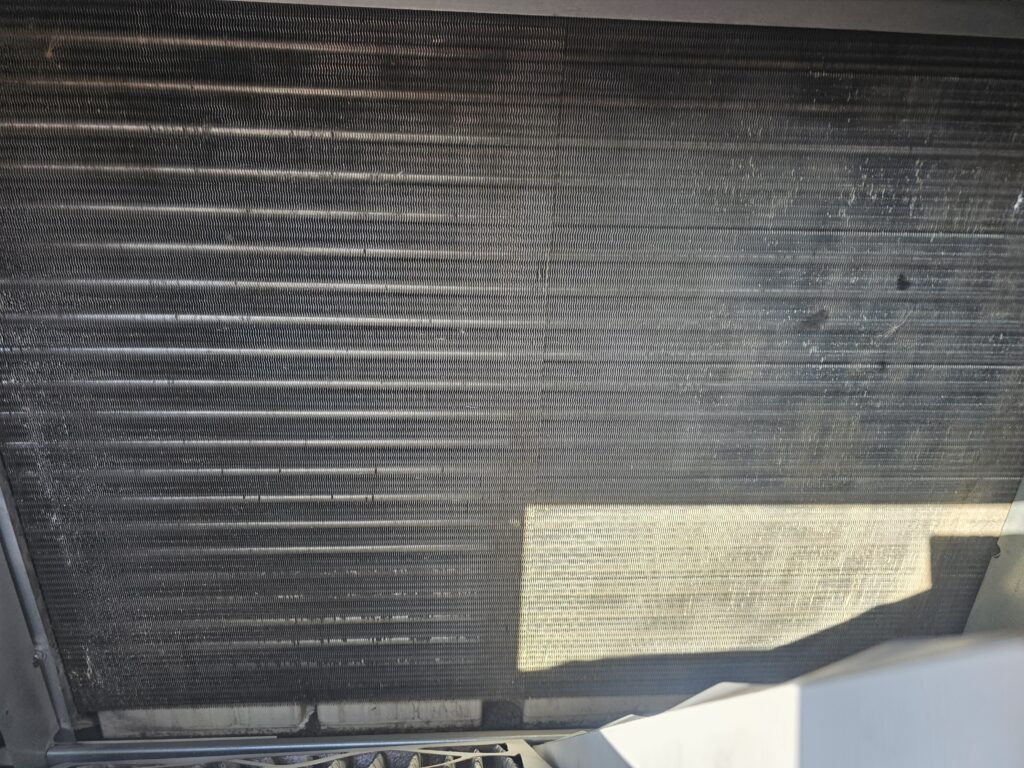
A clogged filter, a dirty evaporator coil, or a condenser packed with leaves all do the same thing: they choke airflow, so the system runs longer to deliver the same comfort. Nothing breaks, so the only symptom is a bill that creeps up a little each month until it just looks normal. Cleaning coils, changing filters, and checking airflow is the core of routine HVAC maintenance, and it's the cheapest way to get that money back.
Sometimes the hidden cost is much bigger than a dirty filter. A homeowner we know had a heat pump that quit, so the house had been running on the furnace's electric heat all winter, and the breaker kept tripping. Two companies before us said the system was old and needed to be replaced. We diagnosed it instead: the breaker was undersized, so we verified everything, tuned up the electric furnace, and recharged the R-22 in the heat pump. That saved the homeowner at least $400 a month on the heating bill alone.
Cost 2: Worn parts that take other parts down with them
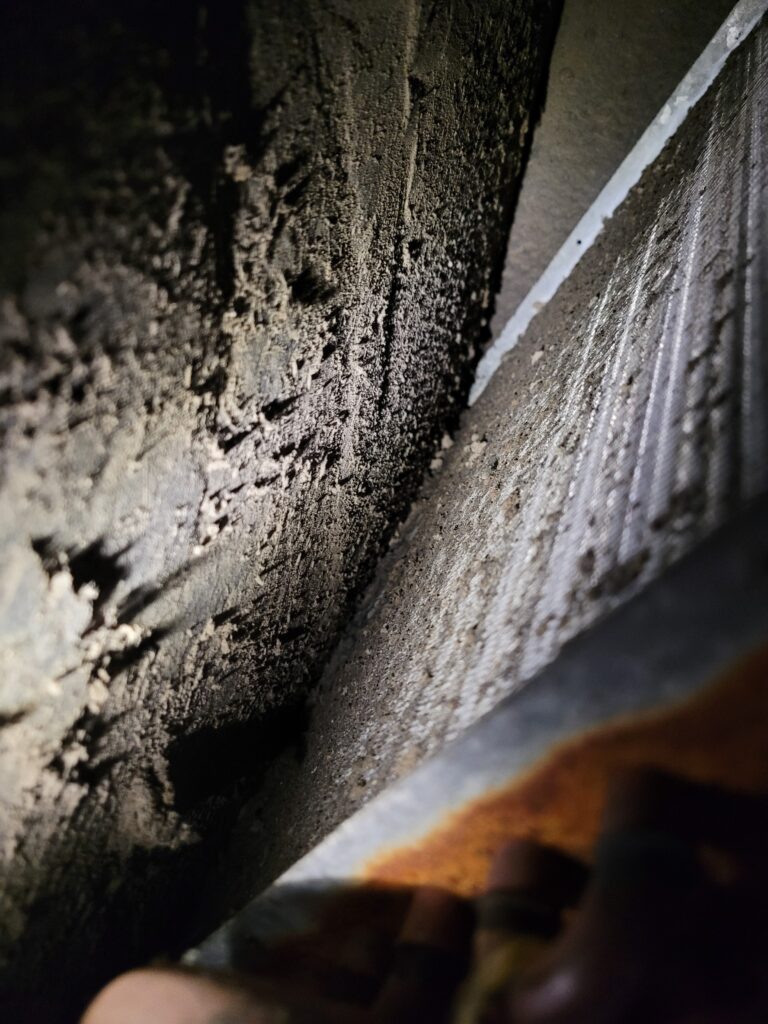
HVAC parts rarely fail alone. A loose or cracked blower belt slips, cuts airflow, and wears out the motor bearings. A rusting run capacitor gives the blower or compressor weak starts until the motor itself gives up. A dirty condenser coil makes the compressor run hot and hard, and the compressor is the most expensive part of the whole system. Each of these is a small part on a maintenance visit and a much bigger AC repair or heating repair once it has dragged its neighbors down with it.
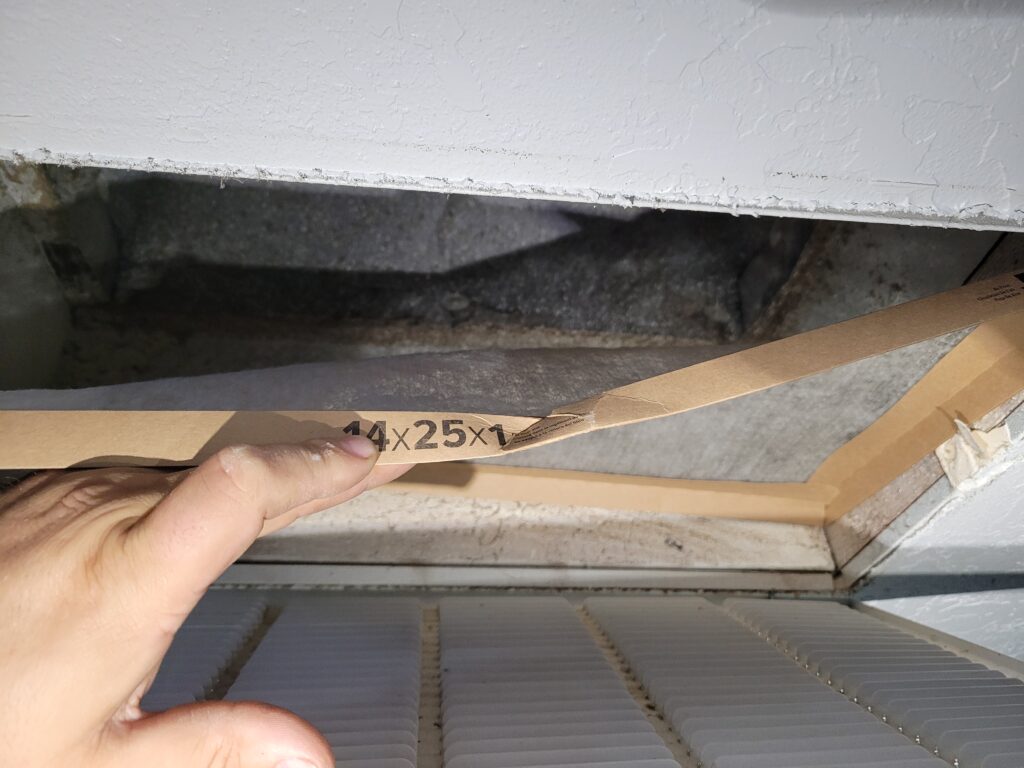
The one piece of maintenance every homeowner can do is the filter. Pull it out and hold it up to a light; if you can't see light through it, change it. Write the date on the edge of the new one with a marker so you never have to guess again. For what's safe to handle yourself and what isn't, see our guide to DIY AC maintenance.
Cost 3: Water, rust, and safety problems you can't see
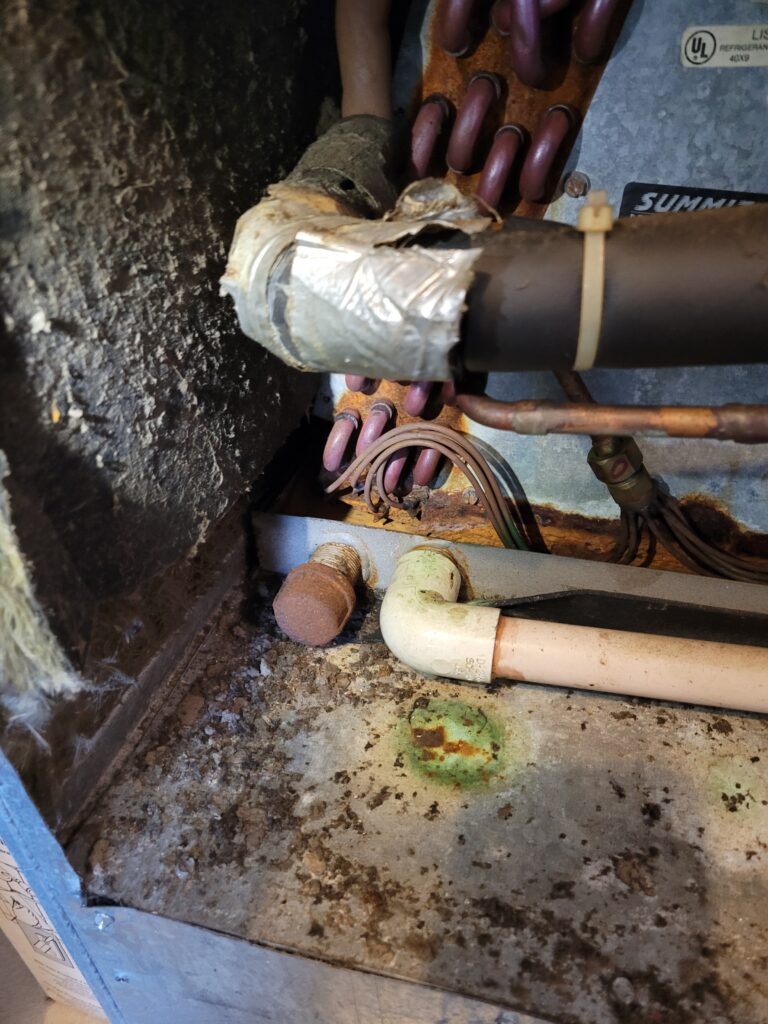
Air conditioners and high-efficiency furnaces make water, and that water has to go somewhere. A clogged condensate line or a corroding drain pan can leak into a closet, a crawlspace, or a ceiling long before anyone notices. Torn or disconnected ductwork under the house quietly pours heated and cooled air into the crawlspace instead of your living room. And inside a gas furnace, rust on the heat exchanger or a door safety switch someone taped over are the kind of findings that matter for safety, not just comfort. If you're curious why that one gets so much attention, read about the dangers of a cracked heat exchanger.
Cost 4: The replacement you didn't actually need
When a neglected system finally quits, the easy answer is a new one. Plenty of companies send a salesperson rather than a technician, and a new unit is the bigger ticket. A system that's been looked after has a history: you know what's been checked, what's been replaced, and what was healthy last season. That history is what lets you push back when someone says the whole thing has to go.
One of our favorite jobs started that way. Another company had told a homeowner their furnace was cracked, tagged the system out, and shut off the gas, with a replacement as the next step. We traced the actual problem to the condensate pump: after ten years, the contacts and circuitry inside had corroded to the point that it could no longer pass 24 volts downstream. We jumpered it, verified the system was not breaching, and the furnace was safe to run. A lot of customers want to know where their money is going. Fixing the real problem the first time is how we answer that.
If a company tells you replacing the whole system is your only option, don't go with them. Get multiple quotes. Many cooling problems come down to something electrical or a system that's undercharged, and an honest technician can show you that at the unit. Listen for sincerity; if it feels like you're being told a story, trust your gut. More on that in why to get a second opinion before HVAC replacement.
Signs your system is just due
Nothing is failing yet. A maintenance visit now keeps it that way.
What we usually see
- The system heats and cools every room, but you can't remember the last time anyone opened the cabinet.
- The filter is gray and due, but it's still seated in its frame and hasn't collapsed.
- The outdoor unit has some leaves around it, but the coil fins are still mostly clear.
- The system starts on the first try and runs quietly, with no new smells, rattles, or squeals.
Signs neglect is already costing you
Something is wearing out. This is a repair conversation, not a tune-up.
What changes the answer
- The energy bill has climbed over the past year even though nothing about how you use the house has changed.
- There's water, rust, or green corrosion under the indoor unit or around the drain line.
- A room needs a box fan or space heater because the vent barely moves air.
- The breaker trips, the burners light and shut off, or the system short-cycles on and off.
Cost 5: Breakdowns that pick the worst possible day
Worn equipment fails under load, and peak load means the first hard cold snap or the first real heat wave. That's the night a weak igniter stops lighting, the afternoon a tired capacitor finally lets go, and the week every HVAC company in town is booked. For a lot of the older homeowners we work with, a house without heat or cooling isn't an inconvenience; it's a health concern. You can call us any time, and our emergency HVAC service is there when it can't wait. But the better plan is to have the system checked before the season that will test it, with a fall check on the heating side and a pre-summer AC tune-up before the heat arrives.
“Neglect never sends a bill of its own. It shows up inside the energy bill, the repair bill, and the replacement quote, and by then it's hard to tell which part was avoidable.”— Talon Mechanical
The decision matrix
Read down the left column to what you're seeing at home, then look across. If most of your rows land in the left column, schedule a maintenance visit. If any of them land hard in the right column, don't wait for a tune-up; call for a repair.
| If you notice… | Maintenance visit | Repair call |
|---|---|---|
| A filter you can't remember changing | Yes | Not yet |
| A system that runs fine but hasn't been checked in a year | Yes | Premature |
| A room that needs a fan to stay comfortable | Start here | If airflow stays weak |
| A system that runs almost nonstop | Often the fix | If it's undercharged |
| Water or rust under the indoor unit | If it's dry now | If it's leaking |
| A breaker that trips when the system runs | Not enough | Yes |
| No heat or no cooling at all | Too late | Call now, any time |
| A system another company tagged for replacement | No | Get a second opinion |
The bottom line
Maintenance is the cheap part of owning a heating and cooling system. The expensive parts are the energy you burn through a clogged coil, the motor a slipping belt takes out, the water a blocked drain line puts into your crawlspace, and the replacement someone talks you into because nobody knows what's been done to the system. A regular maintenance visit keeps all of that small.
Not sure where your system stands? Call us at (503) 334-9584. We'll start on the phone, walking through what the fan is doing and what's happening at the breaker box, and sometimes that's enough to tell whether we even need to come out. Onsite diagnostics are free (terms and conditions may apply, so call for details), and if we fix something incorrectly, we come back and make it right at no charge within 30 days.