
Preparing your HVAC system for fall in the Portland area
On this page · 8 sections
Every fall, the first cold night across Portland, Gresham, and Beaverton brings the same wave of calls: the thermostat says heat, the furnace says nothing. Most of those systems ran fine last spring. They just sat idle all summer, collected dust, and got asked to work hard on the coldest evening of the month.
The good news is that a lot of fall prep is stuff you can do yourself in an afternoon, and the rest is exactly what a seasonal tune-up is for. Here is how we walk customers through it, starting with the questions we ask over the phone before anyone drives out.
The short answer
Bottom Line Up Front
Change the filter, check the thermostat and breaker, and run the heat on a mild day before the first cold snap. If it lights, blows warm air, and shuts off cleanly, you are in good shape. If it smells, trips a breaker, or starts and stops, book a tune-up or a repair now.
Most fall heating problems are not sudden. They build up over a summer of sitting idle and show up the first time the system is asked to work hard. A few simple checks at home catch the easy ones, and a professional inspection catches what is hidden inside the cabinet, from dusty burners to a failing igniter, before a cold night makes the decision for you.
if we got it wrong, we make it right
heating emergencies
about a 25-minute drive (call for details)
The rest of this post breaks that down into three steps, a quick comparison of what to do yourself versus what to leave to us, and a decision matrix at the end.
Step 1: Start with the filter and the airflow
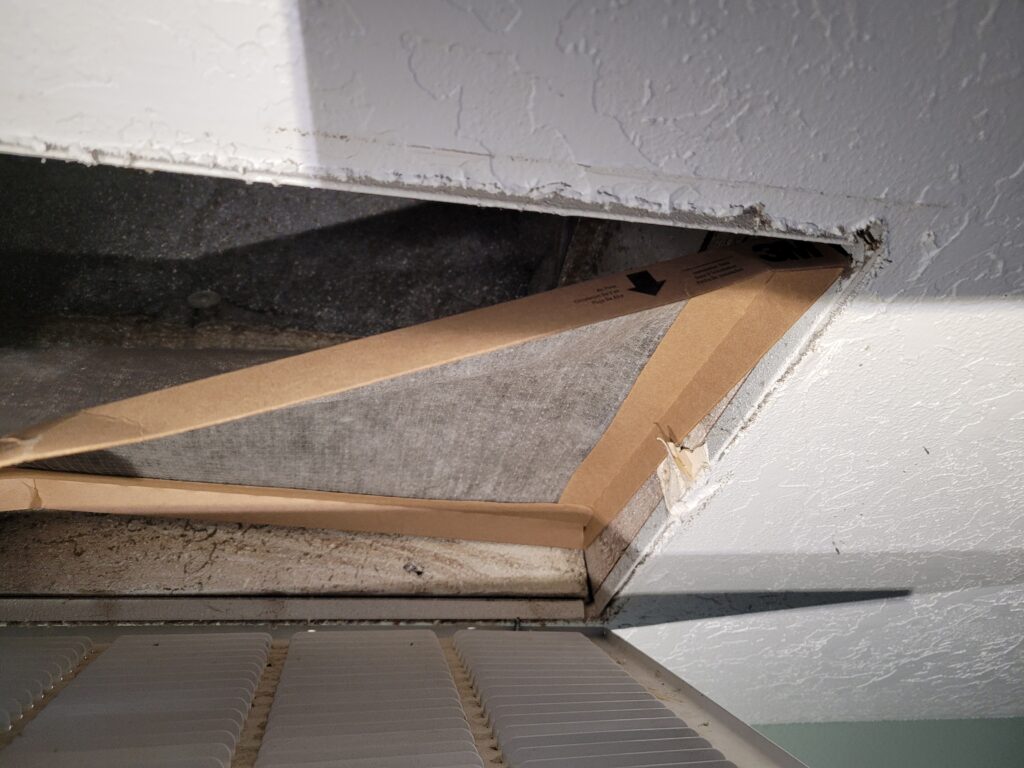
A clogged filter is the most common thing we find on a fall service call, and it is the easiest to fix. When the filter loads up with dust, the system has to pull air through a wall of lint. It runs longer, heats unevenly, and works its parts harder than it should. Pull the filter, hold it up to a light, and if you cannot see through it, replace it. While you are at it, walk the house and make sure supply registers and return grilles are not buried under rugs, furniture, or boxes.
Step 2: Check the thermostat and the breaker before you worry
When a customer calls about a system that will not start, the first things we talk through on the phone are the simple ones: is the thermostat set to heat, does it have fresh batteries, is the fan running, and has a breaker tripped? Weak thermostat batteries can make a perfectly good furnace look dead. A blank screen or a thermostat that will not respond is often just a battery swap.
Breakers matter too, and a breaker that keeps tripping is a different story from one that tripped once. We worked on a home where electric heat kept tripping the breaker all winter, and two companies had already said the whole system needed replacing. The real problem was an undersized breaker from electrical work that never should have been done that way. If a breaker trips a second time, leave it off and give us a call at (503) 334-9584. That is a diagnosis, not a reset.
Turn the heat on during a mild afternoon in early fall, not on the first frosty night. A dusty or burning smell for the first few minutes is common after a summer off. A smell that lingers, a furnace that lights and shuts off, or no warm air at all means it is time for a technician, and you will have found out while the schedule is still open.
What to do yourself and what to leave to a technician
Here is the split we would give you if we were standing in your garage. The check mark sits on whichever side is the right call for that task.
| Task | You Can Do It | Leave It to a Technician |
|---|---|---|
| Air filter | Check it and swap it out | Only if the rack or housing is damaged |
| Thermostat | Fresh batteries, set to heat | Wiring or a thermostat replacement |
| Registers and returns | Clear rugs, boxes, and furniture | Weak airflow that clearing does not fix |
| Outdoor heat pump unit | Clear leaves and debris around it | Coil cleaning and refrigerant checks |
| Breaker | Reset it once | Any breaker that trips again |
| Burners and ignition | Watch and listen during a cycle | Testing the igniter, flame sensor, and gas valve |
| Heat exchanger | Nothing to do from outside | Inspection inside the cabinet |
| Gas smell | Get out and call the gas utility | Finding and fixing the cause |
Step 3: Watch and listen during the first heat cycle
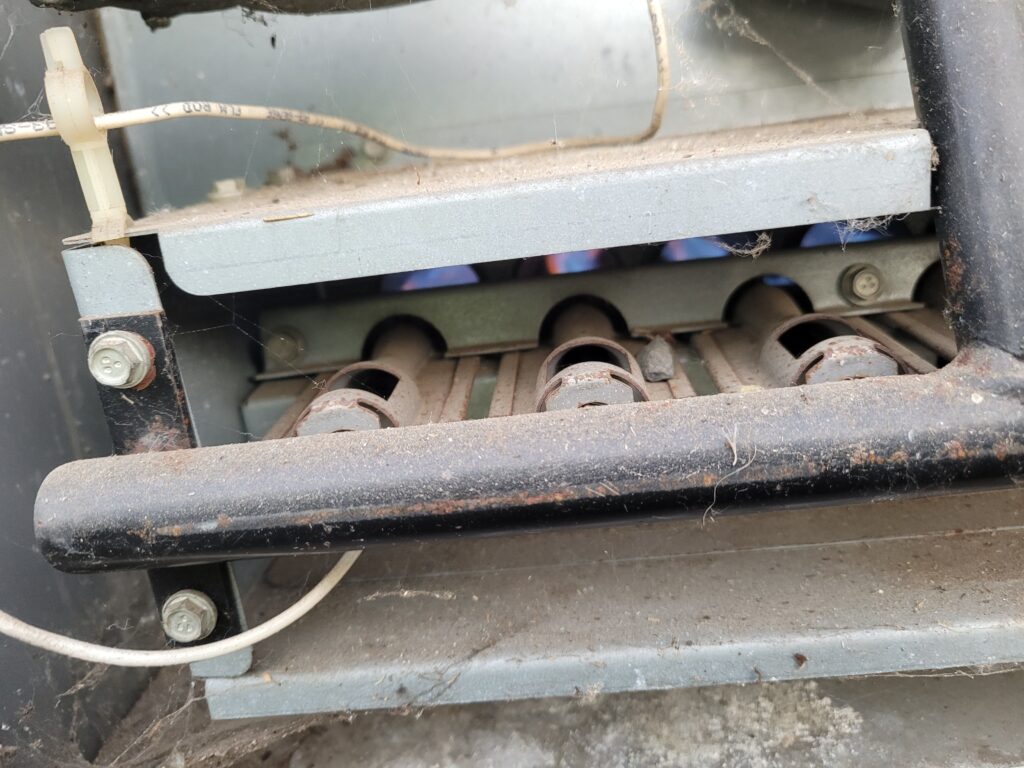
Once the heat is on, stay nearby for one full cycle. You are listening for the furnace to light smoothly, the blower to come on, warm air to reach the registers, and the system to shut off cleanly when the thermostat is satisfied. Rattling, squealing, repeated clicking, or a system that starts and stops over and over are all signs something inside needs attention. That is the point where a heating repair visit costs a lot less than waiting for a full breakdown.
Signs your system is ready
The first heat cycle went the way it should. Keep the filter fresh and enjoy the season.
What you should see
- The furnace lights on the first try and stays lit through the whole cycle.
- Warm air reaches every register within a few minutes of the blower starting.
- Any dusty smell fades after the first few minutes of running.
- The system shuts off on its own once the house reaches the set temperature.
Signs it needs a technician
Something is off inside the cabinet. Book a visit before the cold settles in.
What changes the answer
- The burners light, then shut off a few seconds later, over and over.
- A breaker trips again after you have reset it once.
- Rattling, squealing, or banging from the furnace that was not there last year.
- Some rooms stay cold while others warm up, even with every register open.
If you smell gas near the furnace or water heater, do not flip switches or try to relight anything. Get everyone outside and call your gas utility from there. Once the utility has cleared the house, we can come out to find out why. You can call us any time for emergency HVAC service.
What a fall tune-up actually covers
The checks you can do yourself stop at the furnace cabinet. A fall tune-up goes inside it: we test the ignition and flame sensor, look at the burners, check the inducer and blower, test the electrical connections, inspect the condensate drain on high-efficiency furnaces, and look over the heat exchanger. On a heat pump, we check the outdoor unit and its refrigerant side before it has to carry the house through the winter. We measure instead of guessing, so you only pay for repairs your system actually needs.
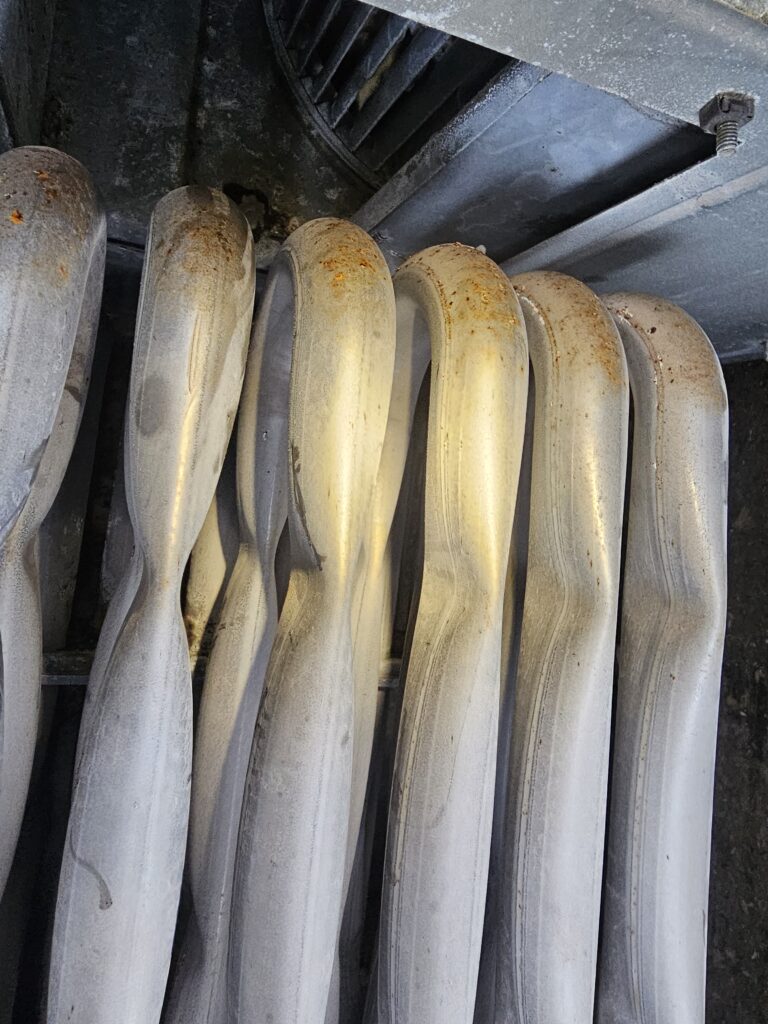
A heat exchanger finding is serious, and we take it seriously. You can read more about why in our post on the dangers of a cracked heat exchanger. But a serious finding still needs a correct diagnosis. We once took a call on a furnace another company had tagged out for a cracked heat exchanger and shut the gas off. When we traced it, the real fault was a corroded condensate pump that could no longer send 24 volts downstream. We verified the system was not breaching, fixed the actual problem, and the furnace ran.
Plenty of fall tune-ups end with a quote for a whole new system. Sometimes that is honest. If the only option you are given is replacing everything, though, slow down. Ask what failed, ask to see it, and get another quote. Our post on getting a second opinion before replacement walks through what to ask.
“You’re better off talking to a technician than a salesperson. Get multiple quotes, and if something feels insincere, trust your gut.”— Talon Mechanical
The decision matrix
Find the line that matches what you are seeing at home. If more than one applies, the right call is whichever column comes up most often for your system.
| If your system… | Handle It Yourself | Call Us |
|---|---|---|
| has a filter you cannot see light through | Yes, replace it | Not needed |
| has a blank or unresponsive thermostat | Try new batteries | If batteries don't fix it |
| tripped a breaker once | Reset it once | If it trips again |
| keeps tripping the same breaker | Leave it off | Yes |
| smells dusty for a few minutes on startup | Normal, let it run | Not unless it lingers |
| lights and shuts off repeatedly | No | Yes |
| has not had a tune-up in a few years | Basic checks only | Book a tune-up |
| smells like gas | Get outside | After the gas utility |
The bottom line
Fall prep does not have to be complicated. Change the filter, clear the registers, check the thermostat and breaker, and run the heat once before you need it. If anything looks, sounds, or smells wrong during that first cycle, that is your cue to book a visit while it is still a small problem.
If you are not sure where your system stands, call us at (503) 334-9584 or schedule a visit online. We will talk it through first, and if we come out, every fix we make is backed by our 30-day guarantee: if we got it wrong, we come back and make it right at no charge.