Do Heat Pumps Actually Work in Portland Winters?
The Short Answer Is Yes
Every fall we get some version of the same question: my neighbor put in a heat pump, but will it actually keep the house warm when it gets cold? It is a fair thing to ask, and the honest answer is that a properly sized modern heat pump will heat a Portland-area home through almost anything our winters throw at it. The caveats are real, though, and they have less to do with the equipment than with how it gets picked, sized, and installed.
This guide walks through what a heat pump actually does, why the old reputation for cold-weather trouble stuck around, and where the genuine decision points are — ducted or ductless, backup heat or not, what your existing ductwork can handle. No sales pitch. If a heat pump is a bad fit for your house, we would rather tell you that up front. If you are still working out who to hire for any of this, we wrote a separate piece on choosing the right HVAC contractor.
Get a Free Estimate!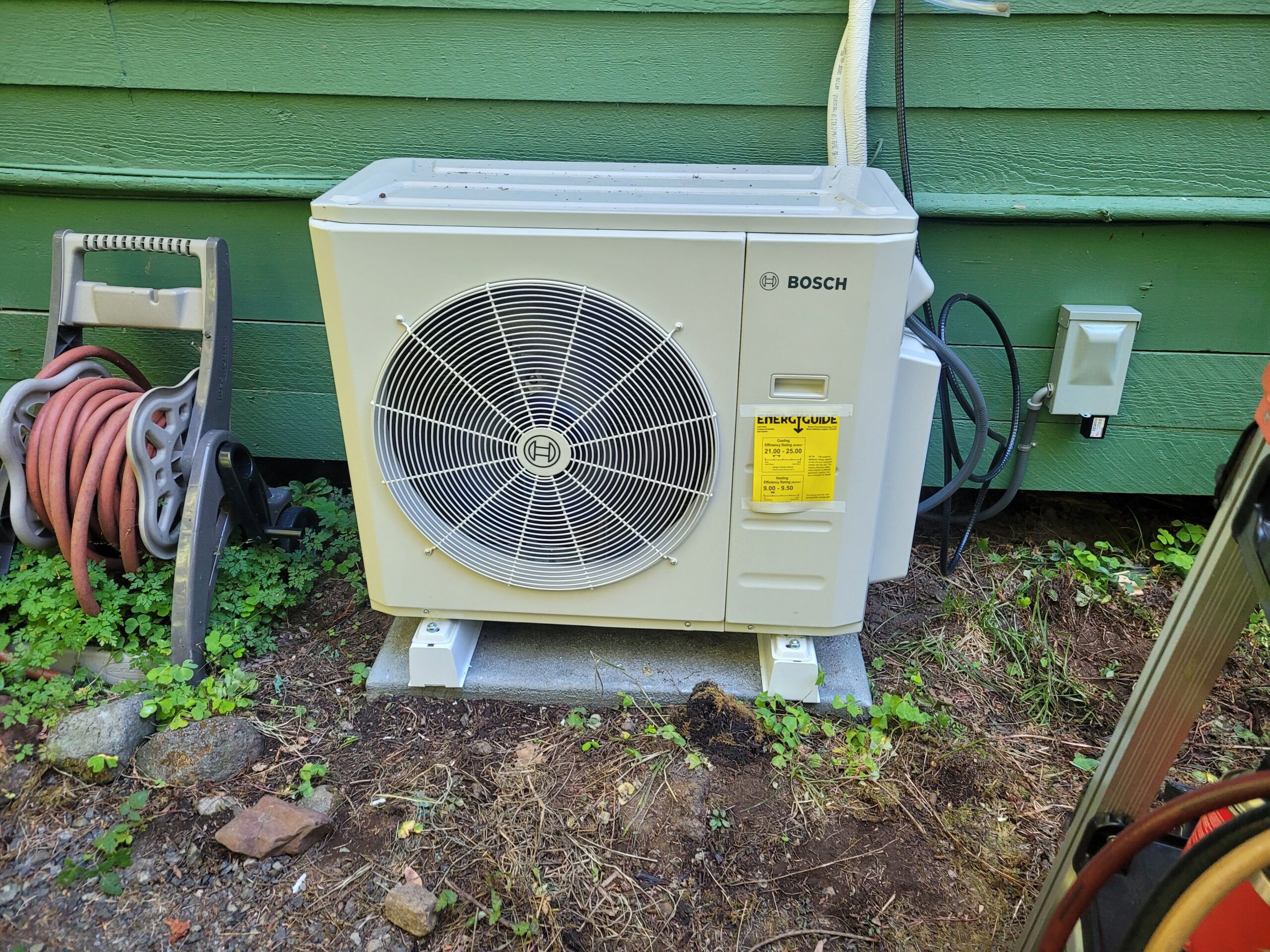
Five Things to Understand Before You Commit
Most of the confusion around heat pumps comes from comparing them to furnaces as if they were the same appliance with a different fuel. They are not. Here is what changes, in the order it tends to matter.
It Is an Air Conditioner That Runs Backwards
A furnace makes heat by burning something. A heat pump does not make heat at all — it moves heat that already exists. In summer it pulls warmth out of your house and dumps it outside, which is exactly what your air conditioner does. In winter a reversing valve flips the refrigerant flow, and the same equipment pulls warmth out of the outdoor air and moves it inside. There is usable heat energy in air well below freezing; the refrigerant just has to be colder than the air to absorb it.
That distinction is why the efficiency numbers look strange at first. A very good gas furnace converts somewhere in the high nineties percent of its fuel into heat, and it cannot do better than the fuel contains. A heat pump routinely delivers two to four times more heat energy than the electrical energy it consumes, because it is transporting heat rather than creating it. If you want the wider comparison of fuel types and system styles, our Portland guide to home heating systems lays them side by side.
"Robert is very knowledgeable and is willing to give you the unvarnished opinion to solve your issue - so you understand the pros and cons of each option. Definitely will use their services again!"
See our profile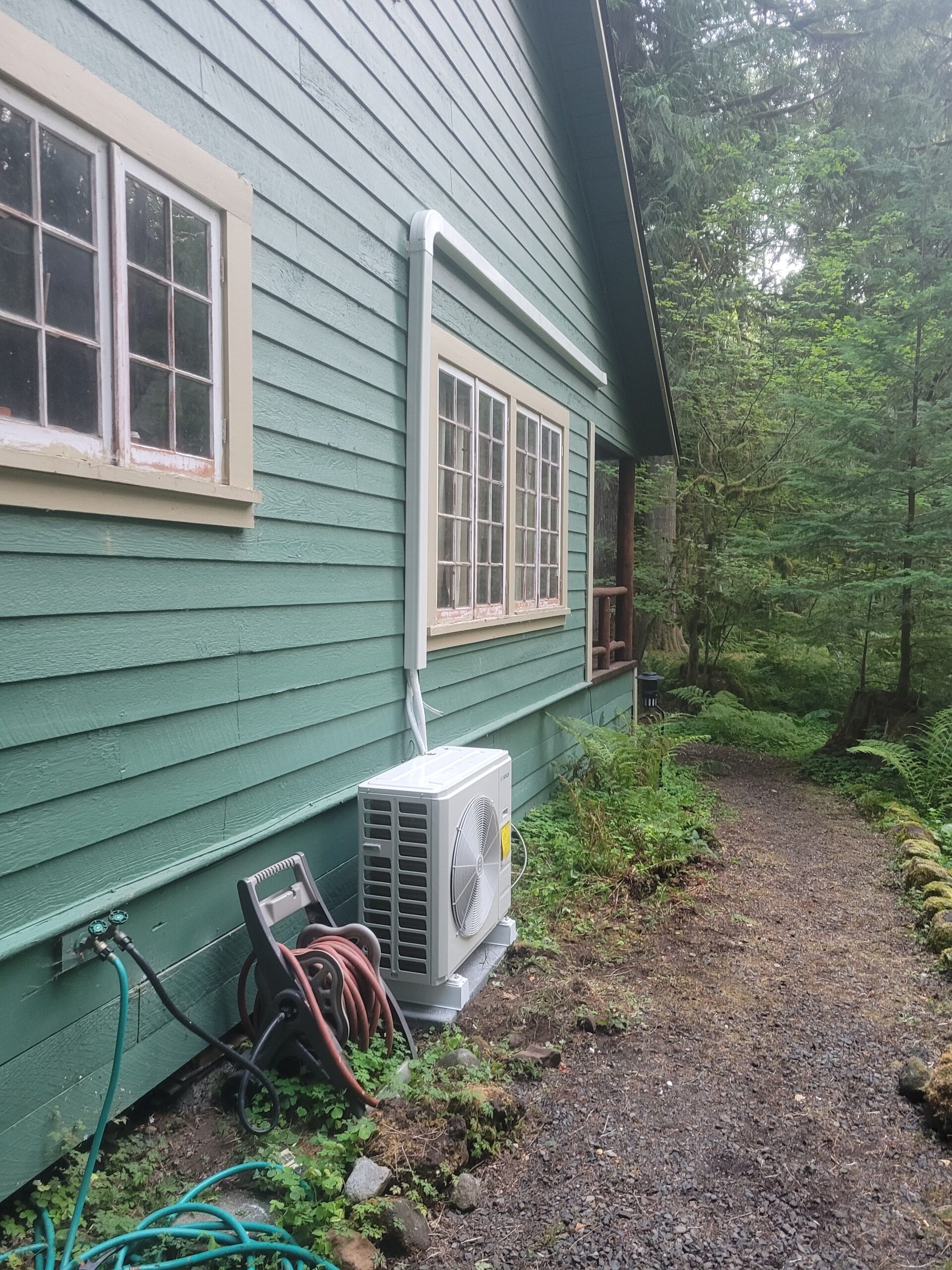
What Happens When It Actually Gets Cold
Heat pump capacity does drop as the outdoor temperature falls — that part of the old story is true. What changed is where the drop starts to matter. A cold-climate inverter unit still produces most of its rated heating capacity in the thirties and a useful share of it in the teens. Portland-area winter design temperatures sit in the low-to-mid twenties, which means a correctly sized system spends nearly the entire heating season operating in its comfortable range rather than straining at the edge of it.
Two things are worth knowing. First, you will likely have backup heat of some kind for the handful of nights that go further than that, either electric elements or an existing gas furnace. Second, the outdoor coil will frost up in cold damp weather and the unit will run a defrost cycle to clear it — the steam you see coming off the outdoor unit on a January morning is the system working correctly, not failing. If yours is short cycling, icing over and staying iced, or leaning on backup heat constantly, that is worth a look; we cover that under heat repair.
"He was extremely professional and communicative about the issues with my mini-split unit. He had to special-order a part from the factory and reached out as soon as it came in to schedule service. He also provided instruction for me on how to maintain my mini-split more effectively going forward."
See our profile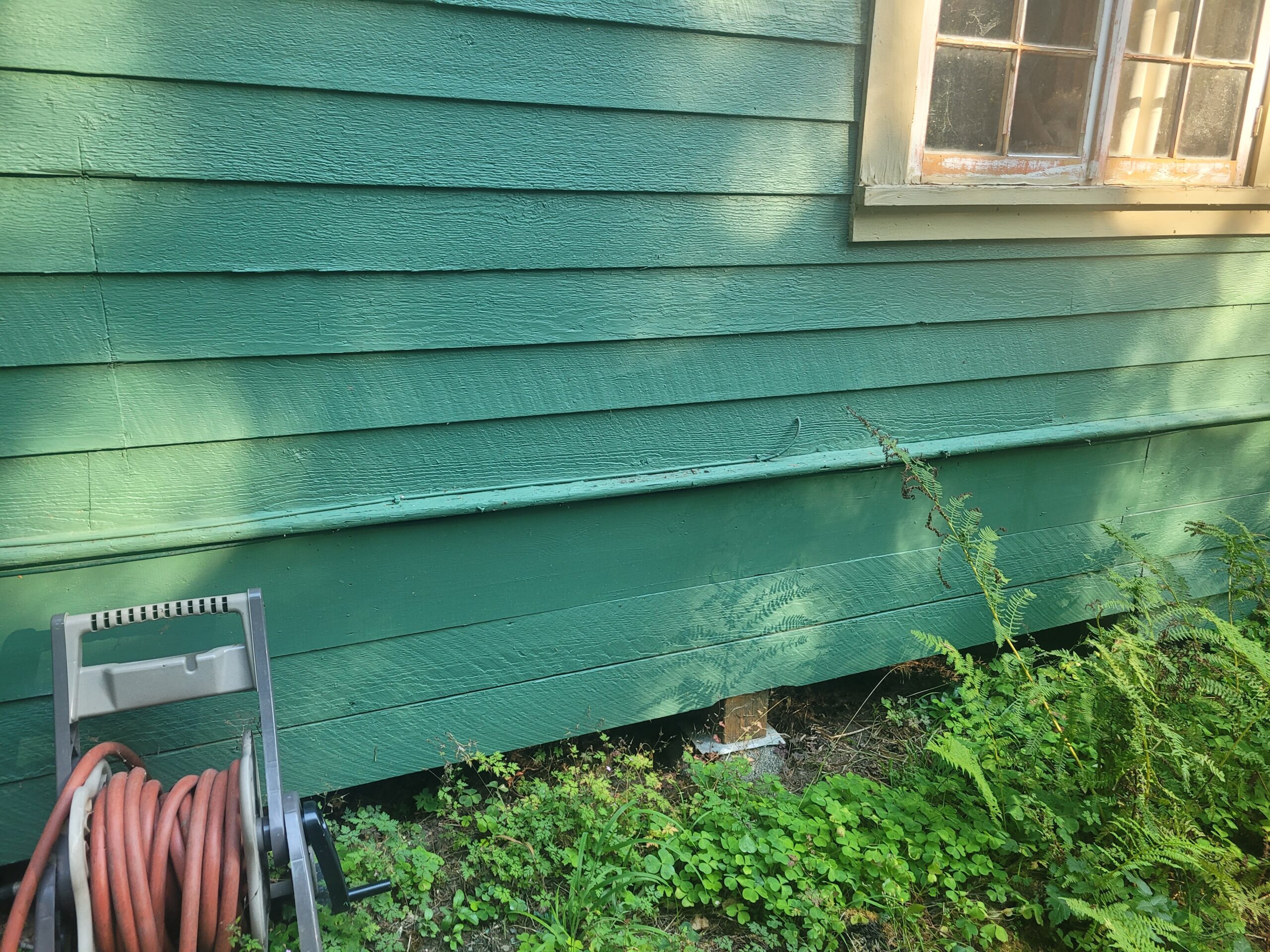
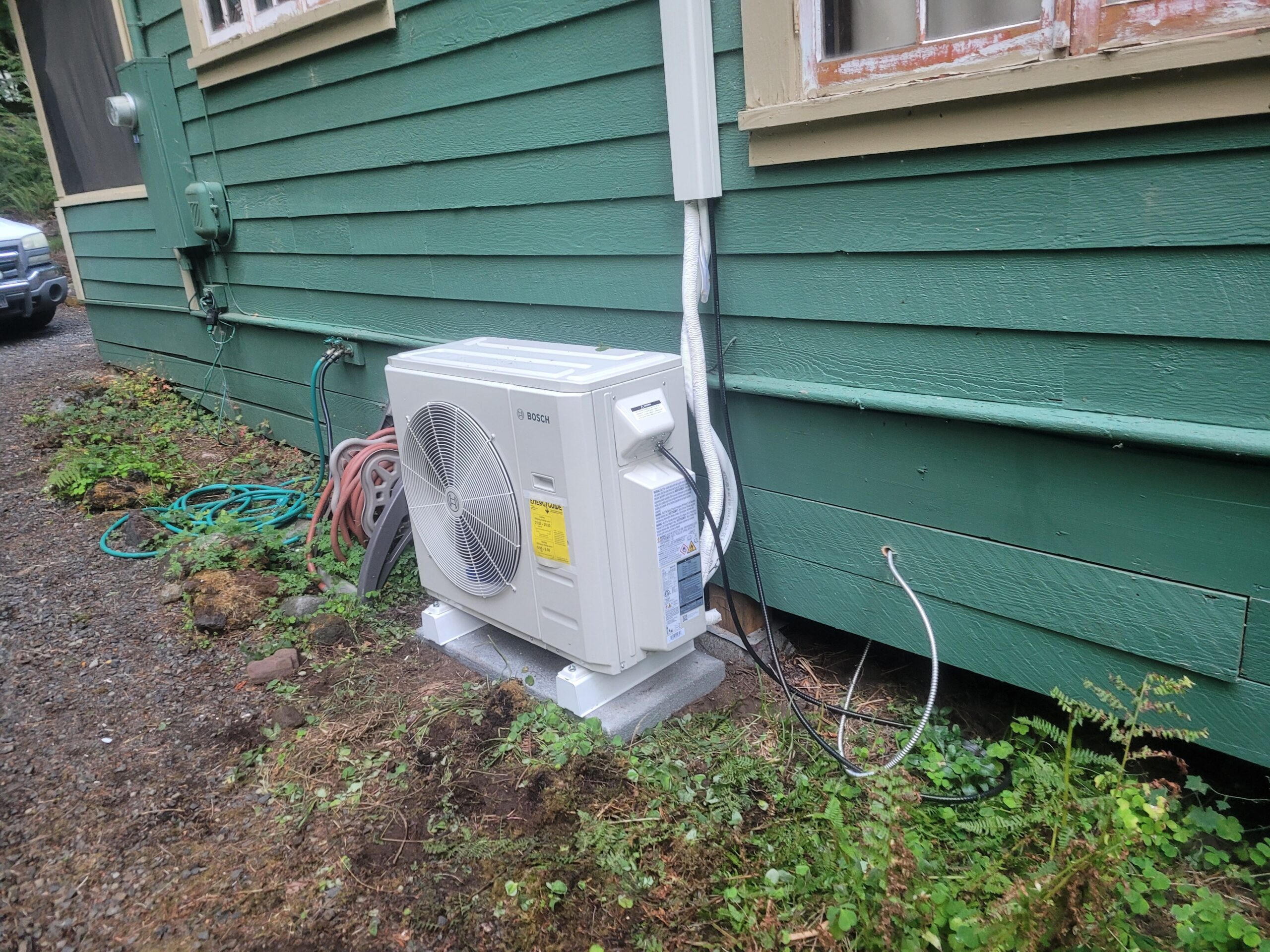
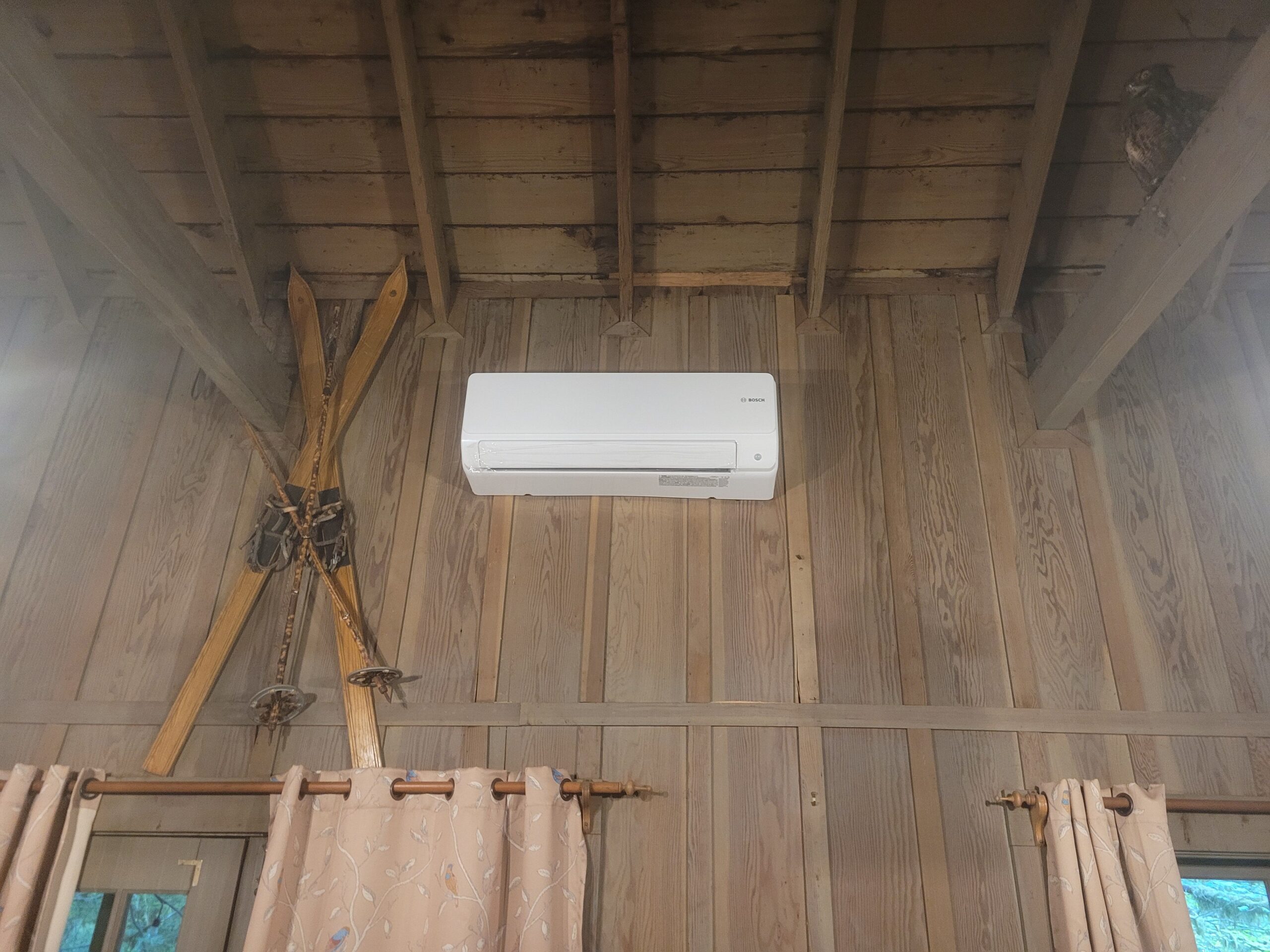
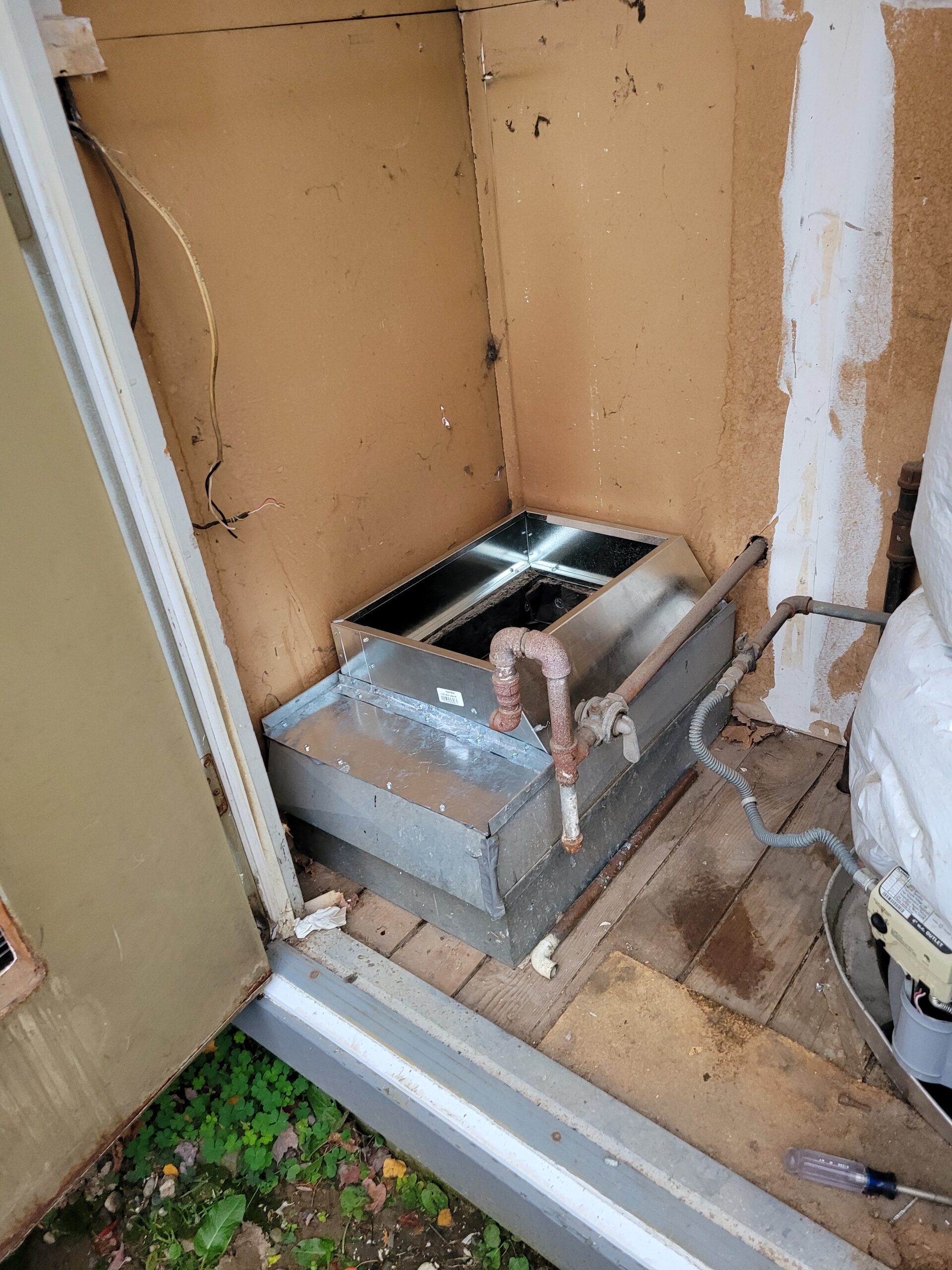
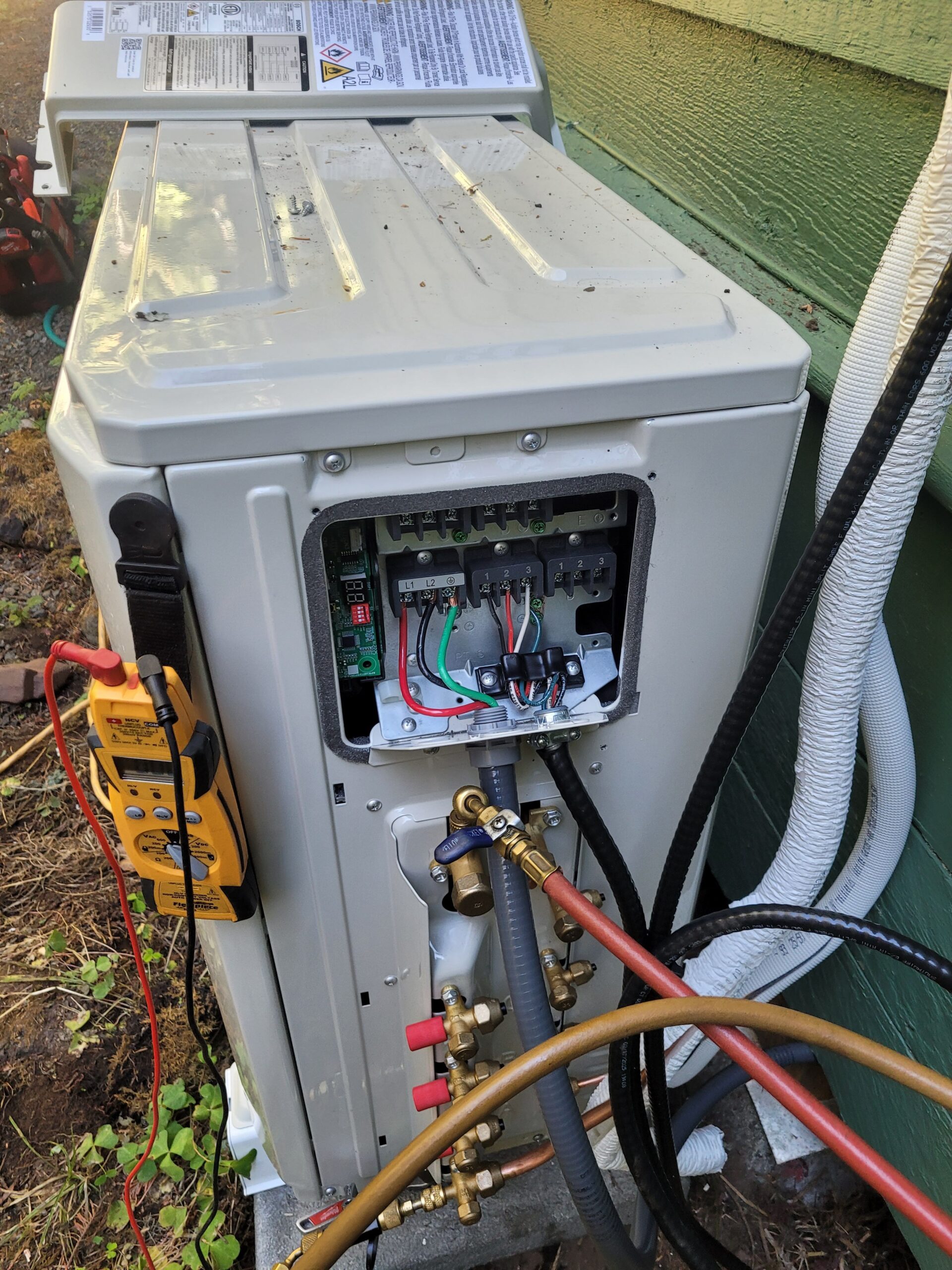
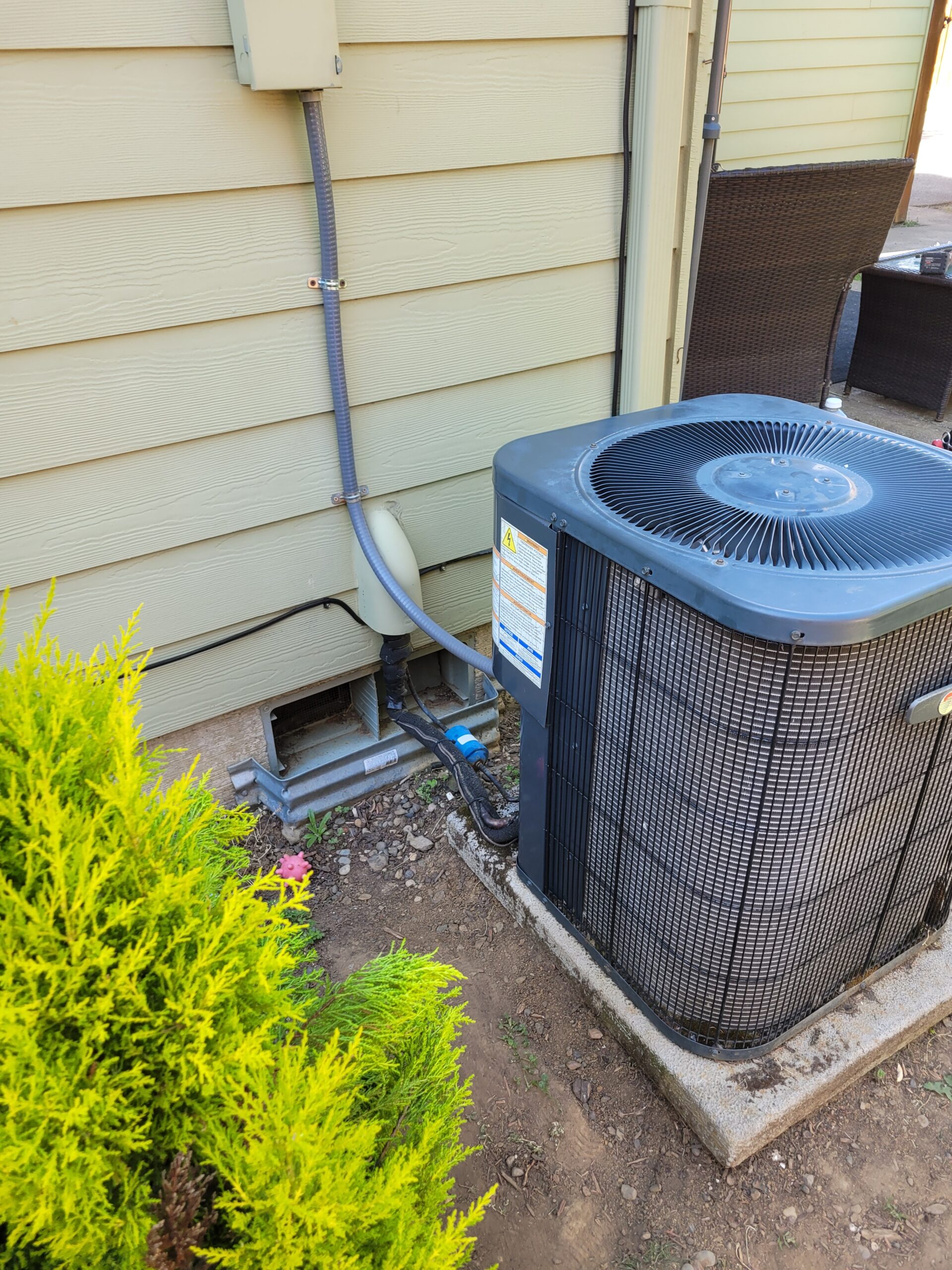
A ductless heat pump added to an existing home — pad set, line set routed, disconnect and electrical run to the building. Drag the handle to compare.
Two Ways to Get Heat Into the House
If your home already has ductwork in decent shape, a ducted heat pump is usually the straightforward path. The outdoor unit pairs with an indoor air handler, the existing registers stay where they are, and one thermostat runs the whole house. It looks and behaves much like the furnace it replaced.
If you do not have ducts — or you have a converted garage, an addition, an ADU, or a bonus room that has never been comfortable — ductless is often the better answer. Indoor heads mount on the wall and connect to the outdoor unit through a small line set, and each head is its own zone with its own setpoint. Plenty of Portland-area houses end up with a hybrid: ducted for the main floor, a ductless head for the room the ducts never reached properly. We handle both under heat installation.
"This guy is the best not only did he do a great job but he also gave me lots of options to work with. He is really knowledgeable and passionate about his work. At the end I'm super happy with my installation and guidance I received."
See our profile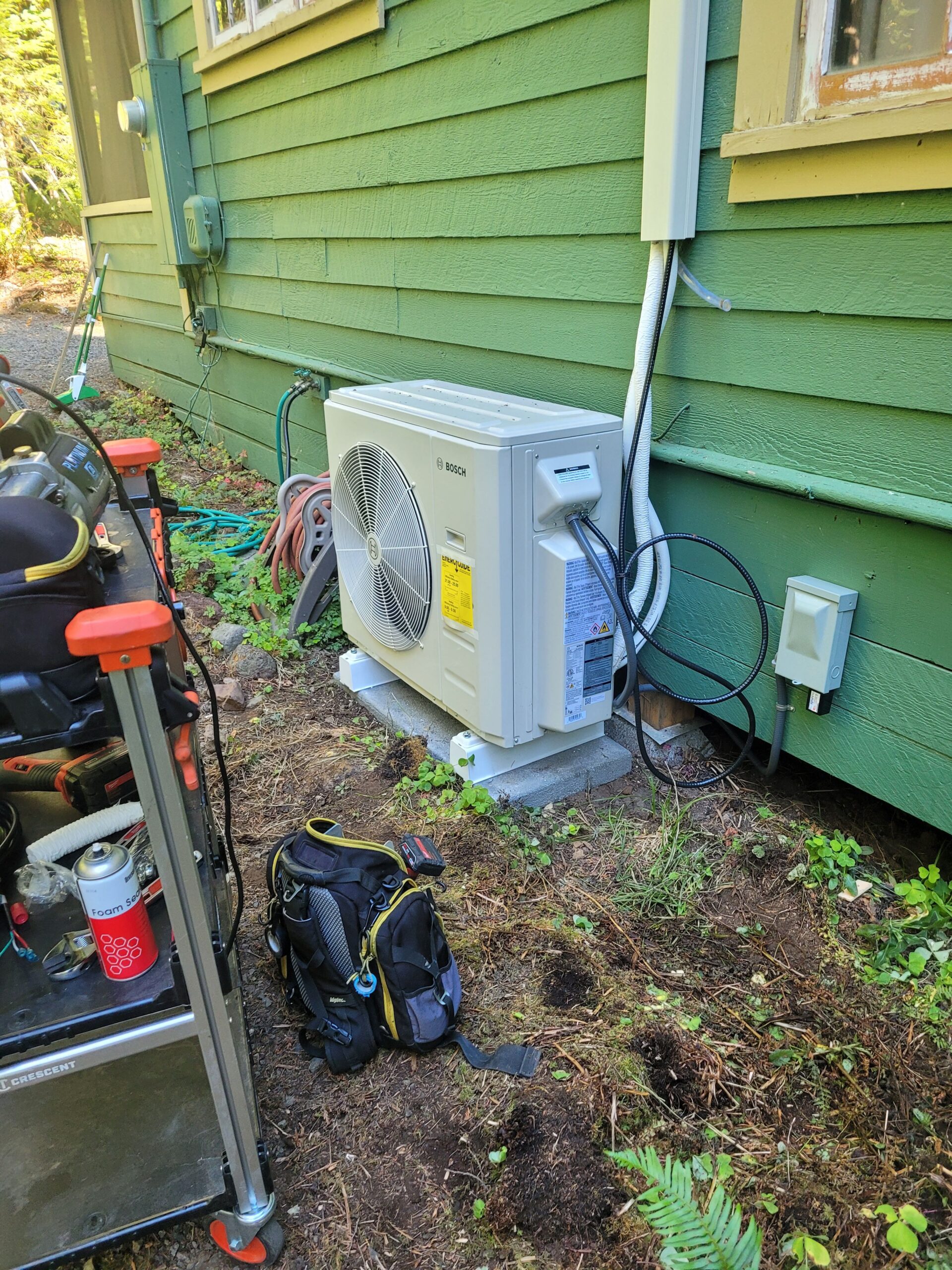
Sizing Matters More Than It Did With a Furnace
With a gas furnace you could get away with going a size up. It would satisfy the thermostat faster, shut off, and nobody noticed. Heat pumps do not forgive that. An oversized unit short cycles, never settles into the steady low-speed operation where it is most efficient, and does a worse job pulling humidity out of the air in summer. The fix is not a rule of thumb based on square footage — it is a room-by-room load calculation that accounts for insulation, window area and orientation, air sealing, and ceiling height.
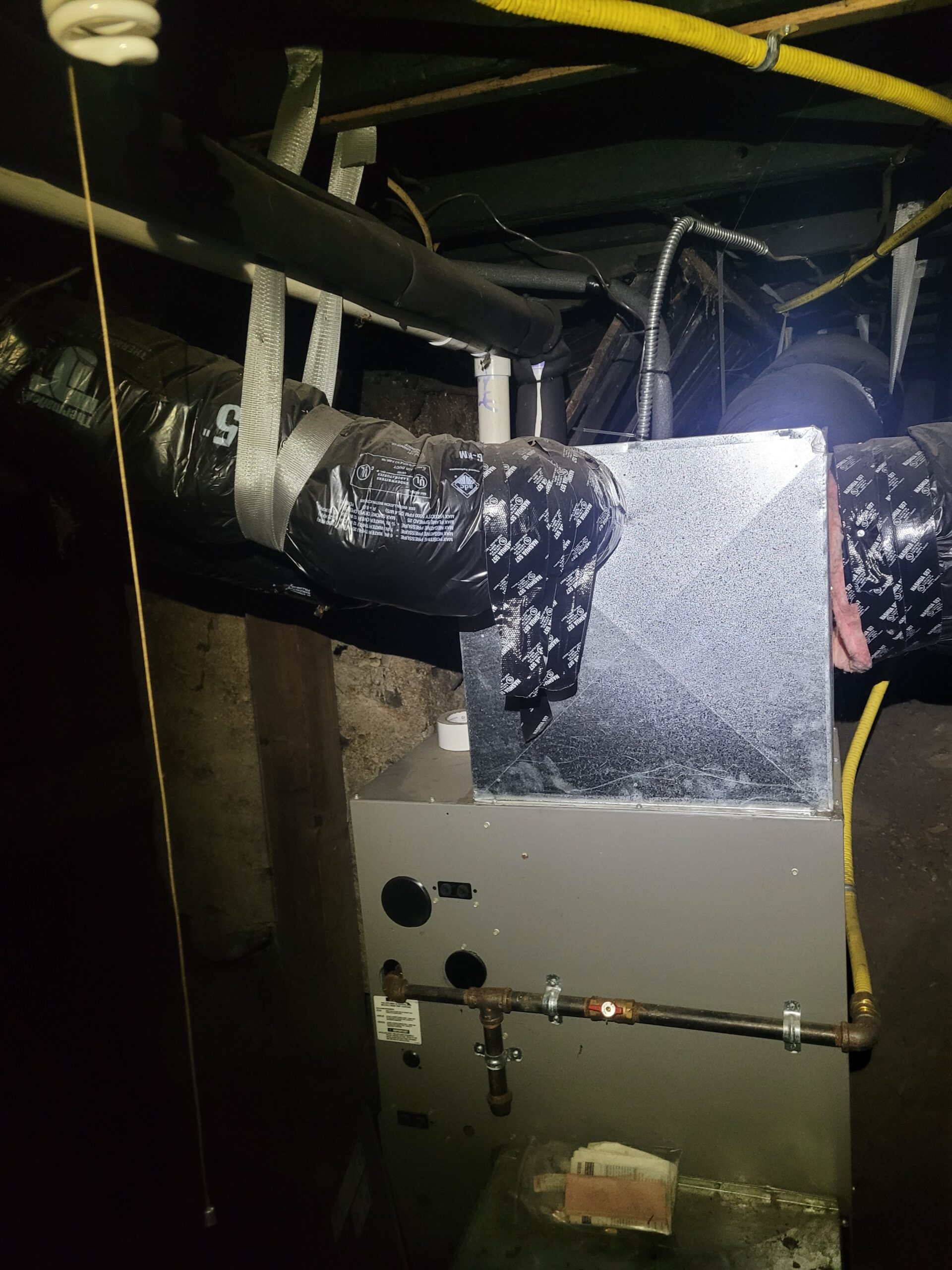
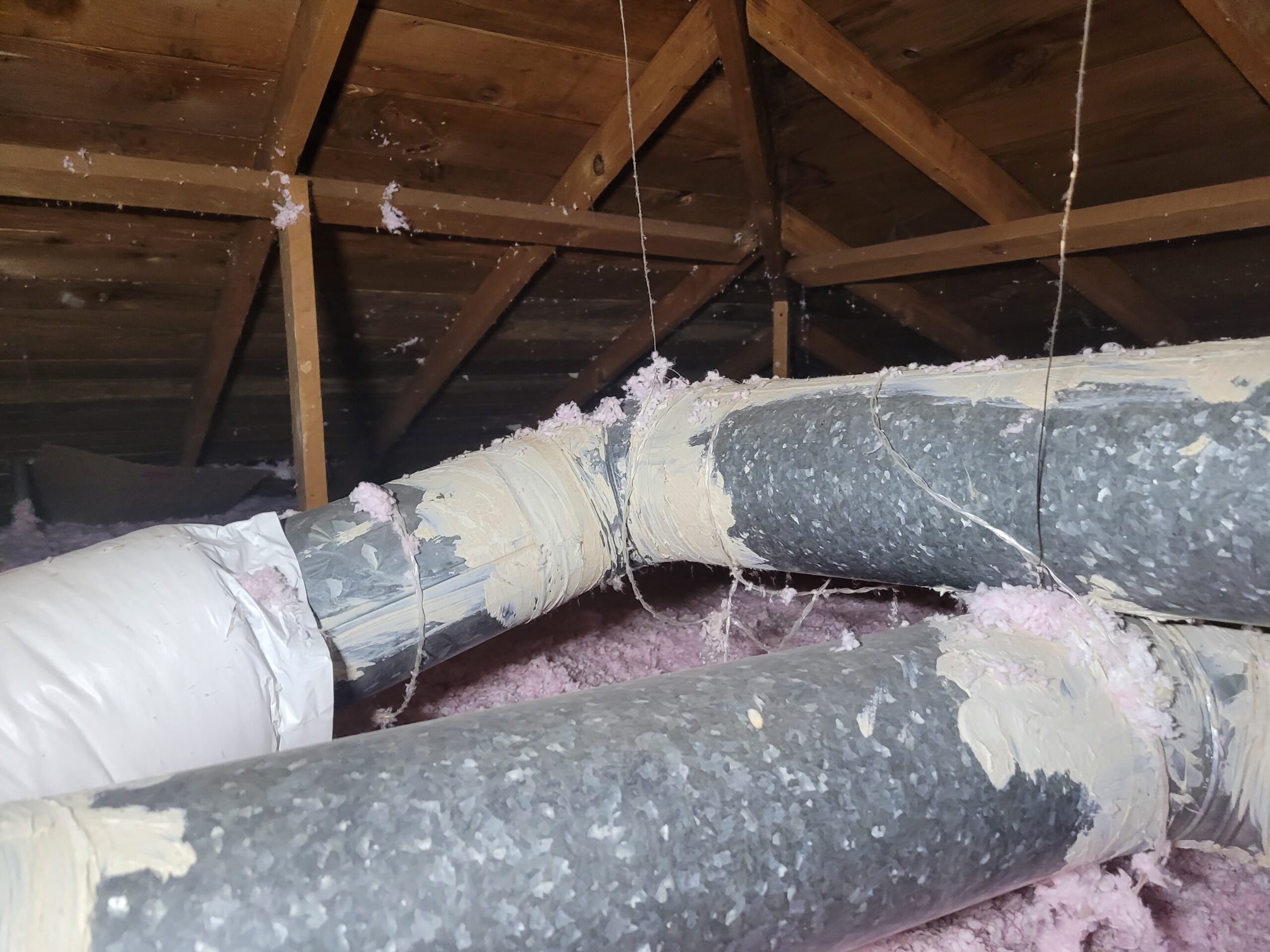
Ductwork deserves the same scrutiny. A heat pump delivers air at a lower supply temperature than a furnace does — think warm rather than hot. That is normal and it heats the house perfectly well, but it means the system moves more air to deliver the same heat, and undersized, leaky, or poorly insulated ducts show up in a way they never did before. Crawlspace and attic runs in older Portland-area homes are where we find most of the problems. Sealing and insulating what is already there is often cheaper than upsizing equipment to overcome it, and it is part of what we look at during HVAC maintenance.
"He's down to earth and he always makes sure whatever our system needs is a conversation not just a take it or leave it. When he comes out he always leaves making sure our home is comfortable."
See our profileThe Portland Metro Is Good Heat Pump Country
Setting the equipment aside for a moment, our climate happens to suit this technology unusually well. Winters here are long, damp, and mild rather than brutally cold, which keeps a heat pump operating in its efficient band for most of the heating season instead of hammering away at design conditions. Summers have gone the other direction — the last several have made air conditioning a necessity in houses that never had it. One system that covers both ends of the year is a genuinely practical answer to that, not just a sales angle.
The trade-off worth thinking through is running cost, and that depends on your electricity rate versus your gas rate, which is a real calculation rather than a slogan. We walk through it honestly in our breakdown of electric vs. gas heating systems. If you already have a newer gas furnace in good condition, keeping it as backup and adding a heat pump for the mild months is frequently the smartest money — see our heating services for how those pieces fit together.
"He was able to diagnose our failed motor and capacitor, and was able to locate the parts and complete the repair within a few hours. I have used him twice now both times great service."
See our profileComparing Your Realistic Options
Ducted Heat Pump
An outdoor unit paired with an indoor air handler that feeds your existing ductwork. One thermostat, whole-house heating and cooling, and the registers stay exactly where they are. This is the natural replacement when an aging furnace and a separate air conditioner both reach the end of their lives around the same time, which happens more often than you would expect.
The main prerequisite is duct capacity and condition. Because supply air is cooler than furnace air, the system needs to move more of it, so undersized or leaky runs get exposed. We check that before quoting rather than after.
Ductless Mini-Split
Wall-mounted indoor heads connected to an outdoor unit by a small refrigerant line set. No ducts required, and each head runs as an independent zone, so you can condition the rooms you actually use instead of the whole house. Installation is far less invasive than adding ductwork to a home that never had it.
Best fit for homes with no ducts, additions and converted garages, ADUs, and that one upstairs room that has been ten degrees off from the rest of the house for as long as you have owned it. The visible indoor head is the trade-off most people weigh.
Dual Fuel (Hybrid)
A heat pump paired with a gas furnace, with controls that switch between them at a set outdoor temperature. The heat pump handles the mild majority of the heating season; the furnace takes the coldest nights. You get heat pump efficiency most of the time and furnace output when it counts.
This is often the best value if your furnace is relatively new and in good shape — you are adding capability rather than throwing away a working appliance. The switchover point can be tuned to your actual utility rates once the system is running.
Gas Furnace + Air Conditioner
The conventional pairing, and still a legitimate choice. Furnaces deliver hot supply air that feels immediately warm, they are unaffected by outdoor temperature, and installed cost is usually lower than a comparable heat pump system. If your gas rates are favorable and your ductwork is marginal, the math can land here.
The downsides are two appliances to maintain and replace on separate schedules, and no efficiency upside beyond the fuel you burn. If you go this route, keep up with combustion safety checks — our post on the dangers of a cracked heat exchanger explains why that is not optional. We also handle AC repair on the cooling side.
Electric Furnace or Baseboard
Straight electric resistance heat converts essentially all the electricity it draws into heat, which sounds efficient until you compare it to a heat pump moving three times that much heat for the same power. If you are currently heating with electric resistance, a heat pump is usually the single largest change you can make to a winter power bill.
Resistance heat still has a role as backup for the coldest hours, where its simplicity and reliability matter more than its running cost. As a primary heat source in this climate, it is hard to justify anymore.
What About Backup Heat?
Nearly every heat pump installation includes some form of supplemental heat for the small number of hours each winter that fall below the system's design point, or for recovery after a deep setback. That is either electric elements in the air handler or an existing gas furnace in a dual fuel setup.
What matters is that backup is configured to come on when it is genuinely needed and not before. Poorly set controls that run strip heat all winter are the single most common reason people conclude their heat pump is expensive to operate. If yours seems to be doing that, give us a call before your next bill.
What Happens After You Call Us
No high-pressure sales appointment, no financing pitch before we have looked at your house. Here is the actual sequence.
Phone Consultation
We start on the phone so we understand the house, the current system, and what is actually bothering you before anyone drives out.
Free Onsite Diagnostic
Robert comes out, inspects the existing equipment, ductwork, and electrical service, and checks what your home can actually support.
Load Calculation
Room-by-room heating and cooling loads, not a square-footage estimate. This is what determines the correct equipment size.
Options in Writing
You get real choices with transparent pricing, including the option to buy your own equipment if that saves you money.
Install & Commission
Charge weighed in, airflow measured, controls configured, and the system verified under load before we call it finished.
Follow-Up
We walk you through filter changes and settings, and we stay reachable. Certain repairs carry a 30-day guarantee.
Heat Pump Questions We Get Every Fall
Yes, provided it was sized for your house and you have backup heat configured for the extremes. Our winter design temperatures sit well within the operating range of current cold-climate equipment. The nights that push past that are few enough each year that supplemental heat covers them without dominating your bill.
Because it is, and that is by design. A heat pump delivers a larger volume of moderately warm air over longer run times, where a furnace delivers short blasts of hot air. The room reaches the same temperature with fewer swings — but if you are used to standing over a register and feeling heat, the first winter takes some adjustment. Nothing is wrong.
That is a normal defrost cycle. In cold damp weather the outdoor coil accumulates frost, so the system briefly reverses to melt it off, which produces visible steam. It should last a few minutes and then return to heating. A unit that ices over and stays iced, or defrosts constantly, is a different situation and worth having looked at.
Usually not. Most existing duct systems can carry a heat pump, though sealing leaks and insulating crawlspace or attic runs often makes a bigger comfort difference than any equipment upgrade would. We assess the ducts during the onsite visit and tell you plainly whether they need work, modification, or nothing at all.
There are typically utility and state incentives for qualifying high-efficiency heat pumps, and federal tax credits have applied to certain equipment as well. Amounts, eligibility, and program availability change from year to year, so we will not quote you a number we cannot stand behind. Ask us during your estimate and we will point you to what is currently open and which models qualify.
If it is reasonably new and passes a safety inspection, keeping it as dual fuel backup is often the best value on the table. You add efficient heating and whole-house cooling without scrapping a working appliance. If it is aging, has heat exchanger concerns, or is already unreliable, replacing the whole system at once usually costs less than doing it in two separate projects.
Robert was one of the HVAC contractors who gave me an estimate for my furnace replacement. I submitted a request on the website Sunday morning, and he came by to check things out that same afternoon. He was knowledgeable, courteous, and offered very competitive prices. I'd gladly recommend Talon Mechanical to anyone needing help with their HVAC equipment.
What You Get With Talon Mechanical
Free Onsite Diagnostic
We come look at the actual house before recommending anything. No charge for the visit and no obligation attached to it.
30-Day Repair Guarantee
Certain repairs carry a 30-day guarantee. If what we fixed does not hold, we come back and make it right.
Owner-Operated
Robert runs the company and does the work. The person who quotes your job is the person standing in your crawlspace.
Transparent Pricing
You see the numbers before work starts, along with what each option does and does not include. No surprises on the invoice.
You Choose the Equipment
We lean toward Goodman for reliability and the 10-year warranty, but we are not locked to a brand and earn nothing on the badge. Supply your own if you prefer.
5.0 Stars on Google
Nine years of work across the greater Portland metro, with a 5.0-star rating and a steady stream of neighbor-to-neighbor referrals.
Related Services
Heat Installation
Heat pumps, ductless mini-splits, furnaces, and dual fuel systems sized and installed for your specific home.
Learn MoreHeat Repair
Diagnostics and repair for heat pumps, furnaces, and mini-splits — including defrost, backup heat, and control problems.
Learn MoreHVAC Maintenance
Seasonal service that keeps a year-round system running efficiently, plus duct and airflow checks while we are there.
Learn MoreAreas We Serve
Let's Figure Out What Your Home Needs
Fall is the right time to sort this out — before the first cold snap, while schedules are open and equipment is available. We will tell you honestly whether a heat pump makes sense for your house or whether you are better off with something else.
Start With a Call
A short phone conversation about your home and your current system, at no cost.
Free Onsite Diagnostic
We inspect the equipment, ducts, and electrical service and run the load numbers.
Clear Options, No Pressure
Transparent pricing on real alternatives. You decide on your own timeline.