
The Portland metro AC and cooling guide: what to check, what to fix, and when to replace
On this page · 8 sections
When a heat wave settles over the Portland metro, the calls start the same way: the house is hot, the AC is either silent or blowing warm air, and somebody has already been told they need a whole new system. Sometimes that's true. Far more often, the problem is one part, one breaker, or a refrigerant charge that has drifted low, and the system has years of cooling left in it.
This guide walks through how we think about air conditioning in homes from Portland and Gresham to Beaverton, Hillsboro, and Lake Oswego: what you can check yourself before you pick up the phone, how to tell a repair from a replacement, and what your options are if your house never had cooling in the first place.
The short answer
Bottom Line Up Front
If your AC stopped cooling, start with a diagnosis: most problems are electrical or a low refrigerant charge, and both are repairs. If the system runs on R-22, keeps leaking, and the coil is corroding, or your home never had cooling, that's when a replacement or a new install makes sense.
A failed capacitor, a tripped or undersized breaker, a clogged coil, or a slow leak can all make a working system look dead. Replacement is the right answer for some homes, but it should be the conclusion of a real diagnosis, not the opening line of a sales pitch.
wrong, we make it right free
for emergencies
equipment we prefer
The rest of this post is the questions behind that answer, plus a decision matrix at the end that most homeowners can work through in a couple of minutes.
Question 1: Is it really the whole system, or one failed part?
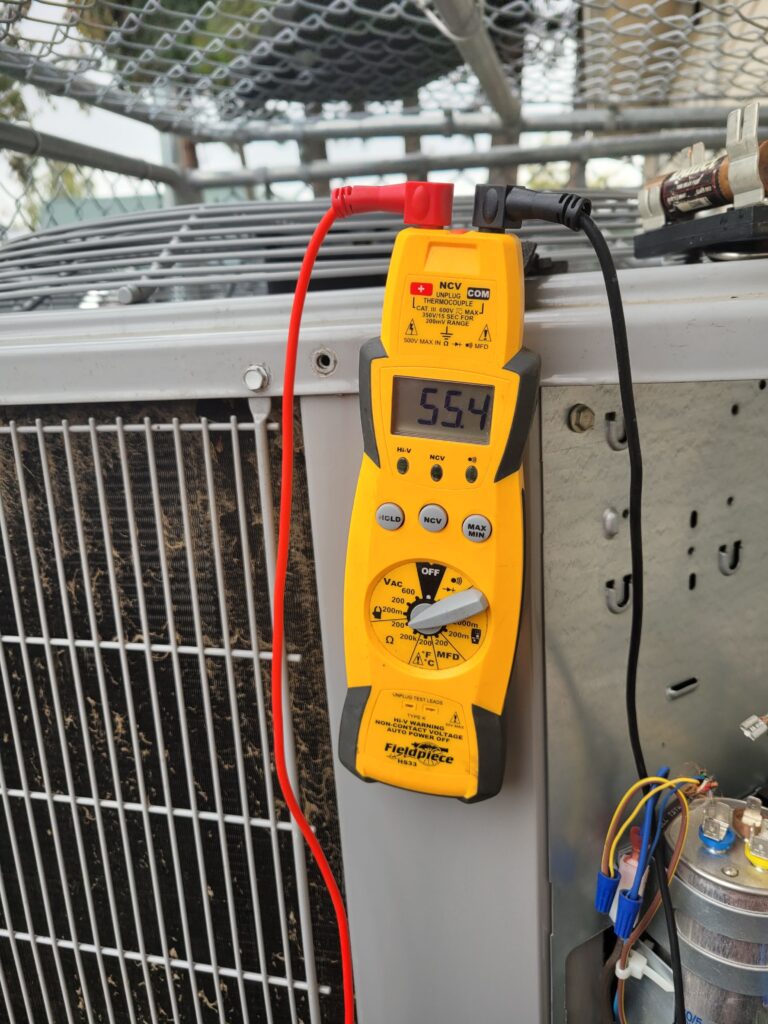
Most cooling problems we diagnose come down to two families of trouble: electrical, or undercharged. On the electrical side, that means a weak capacitor, a worn contactor, a loose wire, or a breaker that trips. On the refrigerant side, it means the system is low on charge, which almost always means there's a leak somewhere that needs finding. Neither one, on its own, means the system is finished.
That's why we start by talking things over on the phone: whether the outdoor fan is spinning, what the breaker box looks like, what the thermostat is doing. Sometimes that conversation tells us whether we even need to come out. When we do, the goal of an AC repair visit is to test each component, find the actual failure, and fix that, not to guess and start swapping parts.
Repair vs. replace at a glance
Each row is a symptom or situation homeowners describe to us. The highlighted column is the one that usually makes more sense when that row is what's driving your decision.
| Situation | Lean Repair | Lean Replace or Add |
|---|---|---|
| Outdoor unit won't start | Often a capacitor, contactor, or wiring | Rarely the whole system |
| Runs but blows warm air | Often low charge; find the leak | Repeated leaks on an aging coil |
| Breaker keeps tripping | Check breaker size and wiring first | Not a reason on its own |
| Coil and filter | Dirty but intact: clean it | Corroded coil and cabinet |
| Refrigerant | R-410A or newer, one fixable leak | R-22 that keeps losing charge |
| Home has no cooling | Nothing to repair | Retrofit central air or go ductless |
| Someone condemned it fast | Get a second diagnosis | Only after the fault is shown |
Look at your breaker panel for a tripped AC or condenser breaker, and step outside to see whether the fan on top of the outdoor unit is turning. Check the thermostat batteries, too. Note what you find. Those three details help us figure out over the phone whether it's something simple or something that needs a technician on site.
Question 2: How old is it, and what refrigerant does it use?
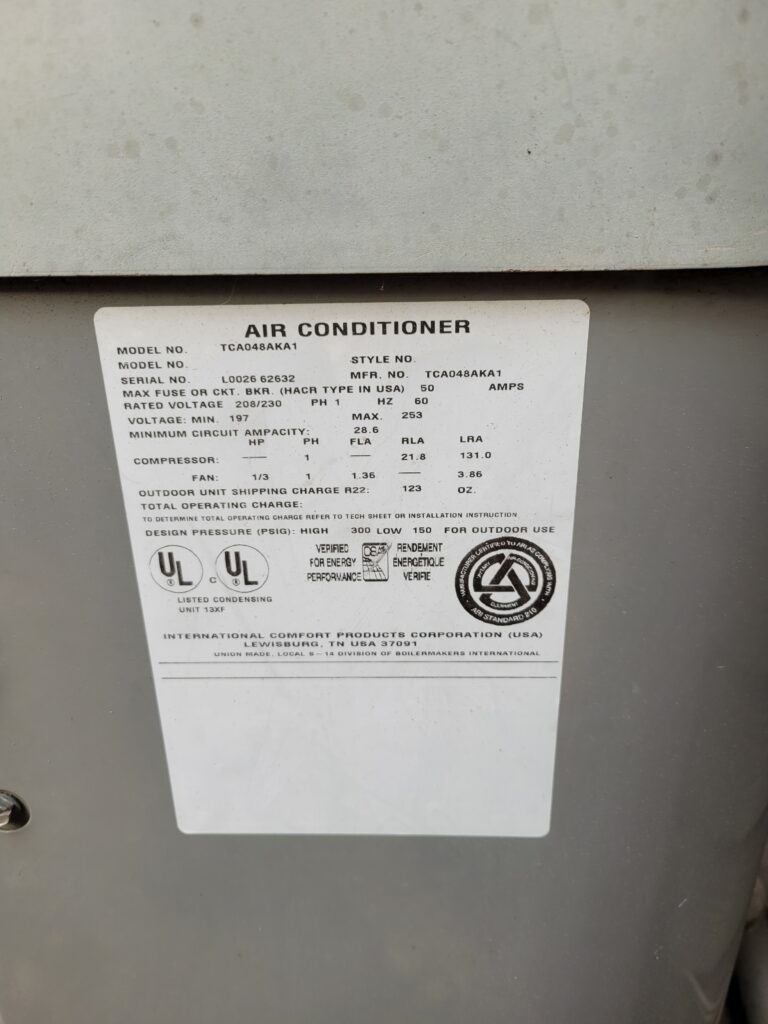
The data plate on the outdoor unit tells us the model, the build date, and the refrigerant. That last one matters a lot. Older systems that run on R-22 use a refrigerant that has been phased out, so recharging them gets more expensive over time. An R-22 system with one small, fixable leak can still be worth repairing; we've recharged R-22 systems that kept running and saved the homeowner real money. An R-22 system that keeps losing charge, on a coil that's corroding, is a different conversation.
Age alone isn't a verdict. We've walked into homes where an older system was condemned, found the real fault, and got it running safely again. If you're weighing whether yours has reached the end, our post on when to replace your AC goes deeper on the warning signs.
Question 3: Does your house have cooling at all?
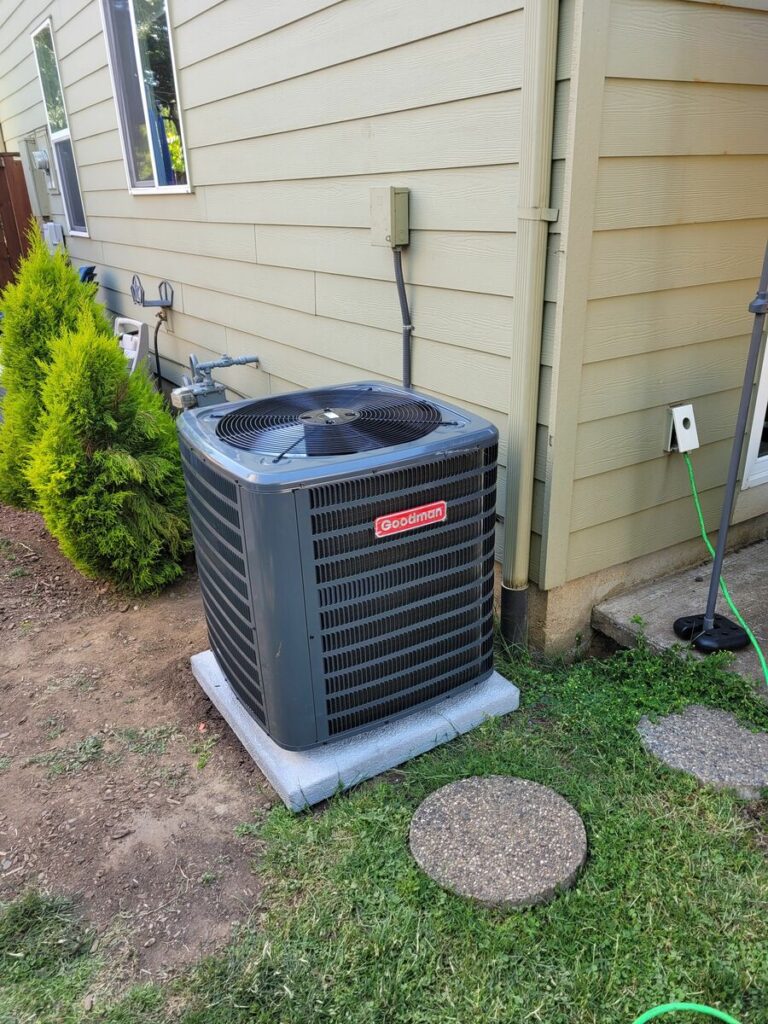
Plenty of Portland-area homes were built with a furnace and ductwork but no air conditioning. If that's your house, you may not need a whole new system. We've retrofitted homes like this by adding the outdoor unit and the coil, then charging the system, so the existing ducts carry cool air as well as heat. One neighbor had lived in their house for years without cooling, and the first hot day after the install made the whole job worth it.
For spaces the ducts don't reach, like a finished attic or an upstairs room that always runs hot, a ductless mini-split can add heating and cooling to just that space. Both options fall under our AC replacement and installation work.
Signs it's a repair
The system is sound and one thing failed. Find it, fix it, keep cooling.
What we look for
- The outdoor unit hums or won't start, and the system was cooling fine last week.
- A breaker trips, and nobody has checked whether it's sized right for the equipment.
- The filter or outdoor coil is visibly clogged with dirt, lint, or leaves.
- It's the first time the system has needed refrigerant, and the leak can be found.
Signs it's time to replace or add
The system is failing as a whole, or there's no cooling to fix.
What changes the answer
- The system runs on R-22 and has needed refrigerant more than once.
- Rust and corrosion are spreading across the coil and the cabinet floor.
- Different parts keep failing, one visit after another.
- The house has a furnace and ducts but has never had air conditioning.
Question 4: Has the system been maintained?
A lot of "my AC can't keep up" calls trace back to a clogged filter or an outdoor coil packed with dirt, lint, and leaves. Air can't move through it, the system runs longer and harder, and on the hottest afternoons it falls behind. That's not a replacement problem. It's a cleaning problem, and it's exactly what HVAC maintenance is for.
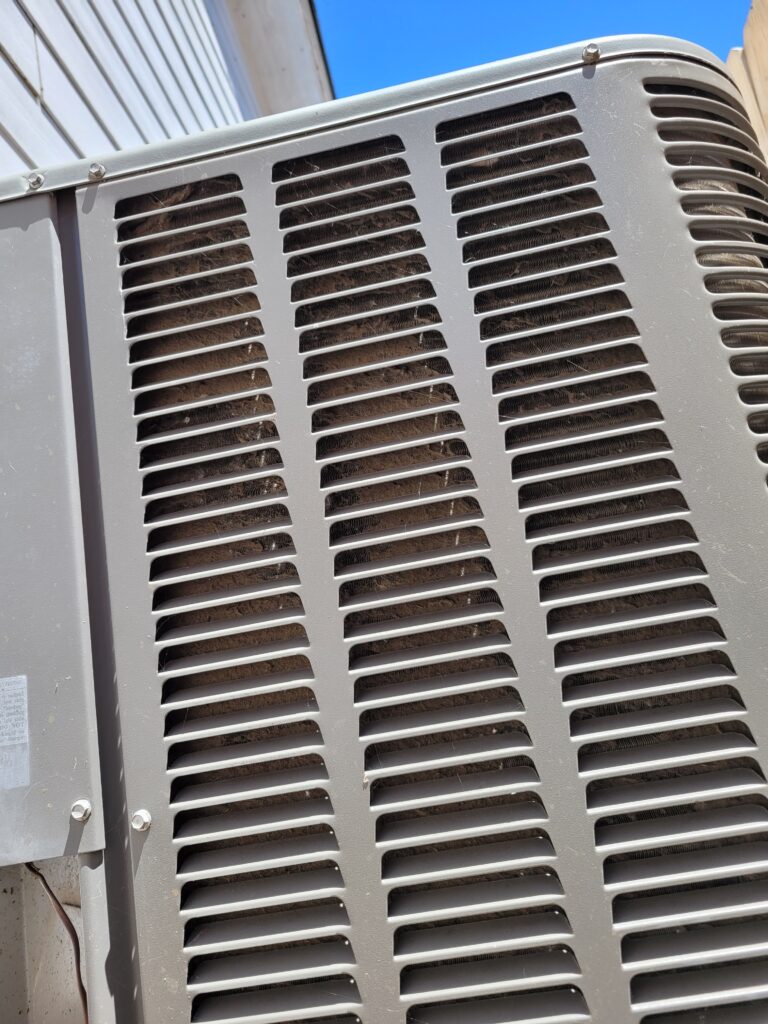
If you want to get ahead of next summer, our pre-summer AC tune-up checklist covers what to look at, and our post on wildfire smoke and your HVAC covers filters during smoky stretches.
Many companies send a salesperson, and the easiest thing to sell on a hot day is a new system. If someone tells you replacing everything is your only option, without showing you what failed and why, get another opinion. Get multiple quotes. Listen for sincerity, and if the explanation sounds like a story, trust your gut.
“If they say replacing the whole system is your only option, don’t go with them. Get multiple quotes. A lot of customers want to know where the money’s going, and they deserve an answer.”— Talon Mechanical
Our post on getting a second opinion before HVAC replacement walks through what to ask before you sign anything.
The decision matrix
Find the rows that match your situation. Most homes match more than one; the column that wins most of your rows is usually the right direction.
| If your AC… | Repair | Replace or Add |
|---|---|---|
| stopped after a breaker tripped | Diagnose first | Premature |
| runs but blows warm air | Find the leak | If leaks repeat |
| has a dirty coil and filter | Clean it | Overkill |
| runs on R-22 and needs charge again | Stopgap | Worth pricing |
| has a corroded, leaking coil | Case by case | Often |
| never reaches the attic room | Check airflow | Consider ductless |
| doesn't exist (furnace only) | Nothing to fix | Retrofit |
| was condemned in one short visit | Get a second look | Not yet |
The bottom line
Most air conditioners that quit on a hot Portland afternoon need a diagnosis and a repair, not a new system. Replacement makes sense when the system is old, on R-22, leaking again and again, or when the house never had cooling at all. Either way, you should know exactly what failed and where your money is going before any work starts.
We work across Portland, Gresham, Beaverton, Hillsboro, Lake Oswego, Tualatin, Westland, and West Linn, and you can call us any time if your AC fails at a bad time. Every repair comes with our 30-day guarantee: if we fixed it incorrectly, we come back and make it right at no charge. Call (503) 334-9584 or use our emergency HVAC service when it can't wait.