A comprehensive guide to AC repair: what to check, what to call about, and what a fix should look like
On this page · 9 sections
When an air conditioner quits on a hot Portland afternoon, the first thought is usually the worst one: the whole system is dead and it is going to cost a fortune. Most of the time, it isn't. A lot of cooling problems come down to something small and specific — a tripped breaker, a dead thermostat battery, a clogged filter, a failed electrical part, or a system that is low on refrigerant because of one leak in one spot.
This guide walks through AC troubleshooting the way we do it ourselves. It starts with the things you can safely check from the hallway and the side yard, moves on to what a technician actually tests once the panels come off, and ends with how to tell a repair from a replacement. Many of our own calls start exactly this way: we talk through the fan, the breaker box, and the thermostat over the phone to work out whether anyone even needs to come out.
The short answer
Bottom Line Up Front
Check the thermostat, the breaker, and the filter, then look at the outdoor unit. If those are fine and the AC still blows warm, hums without starting, freezes up, or trips the breaker again, it's a technician job, and most of those calls end in a repair, not a new system.
Air conditioners rarely fail all at once. The usual culprits are electrical parts, refrigerant leaks, and airflow problems, and each one can be found and fixed on its own. The trick is doing the safe checks yourself, knowing where to stop, and making sure whoever comes out diagnoses the actual failure before talking about replacement.
If we got it wrong, we fix it free
weekends included
Terms may apply; call for details
The rest of this post breaks those checks down step by step, with a decision matrix at the end that sorts most situations into “check it yourself” or “call a technician” in about a minute.
Step 1: Check the power, the thermostat, and the filter
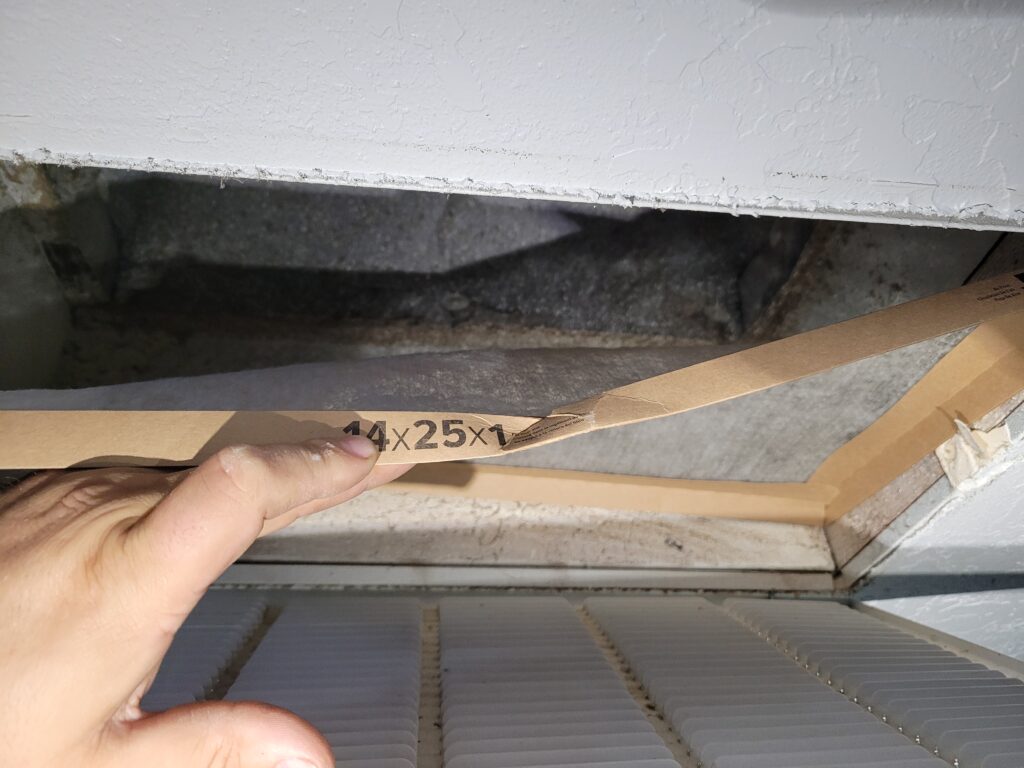
Start inside. Is the thermostat screen lit, set to cool, and set below the room temperature? A blank or flickering screen on a battery-powered thermostat often just means fresh batteries. Next, go to the breaker panel and look for the breakers labeled for the air conditioner, the furnace, or the air handler. Then pull the air filter. A filter caked gray with dust, or one that has buckled out of its frame, chokes airflow so badly that the system can freeze up or run all day without cooling the house.
If the AC breaker has tripped, it is reasonable to reset it one time. If it trips again, leave it off and call. A breaker that keeps tripping is telling you something: a shorted part, a failing compressor, a wiring problem, or a breaker that was sized wrong in the first place. Resetting it over and over can damage the equipment and hides the real problem.
Step 2: Look at the outdoor unit
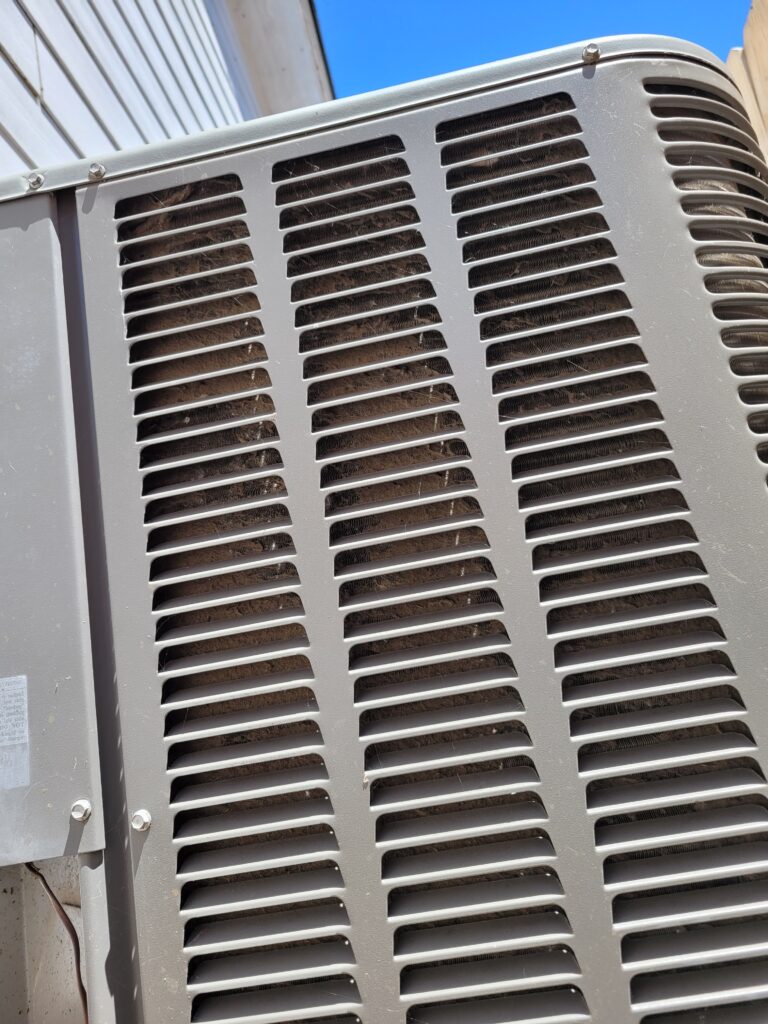
With the thermostat calling for cooling, walk out to the condenser. Is the fan on top spinning? Do you hear the compressor running, or only a hum? Is the unit buried in leaves, grass clippings, or stored junk? Is there ice on the insulated copper line running into the house? If the unit is surrounded by debris, shut it off at the outdoor disconnect before you clear anything away. Do not reach inside the cabinet; there is live electrical equipment and a fan blade in there.
Check it yourself or call a technician
Here is the same ground in one table. Each row is something you might see; the highlighted cell is the better next step when that symptom is the one in front of you.
| What you're seeing | Check It Yourself | Call a Technician |
|---|---|---|
| Thermostat screen is blank | Put in fresh batteries | Still blank with new batteries |
| Air filter is gray or bent | Swap in a new filter | Airflow stays weak after the swap |
| AC breaker has tripped | Reset it one time | It trips again |
| Leaves piled around the unit | Power off, clear the outside | Coil is packed between the fins |
| Outdoor fan isn't spinning | Check the breaker and disconnect | Unit hums but won't start |
| Ice on the copper line | Turn cooling off, let it thaw | Ice comes back after thawing |
| Water around the indoor unit | Shut the system off | Drain or condensate pump problem |
| Everything runs, air blows warm | Nothing safe left to check | Charge, leak, and electrical testing |
Based on what we check on AC repair calls around Gresham and the Portland metro. If you're ever unsure whether a check is safe, skip it and call.
Step 3: Know what a technician actually tests
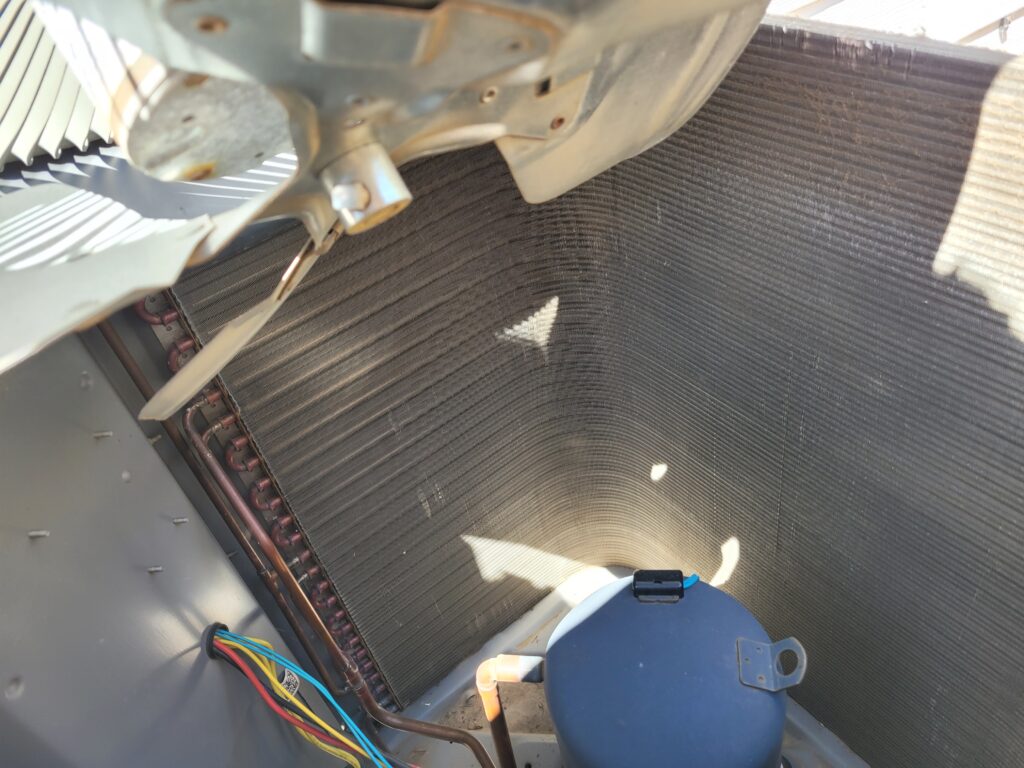
Once the simple checks are done, the problem is usually in one of two places: the electrical side or the refrigerant side. In our experience, a cooling problem is very often isolated to one of those — an electrical fault or a system that is undercharged — rather than a system that has failed as a whole. On the electrical side, a technician tests the capacitor, the contactor, the wiring, and the control board with a meter. A weak capacitor is one of the most common reasons an outdoor unit hums but won't start.
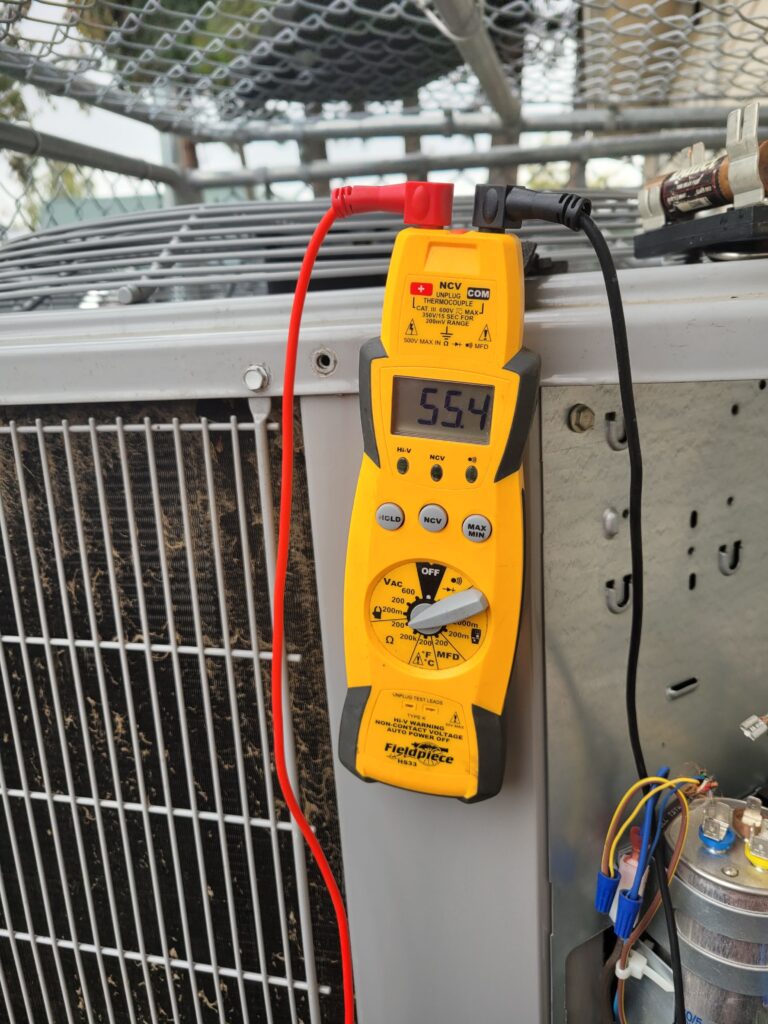
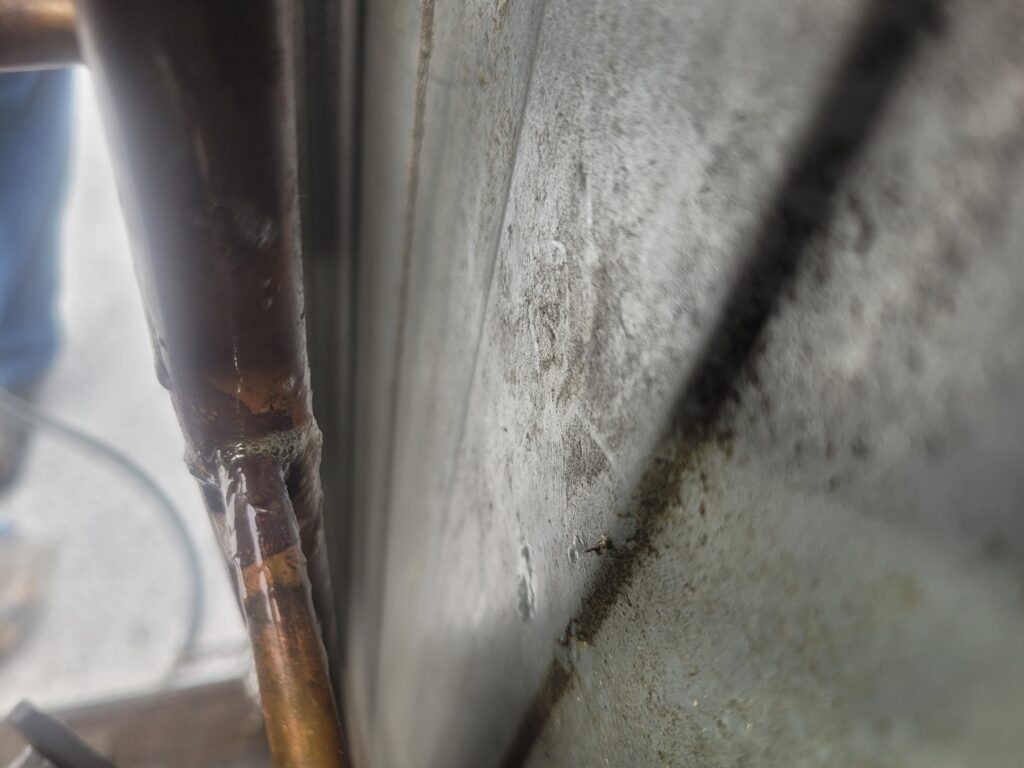
On the refrigerant side, gauges show the system's pressures and temperatures. If the charge is low, the refrigerant went somewhere, and the honest fix is finding the leak before adding more. Topping off a leaking system without looking only guarantees another call. For a closer look at the parts that wear out most, see our post on the most common AC failures.
Signs it's a repair
The system is sound and one thing failed. Find it, fix it, and keep cooling.
What we look for
- The outdoor unit hums but the fan or compressor won't start, which often points to a capacitor or contactor.
- Gauges show a low charge, and the leak turns up at a single joint or fitting.
- The system cooled fine last summer and the problem started suddenly.
- The breaker trips because of a wiring or sizing problem, not because the compressor has failed.
Signs to talk about replacement
The system is wearing out as a whole. A repair may buy time, not years.
What changes the answer
- The system runs on R-22 and needs refrigerant again after an earlier recharge.
- The compressor itself has failed on an older system.
- Leaks keep showing up in different parts of the system.
- The same system has needed repairs summer after summer.
Plenty of companies send a salesperson, not a technician, and the visit ends with a price for a whole new system. If someone tells you replacement is your only option without showing you what failed and why, get another quote. Multiple quotes are always a good idea, and a technician who explains the problem plainly is worth more than a polished pitch. If something feels insincere, trust your gut.
Step 4: Repair, or is it time to replace?
Sometimes replacement really is the better call: a failed compressor on an older system, leaks that keep coming back in different places, or a system that runs on R-22, a refrigerant that is no longer produced and gets harder to come by every year. Our post on when to replace your AC covers those signs in detail, and when a new system makes sense we handle AC replacement and installation too. But the decision should come after a real diagnosis, not before one. If you already have a replacement quote in hand, it is worth reading why we recommend a second opinion before replacing anything.
“A lot of customers want to know where the money is going. The answer should start with what actually broke, not with a brochure for a new system.”— Talon Mechanical
One job shows why. A heat pump had quit, and the home was running on the electric heat in the furnace, which kept tripping the breaker. Two companies had already said the system was old and needed replacing. When we diagnosed it, the real problem was an undersized breaker from earlier electrical work that should never have been done that way. We verified everything, tuned up the electric furnace, and recharged the R-22 in the heat pump, and the homeowner saved at least $400 a month on the heating bill alone.
The decision matrix
If you only use one part of this post, use this table. Find the row that matches what your system is doing and follow the stronger answer. If more than one row fits, the safest choice wins.
| If your AC… | Check It Yourself | Call Us |
|---|---|---|
| has a blank thermostat | Batteries first | If new batteries don't help |
| has a dirty or bent filter | Swap it | Not yet |
| tripped its breaker once | Reset once | If it trips again |
| keeps tripping the breaker | Stop resetting it | Yes |
| has ice on the lines | Shut cooling off | Yes |
| hums but won't start | Leave it off | Yes |
| smells like something is burning | No | Right away |
| runs but blows warm air | Nothing safe to check | Yes |
When an AC problem can't wait
A burning smell, sparking or scorched wiring at the unit, water spreading from the indoor equipment, or a home without cooling during a heat wave with older family members inside are not wait-until-Monday problems. Shut the system off at the thermostat and the breaker, and call (503) 334-9584. You can call us any time, and our emergency HVAC service takes calls on nights, weekends, and holidays.
The bottom line
Good AC troubleshooting works from simple to complex: power, thermostat, and filter first, then the outdoor unit, then a technician's meters and gauges. Most problems that make it past your own checks are still one failed part or one leak, and those are repairs. Replacement belongs at the end of a diagnosis, when the system itself has worn out, not at the start of a sales visit.
If your system still isn't cooling after the checks above, our AC repair service starts with free onsite diagnostics (terms and conditions may apply, so call for details). Every repair carries our 30-day guarantee: if we fixed it incorrectly, we come back and make it right at no charge. And once it is running again, routine HVAC maintenance is the easiest way to keep the next breakdown from happening.