Common AC failures, and how to tell a fix from a replacement
On this page · 9 sections
When an air conditioner quits on a hot afternoon, the first thing most people hear is that the system is old and needs replacing. Sometimes that is true. Far more often, the problem is one worn part, a dirty coil, or a refrigerant charge that has leaked low. In our experience, most cooling problems come down to two things: something electrical, or a system that is undercharged.
This post walks through the failures we find most often on central AC systems across the Portland metro, what each one looks and sounds like from your side, and where the line sits between an honest AC repair and a system that has earned its retirement.
The short answer
Bottom Line Up Front
If the outdoor unit hums but won't start, the coil is dirty, or the charge is low from a leak you can find, repair it. If the compressor has failed, the system runs on R-22 and needs a major repair, or you are on your third repair in a few seasons, it is time to talk about replacement.
Most cooling problems are isolated to the electrical side or a system that is undercharged. Those are repairs. The trick is getting a real diagnosis from someone who tests the parts, instead of a sales pitch that skips straight to a new unit.
we make it right at no charge
for emergencies
the units we like to install
The rest of this post covers the five failures behind most no-cooling calls, a symptom table, and a decision matrix you can run through in about a minute.
Failure 1: The capacitor or contactor gives out
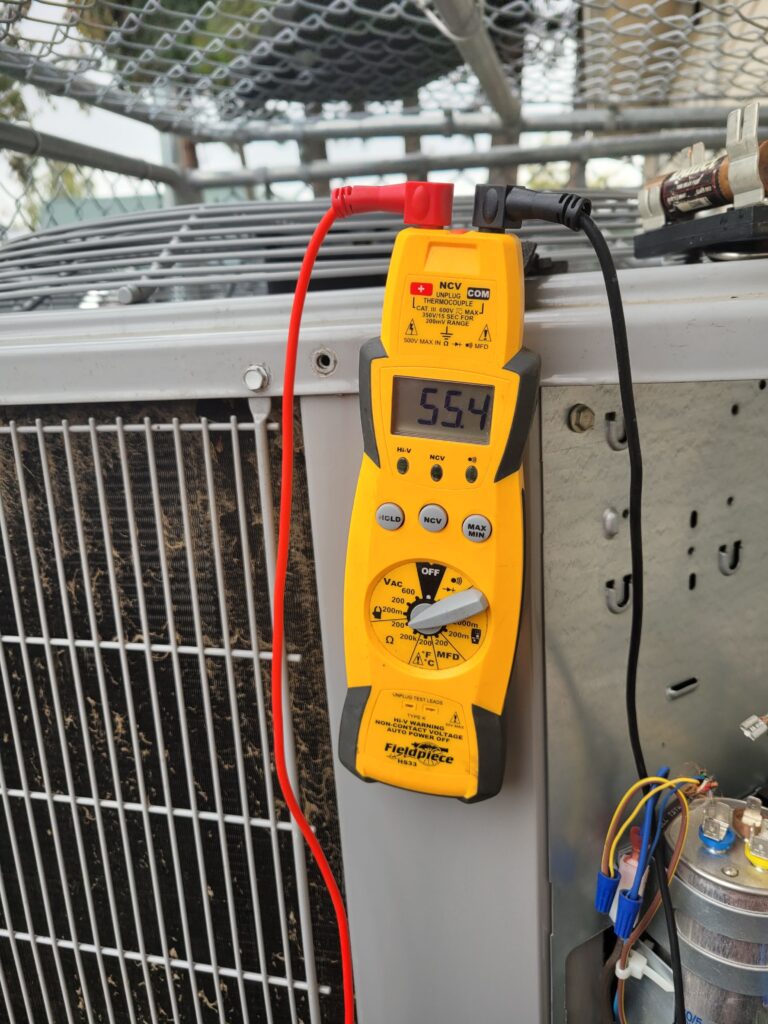
The capacitor gives the compressor and the outdoor fan the jolt they need to start. When it weakens, you get the classic symptom: the outdoor unit hums, the fan sits still or turns slowly, and the air inside never gets cold. The contactor, the switch that sends power to the outdoor unit, wears in a similar way, with pitted contacts that stop making a clean connection. Both are small parts, and both are repairs, not reasons to replace a system.
Failure 2: A dirty condenser coil or a clogged filter
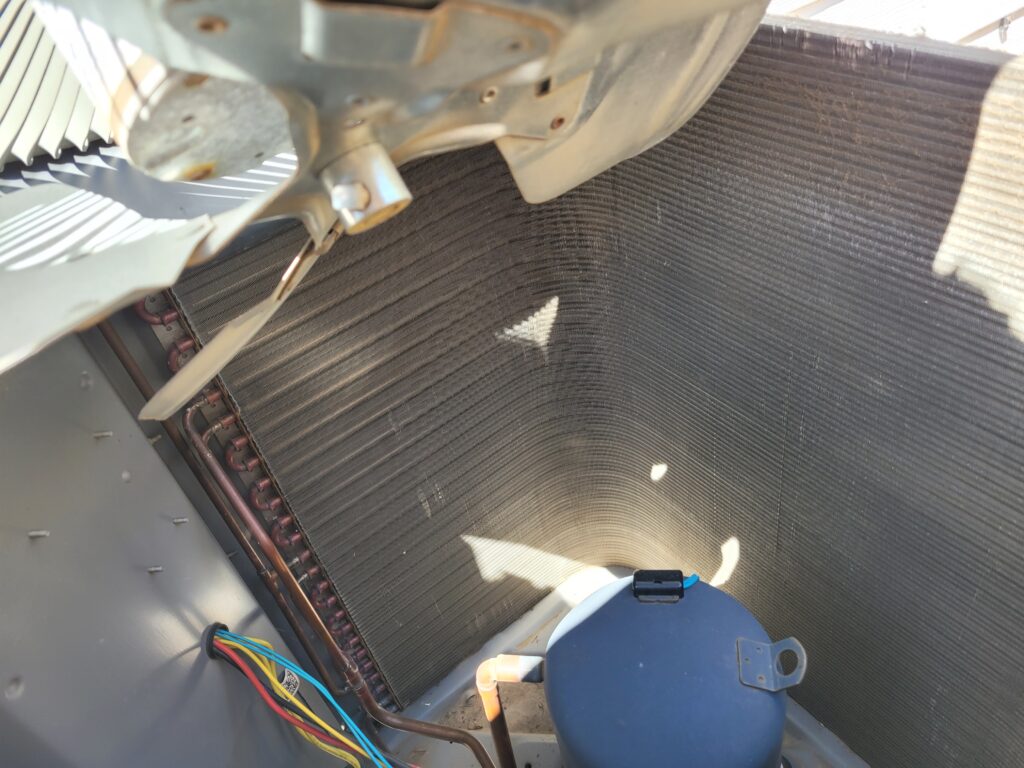
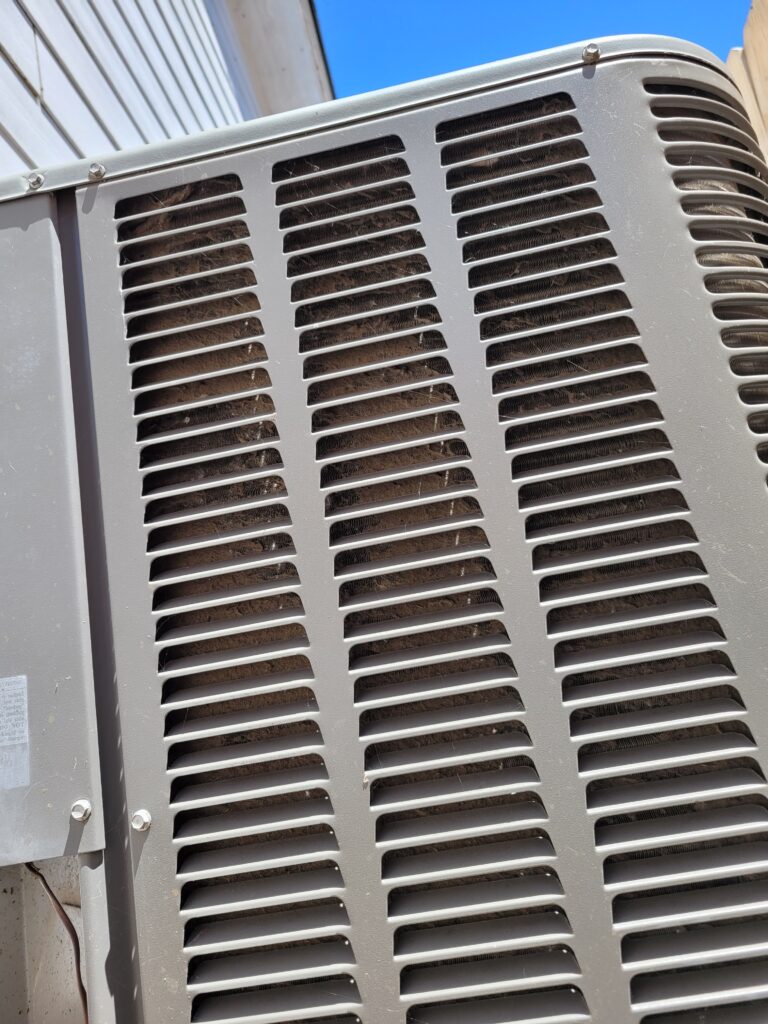
An air conditioner moves heat from inside your house to outside. If the outdoor coil is packed with dirt, lint, and leaves, it cannot shed that heat, so the system runs longer, works harder, and cools less. A clogged return filter does the same thing from the indoor side, starving the evaporator coil of air until it can frost over. Neither one is dramatic, and both quietly wear down the compressor, the most expensive part in the system.
Pull the return filter and hold it up to a light. If you cannot see through it, change it. Then check your breaker panel for a tripped breaker labeled for the AC or the furnace, and look at whether the outdoor fan is spinning. When you call, we often walk through these same checks with you over the phone first, so you know whether a visit is even needed.
Failure 3: Low refrigerant from a leak
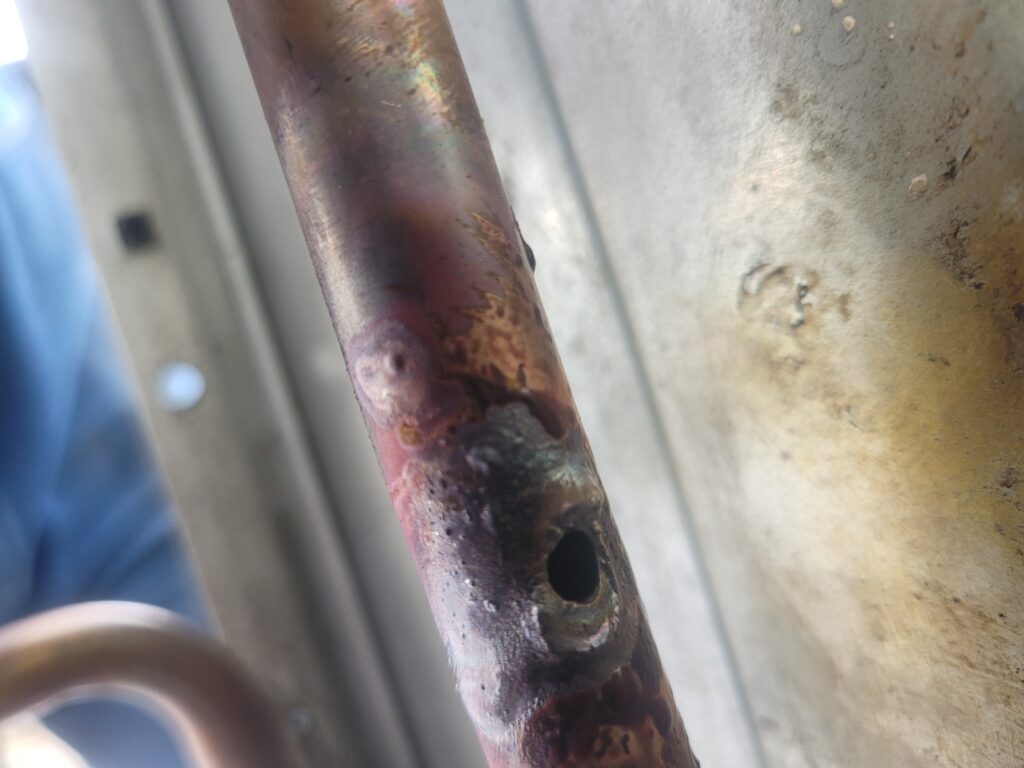
Refrigerant is not fuel. A sealed system should not use it up, so if it is low, it leaked somewhere. Common signs are air that is cool but not cold, ice on the larger copper line at the outdoor unit, and a system that runs and runs without reaching the thermostat setting. Topping it off without finding the leak just means paying for the same refrigerant again next summer. The real repair is locating the leak, fixing it, pulling a proper vacuum, and charging the system back to spec.
Failure 4: A tripped or undersized breaker
A breaker that trips once on a scorching day can be a fluke. A breaker that keeps tripping is telling you something. Sometimes it is a failing motor or compressor drawing too much current. Other times the breaker itself is the wrong size, put in by someone who had no business doing the electrical work. We have walked into homes where two other companies recommended a new system, and the real problem was an undersized breaker. Check the electrical side first, and the expensive answer often goes away.
Failure 5: An aging system on phased-out refrigerant
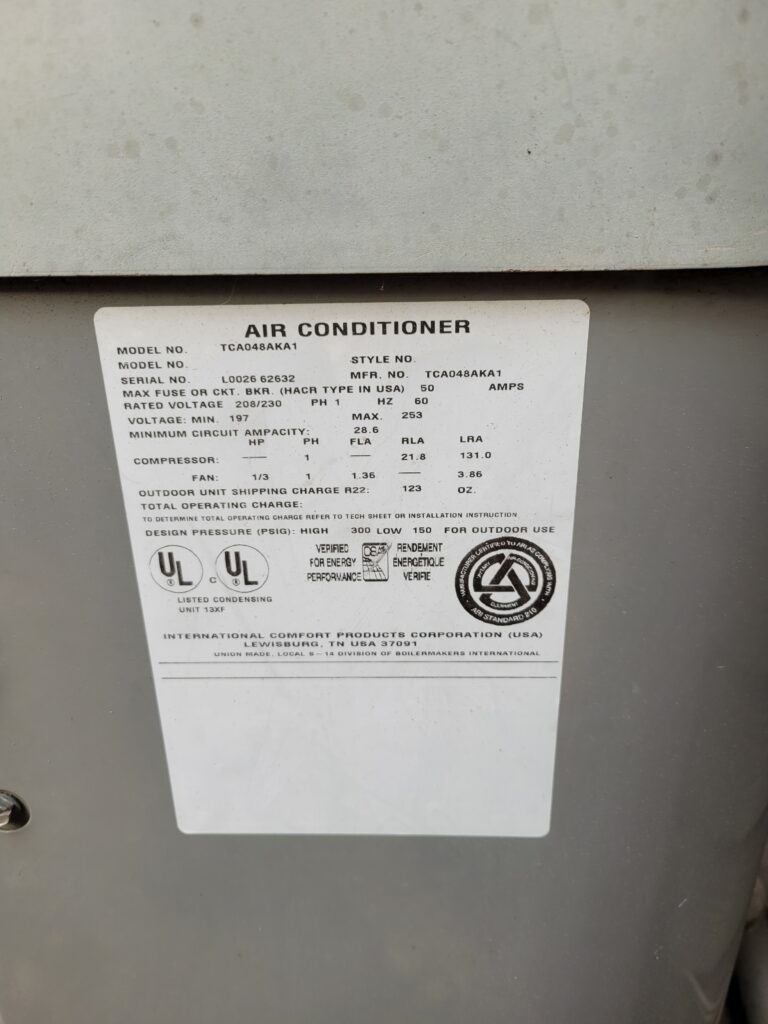
Plenty of older Portland-area systems still run on R-22, a refrigerant that has been phased out and is harder to come by every year. That does not automatically mean replace. We have recharged R-22 systems that had years of service left in them. But when an R-22 system has a major leak, a failed compressor, or a history of repeat repairs, that is the point where replacing the AC becomes the better use of your money.
Symptoms at a glance
Here is the quick version. Each row is something you can notice yourself; the highlighted column is where that symptom usually lands.
| Symptom | Lean Repair | Lean Replace |
|---|---|---|
| Outdoor unit hums, fan won't spin | Weak capacitor or worn contactor | Seized compressor |
| Air is cool but not cold | Dirty coil, clogged filter, or a findable leak | Repeated leaks in an aging coil |
| Ice on the copper lines | Airflow problem or low charge | Leak that keeps coming back |
| Breaker keeps tripping | Wrong breaker or failing motor | Compressor drawing too much current |
| Refrigerant type | R-410A or newer | R-22 needing a major repair |
| Repair history | First problem in years | Third repair in a few seasons |
Signs it's a repair
The system is sound and one thing broke. Fix it and get back to cooling.
What we look for
- The outdoor unit hums or clicks but the fan won't start, which usually points to a capacitor or contactor.
- The coil is visibly caked with dirt or the filter is clogged, and cooling has slowly dropped off.
- A single leak can be located and repaired, and the system holds pressure afterward.
- A breaker trips, and the cause turns out to be the breaker or wiring, not the compressor.
Signs it's a replacement
The system is failing as a whole. Repairs are buying a season, not years.
What changes the answer
- The compressor itself has failed, not just the parts that start it.
- The system runs on R-22 and needs a major refrigerant repair.
- Refrigerant leaks keep showing up in different places on the same system.
- You are on your third repair in a few seasons and the next one is already on the horizon.
Many larger companies send a salesperson, not a technician, and the visit is built around selling a new unit. If you are told that replacing the whole system is your only option, get another quote. Ask what failed and how they tested it. Listen for sincerity, and if the explanation feels like a story, trust your gut. We wrote more about this in our post on getting a second opinion before replacement.
“If a company tells you replacing the whole system is your only option, keep looking. Most cooling problems come down to something electrical or a system that is undercharged.”— Talon Mechanical
The decision matrix
Find the rows that describe your system. Most systems match more than one, and the right call is whichever column wins most of your rows.
| If your AC… | Repair | Replace |
|---|---|---|
| hums but the outdoor fan won't spin | Yes | Premature |
| is blowing cool, not cold, air | Find the cause first | Not yet |
| has a dirty coil or a clogged filter | Clean it | Overkill |
| trips the breaker over and over | Check the electrical | If it's the compressor |
| runs on R-22 and needs a big repair | Stopgap only | Yes, usually |
| has a failed compressor | No | Yes |
| keeps leaking refrigerant | Money down the drain | Yes |
The bottom line
Most AC failures are a single part, a dirty coil, or a leak that can be found and fixed. Replacement makes sense when the compressor is gone, the system runs on R-22 and needs a major repair, or the repairs keep stacking up. When you are ready for that conversation, our post on when to replace your AC goes deeper, and regular HVAC maintenance is the best way to keep the small failures from turning into big ones.
If you are not sure which side of the line your system is on, that is what a diagnostic visit is for. We offer free onsite diagnostics (terms and conditions may apply, so call (503) 334-9584 for details), we test before we replace anything, and if we fix it incorrectly, our 30-day guarantee means we come back and make it right at no charge. And if it fails at 2 a.m., you can call us any time for emergency HVAC service.