
The Importance of Commercial HVAC
On this page · 8 sections
In a house, a struggling furnace or AC is an uncomfortable week. In a business, it is a closed sign. A store that cannot keep its sales floor cool loses customers by early afternoon. An office that runs cold loses a morning of work to space heaters and complaints. A lab, a kitchen, or a storage room that drifts out of its temperature range can lose product it took months to buy. Commercial heating and cooling is not a comfort feature. It is part of how the building earns its keep.
We came to HVAC through the industrial side of the trade, working on foundry filtration and keeping cold-storage rooms held at temperatures well below zero. That background shapes how we look at a commercial system: as equipment that has to run every day, that tells you a lot before it fails, and that is almost always cheaper to look after than to rescue. Here is what we want business owners and property managers around Portland to know.
The short answer
Bottom Line Up Front
Your heating and cooling is part of how your business runs. Have the equipment serviced on a schedule, fix problems when they are small, and get an honest diagnosis before anyone talks you into a replacement.
Commercial systems run longer hours than home systems, serve more people, and usually sit on a roof where nobody sees them wear out. Most breakdowns start as something small: a loose belt, a loaded filter, a failing sensor, or a slow refrigerant leak. Caught early, they are routine repairs. Ignored, they turn into a closed afternoon.
service after hours
we make it right at no charge
background includes maintaining
The rest of this post covers why commercial systems fail differently than home systems, what a good maintenance visit actually checks, how to spot a system that is being run to failure, and a quick table for deciding whether to schedule service or call today.
Why commercial systems are a different animal
Most small commercial buildings in the metro are heated and cooled by packaged rooftop units: the furnace, the air conditioner, the blower, and the controls all in one cabinet on the roof. That design saves floor space, but it also puts the equipment where nobody sees it. A homeowner notices a dirty outdoor unit every time they take out the trash. A store manager may not know the rooftop unit exists until the building gets warm.
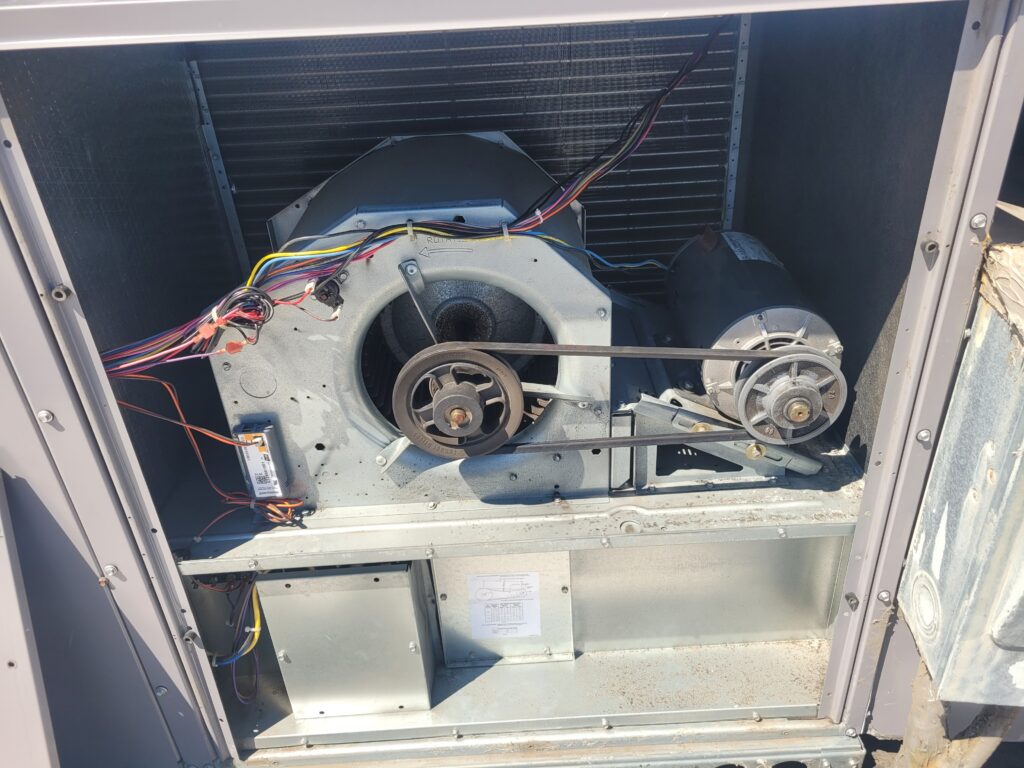
Commercial equipment also works harder. It runs longer hours, it serves more people, and it often has more parts to go wrong: belt-driven blowers, economizers that bring in outside air, multiple stages of cooling, and control boards that talk to a building thermostat. Each of those is a place where a small problem can quietly cost money for months before anyone calls it a breakdown.
Planned service vs. waiting for a breakdown
Every business ends up paying for HVAC service one way or the other. The question is whether you pay on your schedule or the equipment's. Here is how the two approaches compare on the things a business owner actually cares about.
| Factor | Planned Service | Wait for a Breakdown |
|---|---|---|
| When the work happens | On a date you choose | Whenever the unit quits |
| Business disruption | Little to none | Lost hours or a closed day |
| Size of the repair | Small parts caught early | Failures that spread to other parts |
| Energy use | Clean coils and filters, tuned controls | Equipment working harder than it should |
| Service history | Written record to plan from | Fresh diagnosis every time |
| Replacement decision | Planned and budgeted | Made under pressure |
| Equipment already at end of life | Maintenance only buys time | Replacement is coming either way |
Some problems never need a truck. When you call, we will talk through what you are seeing: whether the fan is running, what the thermostat shows, whether a breaker has tripped. Sometimes that conversation is enough to tell whether a visit is even needed.
What a good commercial maintenance visit checks
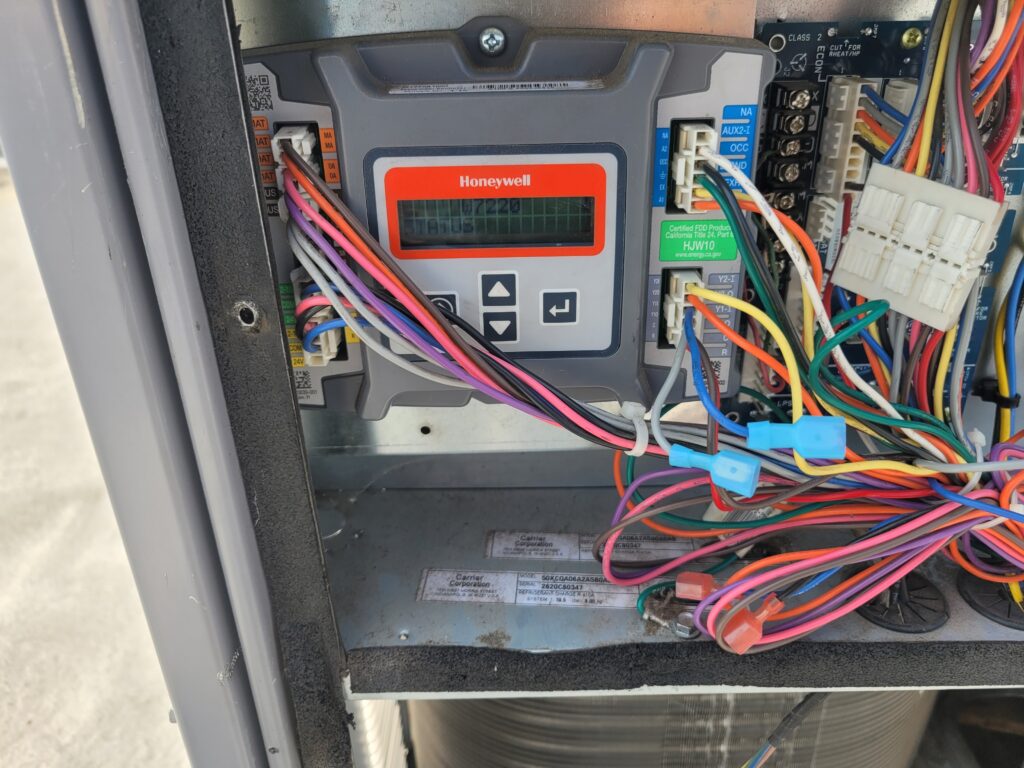
A real maintenance visit is not a filter swap and a sticker. On a rooftop unit, it means opening the cabinet and looking at the parts that wear: filters, blower belts and pulleys, the condenser coil, the burners and ignition, the capacitor and contactors, and the control wiring. It means testing with a meter rather than guessing, and reading refrigerant pressures when the cooling side is in question. Our HVAC maintenance visits follow that approach on homes and businesses alike.
It also means writing things down. A note on the panel or in the service record, such as a loose belt, a code on the control board, or a coil that is starting to load up, turns the next visit into a follow-up instead of a fresh diagnosis. Over a few seasons, that history is what lets you plan a repair or a replacement instead of being surprised by one.
Signs it's being looked after
The system is getting the attention a working building needs.
What you'll see
- Filters are changed on a schedule, not when someone notices dust on the grilles.
- There is a written service record, or notes on the unit, from the last visit.
- Temperatures stay steady across the space, through the whole business day.
- Small repairs, like a belt or a capacitor, get handled before they cause a shutdown.
Signs it's being run to failure
Nobody has opened the cabinet in a while, and the building is starting to show it.
What changes the answer
- Nobody on staff can say when the rooftop unit was last serviced.
- One area runs hot or cold, and staff are bringing in fans or space heaters.
- The unit squeals, rattles, or short-cycles on and off.
- The same problem has been recharged or reset more than once without a clear cause.
When something does break, diagnose it properly
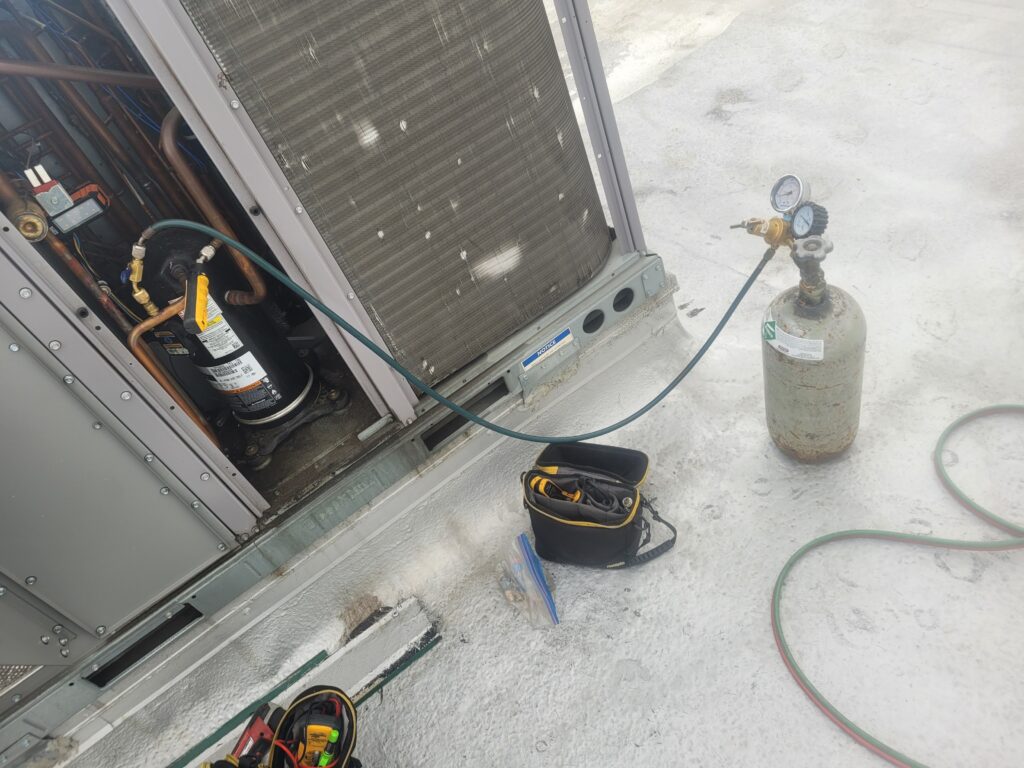
The most expensive commercial HVAC call is the one that ends in a replacement the building did not need. When a unit stops cooling, the cause is often electrical or a low refrigerant charge, and both can be tracked down. A refrigerant leak, for example, can be pressure-tested, found at the exact joint, repaired, and recharged, rather than treated as proof the whole unit is finished.
If a contractor tells you a full system replacement is your only choice, get another opinion before you sign. Get multiple quotes, ask to talk to the technician rather than a salesperson, and pay attention to whether the explanation sounds sincere. If something feels like a story, trust your gut. Our post on getting a second opinion covers what to ask.
“A unit that quits on a Tuesday afternoon usually started telling someone about it months earlier. The job is to listen before it gets loud.”— Talon Mechanical
Upgrades, remodels, and spaces without ductwork
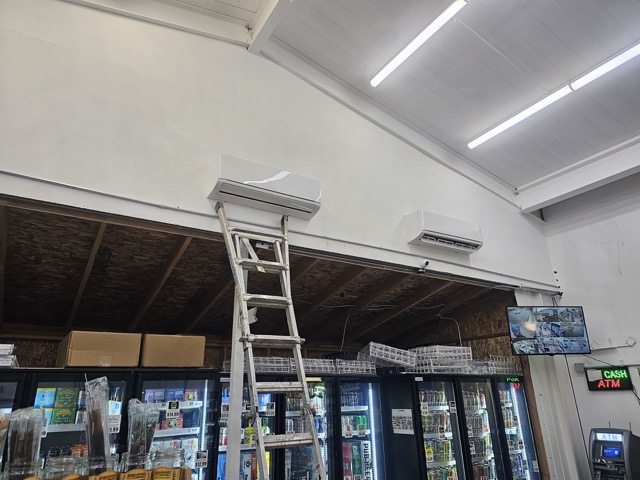
Sometimes the right answer really is new equipment: a unit past its useful life, a tenant change that alters how the space is used, or a remodel that opens up the ceiling. In open retail spaces or additions without ducts, wall-mounted ductless units can heat and cool the room without major disruption to the business. If you are weighing a bigger project, our guide to what to expect during a commercial system upgrade walks through the process, and our post on electric vs. gas heating in commercial buildings covers one of the first choices you will face.
Schedule it or call today?
Read down the left column to what you are seeing in your building, then look at which side has the stronger answer. When something can't wait, you can call any time for emergency HVAC service.
| If your building… | Schedule Maintenance | Call Today |
|---|---|---|
| Hasn't had its rooftop unit serviced in over a year | Yes, book it | Not urgent |
| Has no cooling or no heat during business hours | Too late for that | Yes |
| Has a burning or electrical smell near the equipment | No | Yes, right away |
| Has one zone running warmer or colder than the rest | If it's mild | If it's getting worse |
| Has a unit that squeals, rattles, or cycles on and off | Soon | Before it quits |
| Has visibly dirty filters or grilles | Yes | Overkill |
| Is planning a remodel or tenant change | Plan it in | No rush |
The bottom line
Commercial HVAC matters because the business depends on it, and because the equipment usually sits where nobody is watching. Regular, documented service catches the cheap problems before they become expensive ones, and an honest diagnosis keeps a repairable unit from being replaced. Whether you run a single storefront in Gresham or manage properties from Portland to Tualatin, the goal is the same: equipment that runs on your schedule, not the other way around.
If you are not sure what shape your building's system is in, start with a phone call. We will talk through what you are seeing, tell you whether a visit makes sense, and if we come out, the work is backed by our 30-day guarantee. Learn more about our commercial HVAC service, or send your questions through our contact form.