
What to expect during a commercial HVAC system upgrade
On this page · 7 sections
When a rooftop unit at a store or office starts struggling, the word “upgrade” tends to show up fast — usually in a quote with a big number at the bottom. Sometimes that's the right call. Plenty of times it isn't. A commercial system that won't keep the sales floor cool can be one failed sensor, one leaking joint, or one worn belt away from running well again, and the only way to know is to diagnose it properly before anybody talks about new equipment.
This post walks through what a commercial HVAC upgrade actually looks like from the business owner's side: how the first conversation should go, what gets checked on site, what an upgrade can include short of a full changeout, how the work gets scheduled around your hours, and how to tell an honest recommendation from a sales pitch.
The short answer
Bottom Line Up Front
If testing finds one failed component and the rest of the system checks out, repair or upgrade that part. If the unit is failing on several fronts at once, keeps losing refrigerant after repairs, or simply can't serve the space you have now, plan a full replacement — on your schedule, not in an emergency.
A real upgrade starts with a real diagnosis. The equipment's age alone doesn't tell you much; the readings do. Once you know what's actually wrong, the choice between a targeted fix and new equipment usually becomes clear, and the work can be timed around your business hours instead of interrupting them.
included
made right at no charge
the Portland metro
The rest of this post is the detail behind that answer, and a decision matrix near the end that helps you see which way your own system is leaning.
Step 1: Find out what's actually wrong before talking about new equipment
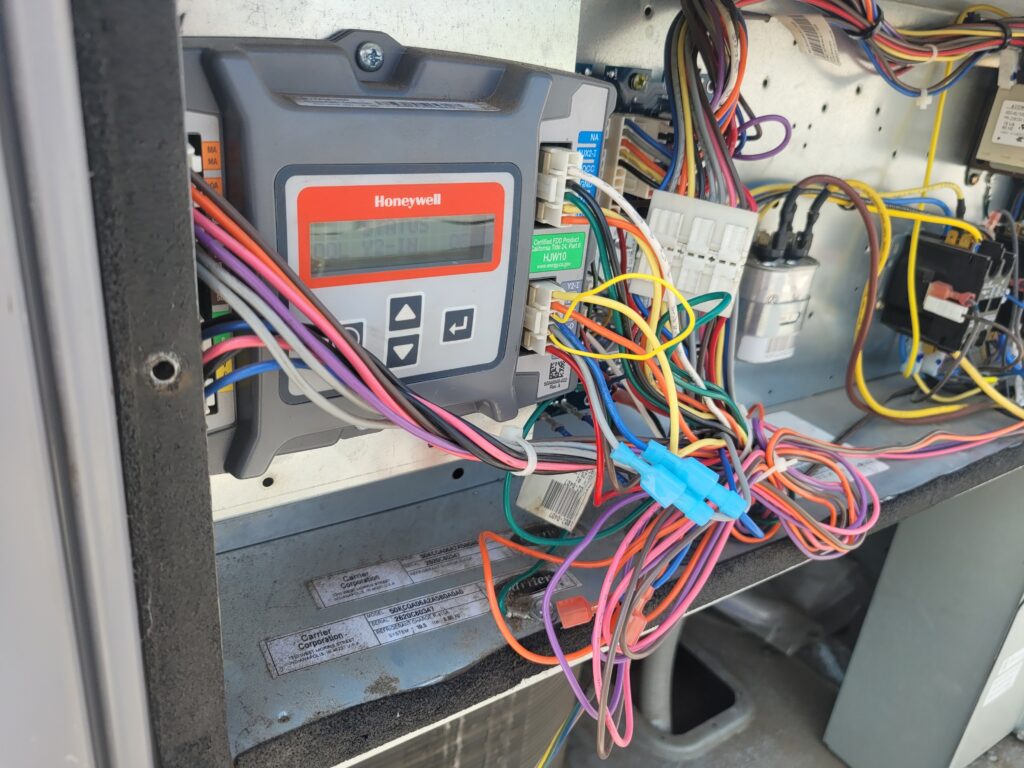
Every good upgrade starts with a diagnosis, not a catalog. We often begin on the phone: what the unit is doing, whether the fan is running, what the breaker panel looks like. Sometimes that conversation alone tells us whether a visit is even needed. When it is, a technician tests the system component by component — the control board, contactors, capacitor, refrigerant pressures, economizer, and blower drive — so the recommendation is based on readings, not on the age printed on the data plate.
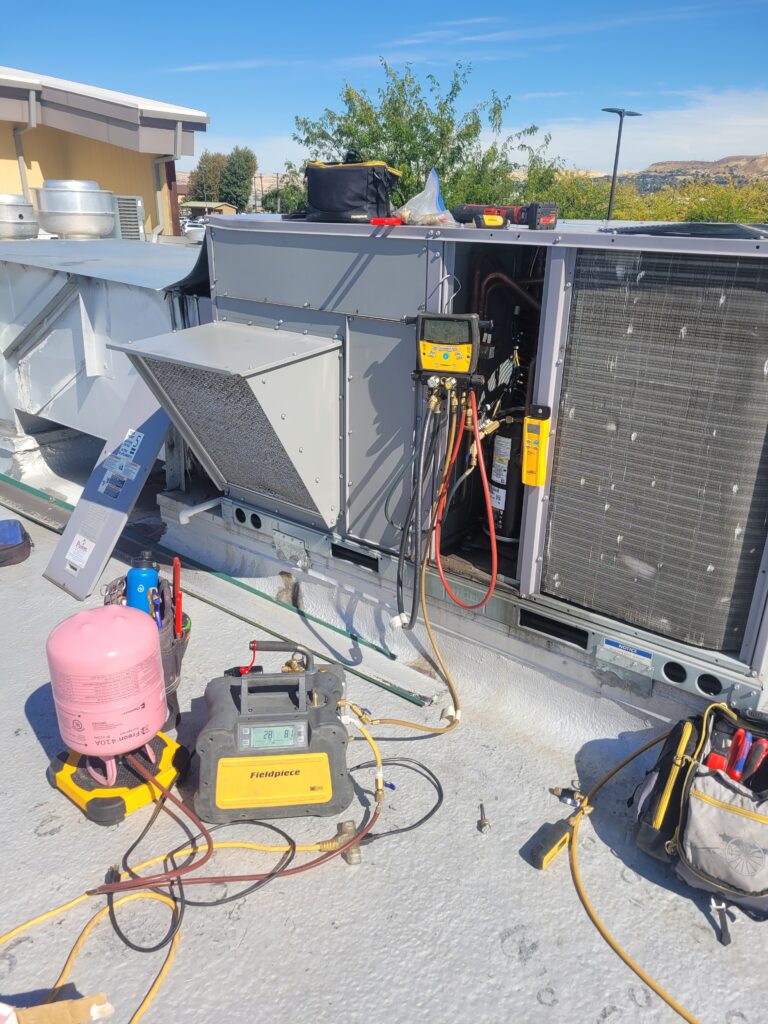
That matters because commercial equipment fails in pieces. On a retail rooftop unit that wasn't cooling, the problem we tracked down was a refrigerant leak at a single copper joint. We found it, brazed the repair, pulled a deep vacuum, and weighed the charge back in. On another call, a system another company had tagged out and condemned turned out to have a corroded condensate pump that couldn't pass 24 volts downstream. In both cases, the fix was a repair done the right way the first time, not a new system.
Step 2: Understand what an “upgrade” can mean
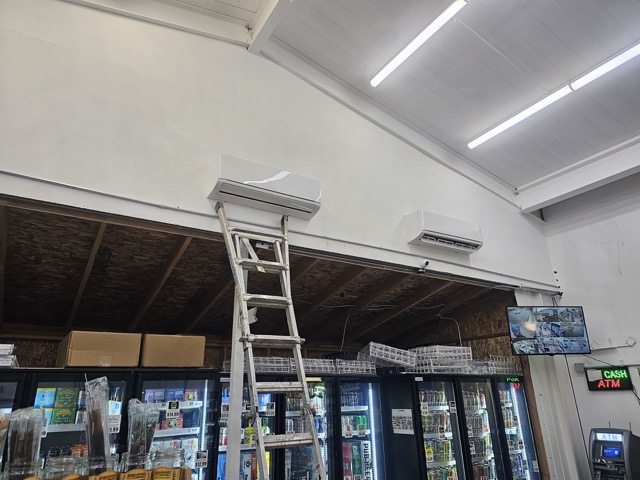
“Upgrade” covers a wide range of work. On one end, it's replacing worn components — a blower motor, a disconnect, a control board, a sensor — so an existing unit runs reliably again. In the middle, it's adding equipment to fill a gap, like wall-mounted ductless units for a space the main system never reached. On the far end, it's a full changeout of the rooftop or packaged unit. Here's how the two ends of that range compare.
| Factor | Component Upgrade | Full Replacement |
|---|---|---|
| What testing found | One failed part, rest checks out | Multiple major components failing |
| Refrigerant history | One leak, found and repaired | Repeated leaks in different spots |
| Controls and sensors | Faulty sensor or board, replaceable | Obsolete controls throughout |
| Space served | Same layout as when installed | Layout or use has changed |
| Disruption | Usually a single visit | Planned project, scheduled ahead |
| Recent repair calls | First problem in a while | Same unit, call after call |
Your system will likely match more than one row. The right call is whichever column wins most of your rows, and the readings from an onsite diagnosis are what settle it.
Before you pick up the phone, note what the thermostat reads versus its setpoint, whether the indoor fan is moving air, whether the outdoor fan is spinning, and whether any breakers are tripped. Check whether the thermostat is showing a low-battery alert, too. Those few details let us narrow the problem quickly and sometimes tell us whether a visit is needed at all.
Step 3: What happens on site, start to finish
Once the diagnosis is done and you've decided on the scope, the work itself follows a predictable order. We confirm the electrical side first — disconnects, breakers, and circuits feeding the equipment — so the job is safe before anything is opened up. Then comes the repair or installation: brazing and pressure testing refrigerant lines, setting or replacing equipment, wiring controls, and sealing duct connections.
Startup is where the job is proven. A technician checks refrigerant pressures, superheat and subcooling, supply and return air temperatures, and amp draw on the motors, and confirms the controls respond the way they should. If something we fixed quits on us because of our work, our 30-day guarantee means we come back and make it right at no charge.
Signs a targeted fix will do
The system is sound overall and the problem is contained. Fix it and keep running.
What we look for
- Testing traces the problem to one component, such as a capacitor, sensor, belt, or control board.
- A refrigerant leak is found at a single joint and the system holds pressure once it's repaired.
- The unit cooled and heated the space well until the recent problem started.
- Startup readings after the repair show pressures, temperatures, and amp draw where they should be.
Signs it's time for the bigger upgrade
The equipment is failing as a whole. Repairs are buying weeks, not years.
What changes the answer
- The same unit has needed repair after repair, each time for a different failure.
- Refrigerant keeps leaking from new spots after earlier leaks were fixed.
- Several major components test bad at once, not just one.
- The space has changed and the existing system can no longer keep it comfortable.
A lot of HVAC companies send a salesperson, not a technician, and a salesperson's job is to move new equipment. If the only answer you're given is “replace the whole system,” with no diagnosis behind it and no repair option on the table, get another quote. Ask what was tested and what the readings were. Listen for sincerity, and if the explanation sounds like a story, trust your gut.
“If they say replacing the whole system is your only option, don't go with them. Get multiple quotes — that's always good.”— Talon Mechanical
Step 4: Planning around your business hours
For a business, the hardest part of an upgrade is often the timing, not the work. We can talk about scheduling work before you open or after you close, so it disrupts your business as little as possible. Rooftop and packaged-unit work happens outside the sales floor, which keeps disruption to customers and staff to a minimum. And if a system fails at the worst possible moment, our emergency HVAC service is there to get you running while a longer-term plan is worked out.
The decision matrix
Read down the left column to find your situation. Most systems match more than one row, so the right path is whichever column wins most of your rows.
| If your system… | Targeted fix | Full replacement |
|---|---|---|
| Has one component that tested bad | Yes | Premature |
| Has one refrigerant leak, now repaired | Yes | Overkill |
| Keeps leaking in new places | Stopgap only | Yes, usually |
| Has several major parts failing at once | No | Yes |
| Serves a space that has changed | Add equipment | Often |
| Was condemned without a clear diagnosis | Get it tested | Not yet |
The bottom line
A commercial HVAC upgrade should be a decision you make with clear information, not one you're rushed into. Diagnose first, understand the full range of options, schedule the work around your business, and insist on startup readings that prove the system is right. Regular HVAC maintenance keeps that decision on your timeline instead of the equipment's, and if you already have a replacement quote in hand, it's worth reading about getting a second opinion first.
If you're weighing an upgrade for a store, office, or other building anywhere from Portland to Gresham, Beaverton, and Hillsboro, take a look at our commercial HVAC service or send the details through our contact form. We offer free onsite diagnostics — terms and conditions may apply, so call for details.