Furnace not working? What to check before you call
On this page · 12 sections
A lot of the no-heat calls we take around the Portland metro start the same way: the house is getting cold, the furnace is quiet, and the homeowner wants to know whether it's finally dead. Sometimes it is. But plenty of times the problem turns out to be a thermostat with tired batteries, a breaker that tripped, or a filter so clogged that the furnace shut itself down to protect itself.
That's why, when you call us, we usually start by talking it through on the phone: looking at the fan, checking the breaker box, and working out whether we even need to come out. This post is that same conversation, written down. Six checks you can make safely on your own, the signs that mean you should stop and call, and a decision matrix at the end that sorts most situations in about a minute.
The short answer
Bottom Line Up Front
Before you call, check the thermostat, the breaker and furnace switch, the filter, and the furnace door. Those are safe for anyone to check. If you smell gas, see water pooling around the furnace, or the breaker trips a second time, stop and call a technician.
A furnace that won't heat is often protecting itself from something simple, like low thermostat batteries, a tripped breaker, a clogged filter, or a loose panel. Clear those first and you may have heat back in minutes. If you don't, you'll call us already knowing what isn't wrong, which makes the diagnosis faster.
The rest of this post walks through each check in the order we'd ask about it on the phone, and why each one matters.
Check 1: Is the thermostat actually calling for heat?
Start at the wall, not the furnace. Make sure the thermostat is set to Heat, not Cool or Off, and that the setpoint is a few degrees above the temperature in the room. Then look at the fan setting. If it's on On instead of Auto, the blower runs all the time, including between heating cycles, and that steady stream of room-temperature air can feel like the furnace is blowing cold.
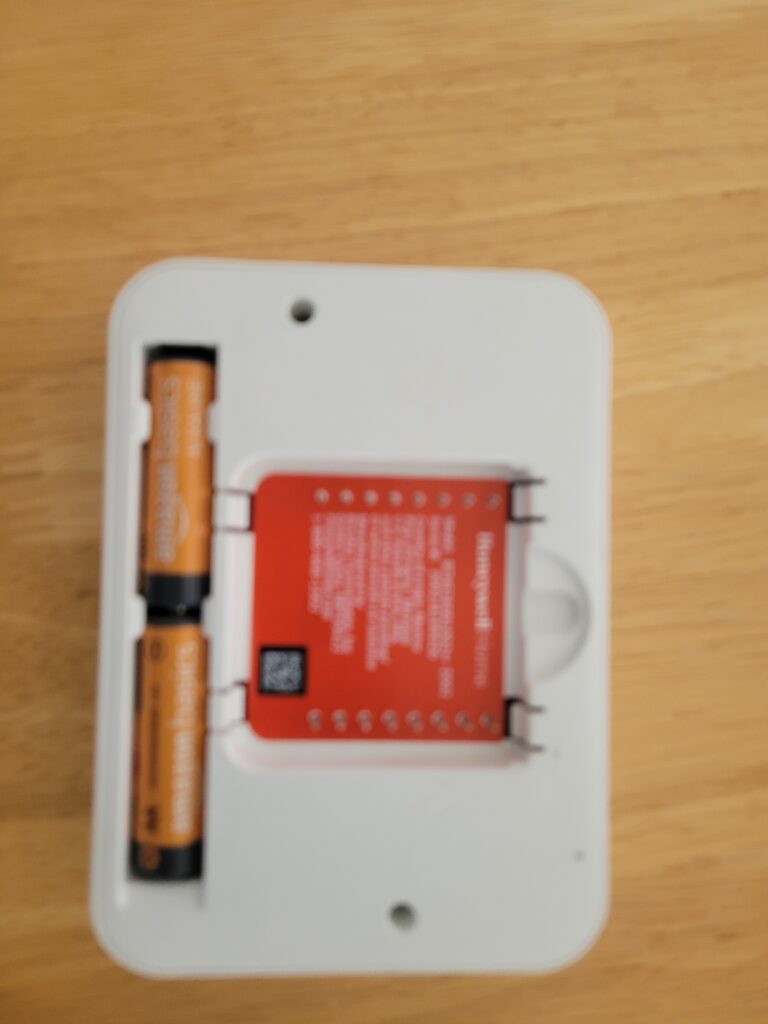
If the screen is blank or dim, the batteries are the first suspect. Many wall thermostats run on a pair of AA batteries, and when they get weak the thermostat can stop talking to the furnace without much warning. Fresh batteries cost a lot less than a service call.
Check 2: Is the furnace getting power?
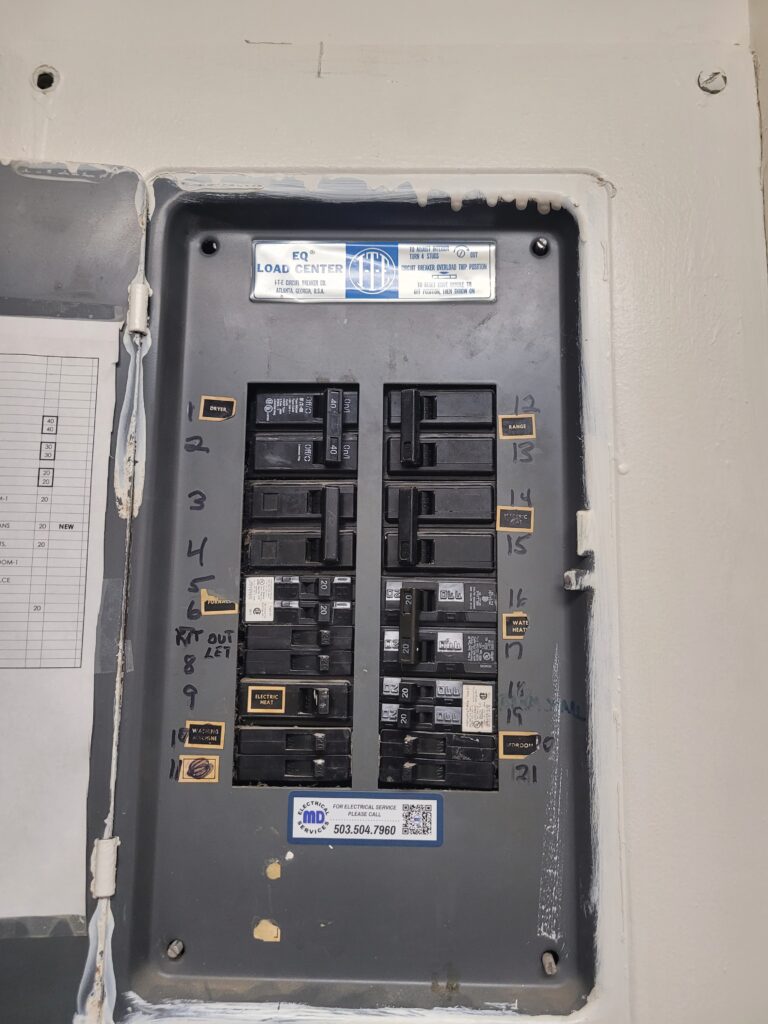
Go to your electrical panel and find the breaker labeled for the furnace. If it has tripped, it will sit in the middle position or be flipped toward Off. Push it fully off, then back on, once. Then check near the furnace itself for a switch that looks like an ordinary light switch. That's the service switch, and it gets bumped off more often than you'd think, especially when someone has been moving boxes around in the garage or utility closet.
If the breaker trips a second time, stop resetting it. A breaker that keeps tripping is telling you something is wrong with the load or the wiring. We saw this on a heat pump system where the heat pump had quit and the electric heat in the furnace was carrying the house. Every winter the breaker tripped, and two companies before us said the system was old and needed replacing. We diagnosed it, found the breaker was undersized for what it was feeding, and verified everything. Then we tuned up the electric furnace and recharged the R22 in the heat pump, which saved that household at least $400 a month on the heating bill.
What you can check vs. what to leave to us
Here's the quick version. Each row is something you might notice; the highlighted column is the smarter move when that's what you're seeing.
| What you notice | Check it yourself | Time to call |
|---|---|---|
| Thermostat screen is blank | Swap in fresh batteries | Still blank with new batteries |
| Thermostat looks normal | Set to Heat, fan on Auto, setpoint above room temp | Set right and nothing happens |
| Furnace breaker is tripped | Reset it once | It trips again |
| Furnace is completely silent | Check the service switch and the door panel | Power and door are fine |
| Furnace starts, then quits | Replace a clogged filter | Clean filter and it still quits |
| Water around the furnace | Make sure the condensate pump is plugged in | Pump is full, trap is clogged, or water keeps coming |
| Burners light, then go out | Nothing safe to check | Often a flame sensor or ignition problem |
| Smell of gas | Never troubleshoot | Leave the house, call the gas utility, then call us |
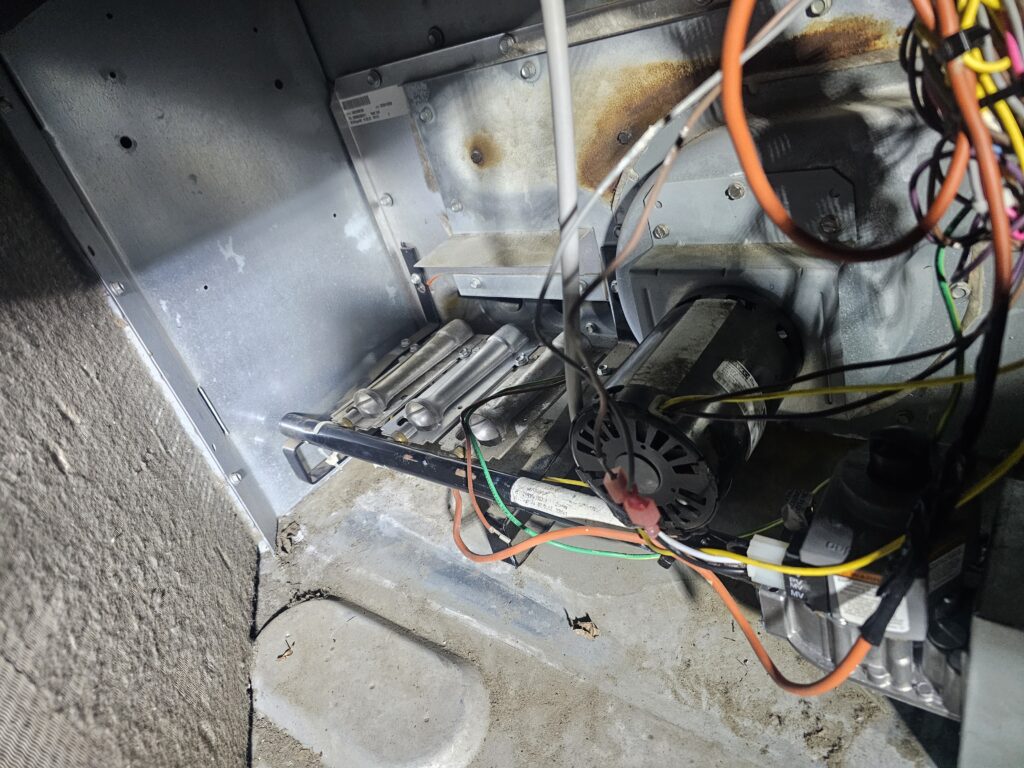
Somewhere on your furnace, usually inside the front door or on the side of the cabinet, is a label with the model number, serial number, and gas and electrical specs. Take a clear photo of it. It tells us exactly what equipment you have, how old it is, and which parts it takes, so the conversation on the phone gets a lot more useful.
Check 3: When did you last change the filter?
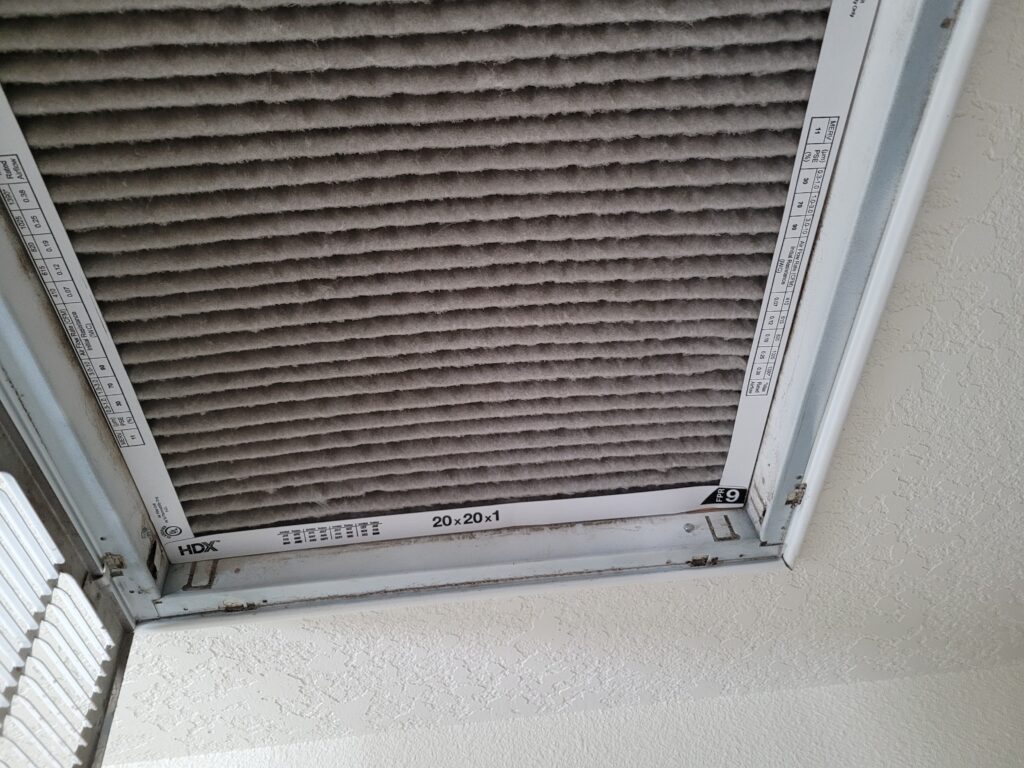
A furnace needs to move air across its heat exchanger. When the filter is packed with dust, the air can't get through, the furnace runs hot, and a safety limit shuts the burners off. The blower may keep running, the furnace may light again a few minutes later, and the cycle repeats. To you it looks like the furnace keeps quitting. To the furnace, it's doing exactly what it should.
Pull the filter out and hold it up to a light. If you can't see light through it, replace it and give the system some time. Filters are also one of the things we look at on every maintenance visit, along with burners, wiring, and the parts you can't see from the outside.
Check 4: Is the furnace door seated properly?
Most furnaces have a door safety switch behind the lower panel. If that panel is crooked, loose, or was put back on in a hurry after a filter change, the switch stays open and the furnace won't run at all. Take the panel off and set it back on so it sits flat and snug. If you hear the furnace come to life, that was your problem.
One thing never to do: tape or wedge that switch closed to make the furnace run with the door off. We've found switches taped over on service calls, and it defeats a safety device that exists to protect whoever is working on the unit.
Safe to check yourself
Simple, low-risk checks that clear up a lot of no-heat calls before anyone needs to drive out.
What to look at
- The thermostat is set to Heat, the setpoint is above room temperature, and the batteries are fresh.
- The furnace breaker is on, and the service switch near the furnace hasn't been bumped off.
- You can see light through the filter when you hold it up.
- The lower furnace panel sits flat and snug, so the door switch is closed.
Stop and call
Signs the problem is past the simple stuff, or that poking at it could make things worse.
What changes the answer
- You smell gas anywhere near the furnace or in the house.
- The breaker trips again after you've reset it once.
- Water is pooling around the furnace or the condensate pump is full.
- The burners light and shut off within seconds, over and over.
Check 5: Is a high-efficiency furnace backed up with water?
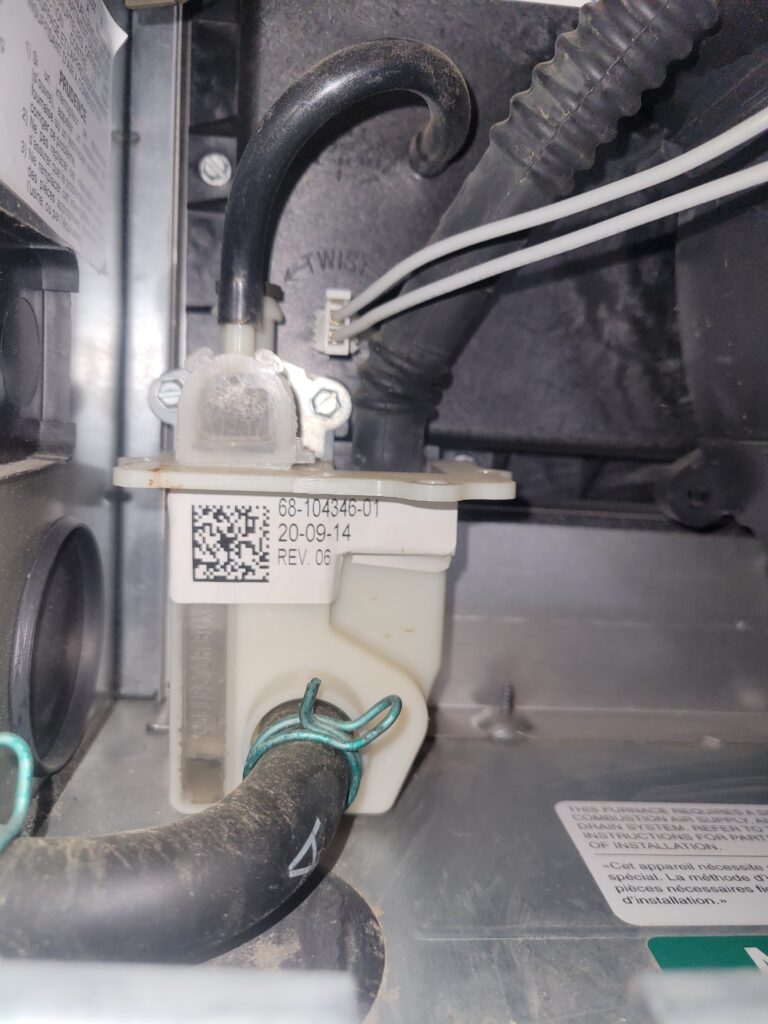
If your furnace has white PVC vent pipes, it's a high-efficiency unit, and it makes water as it burns. That water runs through a plastic trap and drain hoses, and in many homes into a small condensate pump. When the trap clogs or the pump fails, a safety switch shuts the furnace down. Look for water pooling around the furnace, and make sure the condensate pump is plugged in. Beyond that, leave the drain system to us.
This one can fool people who should know better. On one call, another company had tagged a furnace out, shut the gas off, and wanted to talk the homeowner into a replacement. We traced the problem to the condensate pump: after about ten years, the contacts and circuitry inside had corroded to the point that it couldn't pass 24 volts downstream. We jumpered around it and verified the system was not breaching, which meant the furnace could run. If you've been told your furnace is cracked, our post on the dangers of a cracked heat exchanger explains what that diagnosis should involve.
Check 6: Is fuel getting to the furnace?
If you have natural gas, see whether your other gas appliances are working, like the stove or the water heater. If they're out too, the problem is the supply, not the furnace. If the gas was shut off by the utility or by another contractor, don't turn it back on yourself. If you heat with propane, read the gauge on the tank. Running low or empty is an easy thing to miss when the tank sits out of sight behind the house.
Don't flip switches, don't reset breakers, and don't try to relight anything. Get everyone out of the house, then call your gas utility's emergency line or 911 from outside. Once the utility has made it safe, call us to find out why it happened and get the heat back on.
“A lot of customers want to know where the money's going. Starting with the simple checks is part of how we answer that, because sometimes the honest fix costs a pair of batteries.”— Talon Mechanical
When it's time to stop checking and call
If you've worked through all six and the house is still cold, it's time for a technician. The same goes for a furnace that lights and then shuts off after a few seconds (often a flame sensor or ignition problem), one that cycles on and off constantly, one making new grinding, banging, or squealing noises, or anything with a burning or electrical smell. Those need testing with a meter, not guesswork. Our heating repair work starts with exactly that kind of component-by-component testing.
We do take emergency calls, so if the heat is out on a freezing night and there's someone at home who can't ride it out, call (503) 334-9584. Our post on when to call for emergency HVAC service covers which problems can wait until morning and which can't, and our emergency HVAC service page explains how those calls work.
If someone tells you the only option is a new furnace
Sometimes replacement really is the right answer, and our post on the signs it's time for heat replacement lays out when. But be careful with anyone who walks in and says a whole new system is your only option. Many companies send a salesperson; you're better off talking with a technician who has actually tested the equipment. Get multiple quotes, listen for sincerity, and if something feels like a story, trust your gut.
Both stories in this post started with another company recommending replacement, and both ended with a repair. If you're in that spot now, read why to get a second opinion before HVAC replacement. And if a new furnace does turn out to be the right call, our heating replacement page explains how we approach it.
The decision matrix
If you only use one thing from this post, use this table. Find the row that matches what your furnace is doing and read across.
| If your furnace… | Check it yourself | Call us |
|---|---|---|
| has a blank thermostat screen | Swap the batteries | If still blank |
| won't run and the breaker is tripped | Reset it once | If it trips again |
| trips the breaker a second time | Don't reset again | Yes |
| has a filter you can't see light through | Replace it | Not yet |
| has water pooling around it | Check the pump plug only | Yes |
| lights, then shuts off in seconds | Not a DIY fix | Yes |
| was tagged out by another company | Don't restart it | Get a second look |
| smells like gas | Get out of the house | After the utility clears it |
The bottom line
A furnace that won't run isn't always a furnace that's broken. Check the thermostat, the power, the filter, the door, the drain, and the fuel, in that order, and you'll either fix it yourself or hand us a much shorter list to work through. If you smell gas, see water on the floor, or the breaker trips twice, stop and call.
When you do call, we'll talk it through on the phone first, and if we come out, we'll test before we replace anything. Our work is backed by a 30-day guarantee: if we fixed it incorrectly, we come out and make it right at no charge. We serve homes from Gresham to Portland and across our wider service area, and you can book a heating visit online whenever it suits you.