Told you need a new furnace or AC? Get a second opinion first
On this page · 8 sections
A lot of the calls we take start the same way: another company came out, looked at the system for a few minutes, and said the only answer is a brand-new furnace or air conditioner. Sometimes that's true. But a surprising number of the systems we see after that visit don't need replacing at all. They need one part, one correction, or one honest diagnosis.
This post is about how to tell the difference. We'll walk through two real service calls where a replacement had already been recommended, what we actually found, and the questions you can ask yourself before you sign for a new system.
The short answer
Bottom Line Up Front
If the quote says "replace it" but can't name the failed part and show you the readings, get a second opinion before you sign. If a technician shows you a confirmed crack, a breach, or a system that keeps failing in different places, replacement is likely the honest answer.
Many no-heat and no-cooling calls come down to an electrical fault, a failed control or pump, an undercharged system, or wiring that was done wrong. Those are repairs. A tagged-out furnace should stay off until it's checked, but being checked is exactly what a second opinion is for.
If we fixed it wrong, we make it right
where two companies said replace
Terms may apply, call for details
The rest of this post explains why, using two calls we're proud of, and ends with a checklist you can run down in a couple of minutes.
Why so many quotes say "replace it"
Many larger HVAC companies send out a salesperson, or a technician who is measured on how many new units get sold. Installing a new system is a bigger ticket than tracking down a corroded contact or an undersized breaker, so the incentive points one way. That doesn't make every replacement quote dishonest. It does mean the quote deserves the same questions you would ask about any big purchase.
Our advice is simple: you're better off talking to a technician than a salesperson. If someone tells you replacing the whole system is your only option and can't show you why, don't go with them. Get multiple quotes. Watch how the person explains the problem, listen for sincerity, and if the story feels like a tale, trust your gut. We cover more of this in our guide to choosing an HVAC contractor.
When you call us, we'll often talk things through first: whether the outdoor fan is spinning, what the breaker box shows, and what the system was doing when it stopped. Sometimes that's enough to know whether we even need to come out. Call 503-334-9584 and we'll walk through it with you.
Call 1: The furnace that was tagged out
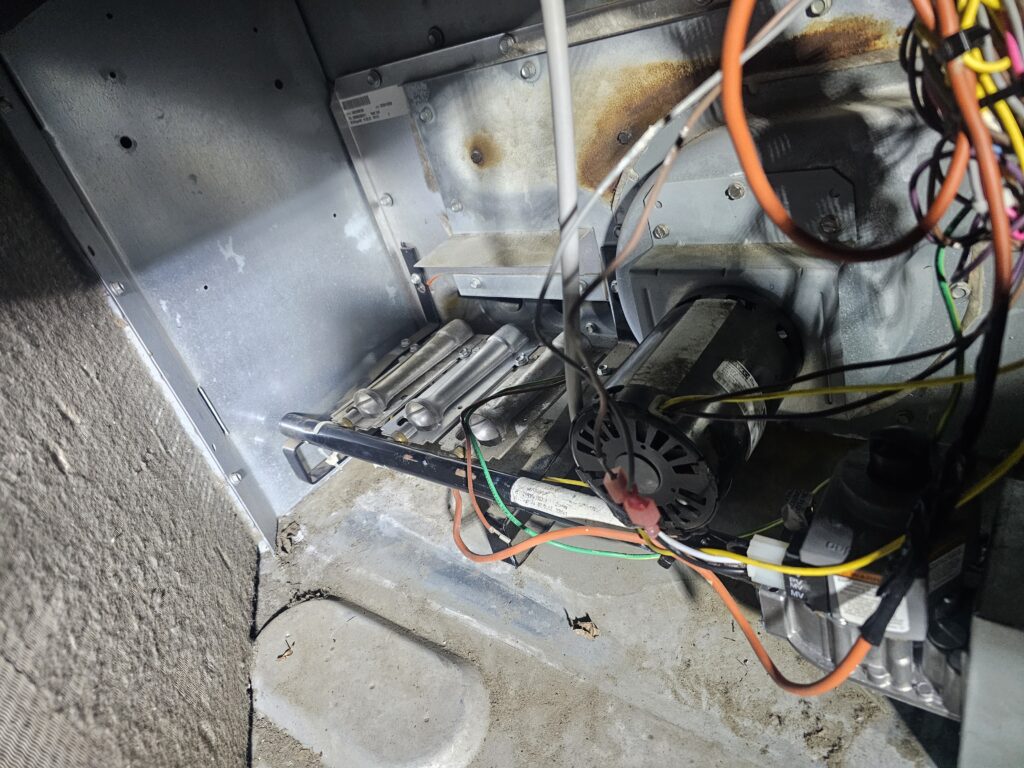
One household had been told their furnace was cracked. The other company tagged the system out, turned the gas off, and recommended a replacement. To be fair, shutting a furnace down when you believe it's cracked is a standard safety procedure, and it's the right move if the crack is real. Nobody should run a furnace that's breaching. Our post on the dangers of a cracked heat exchanger explains why.
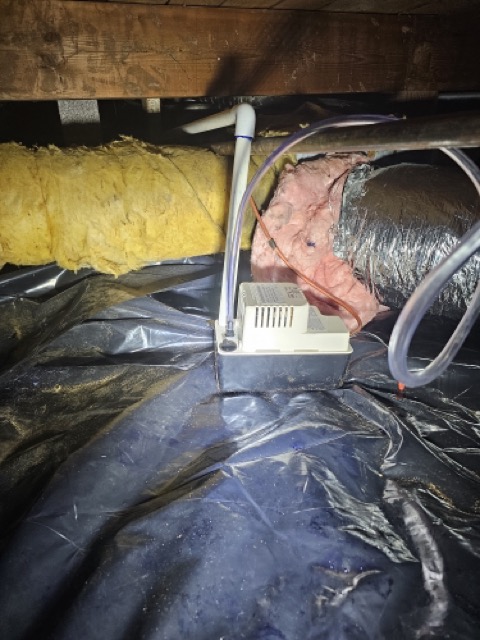
So we treated it as a safety call first. We went through the system and traced the actual failure to the condensate pump. After about ten years of service, the contacts and circuitry inside had corroded to the point that it could no longer provide 24 volts downstream, which shut the furnace down. We worked around the failed pump circuit, then verified the system was not breaching before anything else happened. Only once we'd confirmed that did we put the furnace back in service.
That family went on to have us do a lot more work for them over time. It started by fixing the problem the right way the first time and showing them exactly where their money was going. If your heat has quit and you're weighing a quote, our heating repair team will start with the same kind of verification.
If a technician has tagged your furnace out and shut off the gas, leave it off until it has been properly checked. A second opinion means having a qualified technician test the system, not overriding a safety tag on your own. If you're without heat in the meantime, our emergency HVAC service is available 24/7.
Call 2: The breaker that kept tripping
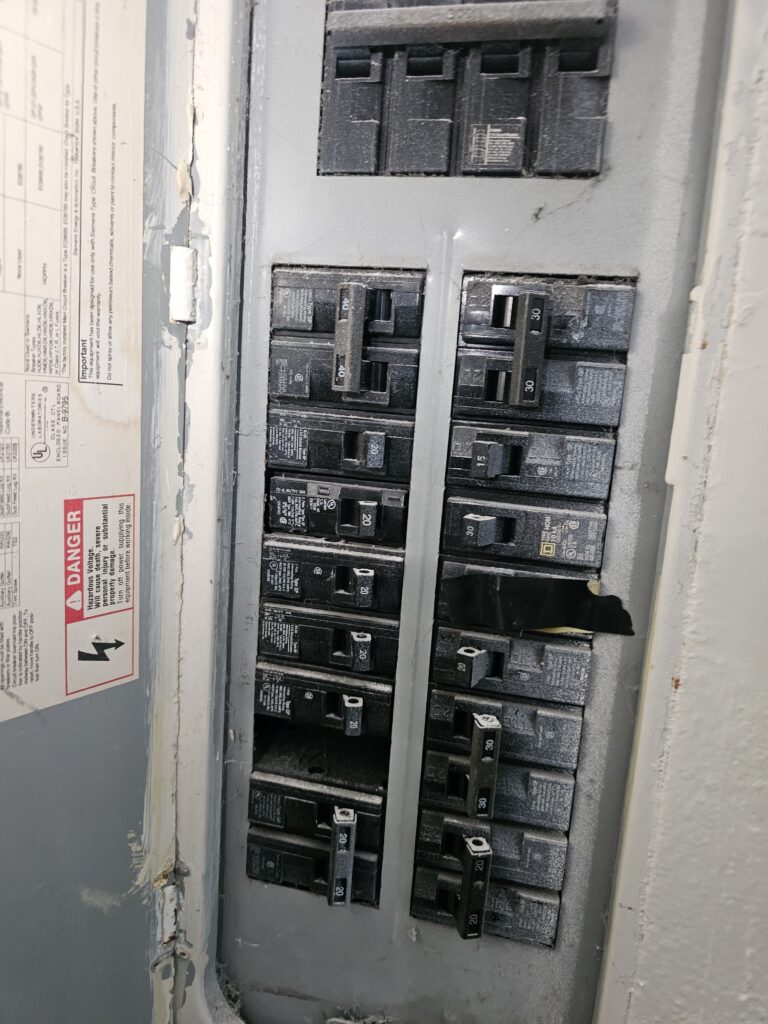
Another homeowner's heat pump had quit, so the house was running on the electric heat in the furnace. In the middle of winter, that electric heat kept tripping the breaker. Two companies had already come out. Both said the system was old and needed to be replaced. One said the resistance coil was broken, but a broken coil wouldn't trip a breaker. It would just stop heating.
When we diagnosed it, the real problem was that the breaker was undersized. Someone had done electrical work on that system who had no business doing it. We verified everything, tuned up the electric furnace, and recharged the R22 in the heat pump. The heat bill had been sky-high from running electric heat plus fans for gas fireplaces, and the fix saved that homeowner at least $400 a month on heating alone.
Signs a repair is worth chasing
The system worked until one thing changed. Find that thing before you replace everything around it.
What we look for
- The system ran fine until one event: a breaker trip, a fan that stopped spinning, or a thermostat that quit responding.
- The quote names the age of the system but not a specific failed part.
- The breaker trips when the heat runs, on a system that heated the house before.
- There's a condensate pump or other small component that has been in service for many years.
Signs replacement is the honest answer
The system is failing as a whole, or it's no longer safe to run. Repairs only buy time.
What changes the answer
- A technician shows you a crack or breach and the test results that confirm it.
- The same system has broken down repeatedly, each time in a different part.
- Two technicians, testing separately, find the same major failure.
- The system has been repaired and maintained and still can't keep the house comfortable.
Repair vs. replace at a glance
Here's how we'd sketch it on the back of a work order. Each row is a factor that comes up on real calls, and the highlighted cell is the column that usually wins when that factor is the one driving the decision.
| Factor | Points toward repair | Points toward replacement |
|---|---|---|
| Cooling problem | Electrical fault or undercharge, isolated | Major failure confirmed with readings |
| Heating problem | A control, pump, or switch has failed | Safety failure confirmed and shown to you |
| Breaker tripping | Undersized breaker or bad wiring found | Equipment fault remains after the electrical is right |
| How it was diagnosed | Tested, measured, and explained | Tested twice with the same major result |
| Repair history | First real problem in years | Repeat breakdowns in different parts |
| Heat exchanger | Verified sound, not breaching | Verified cracked or breaching |
| Comfort after repairs | House stays comfortable once fixed | Still can't keep up after repair and maintenance |
Based on the service calls we run around Gresham and the Portland metro. There are no dollar figures here on purpose: every system is different, and we'd rather show you readings than guess.
Cooling problems follow the same pattern. When an air conditioner stops cooling, the cause is often isolated to the electrical side or a system that's undercharged, and a technician can usually find that by looking at the unit and taking readings. Our AC repair visits start there, not with a brochure.
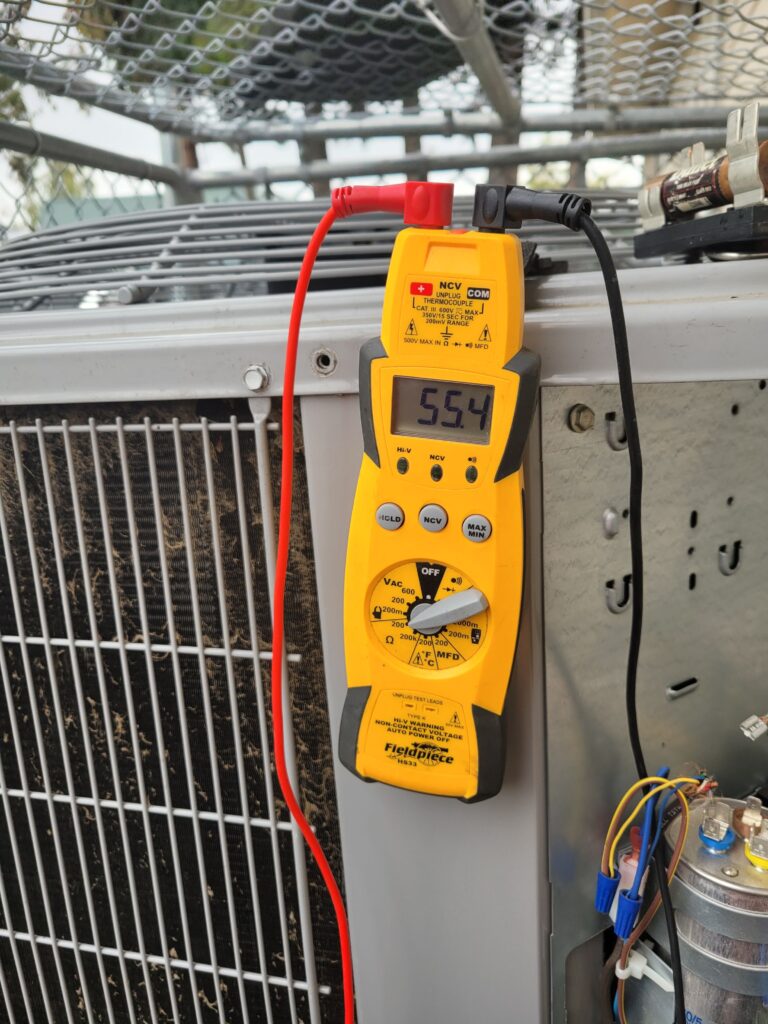
“If they tell you replacing the whole system is your only option and can’t show you why, keep looking. Get multiple quotes, and trust your gut.”— Talon Mechanical
When replacement really is the right call
None of this means every system can be saved. A heat exchanger that's confirmed cracked, a unit that keeps failing in different places, or a system that still can't keep the house comfortable after it's been repaired and maintained are all good reasons to replace. Our posts on signs it's time for a heating replacement and when to replace your AC go deeper.
When we do recommend a new system, we like Goodman. You still get a ten-year warranty, and while they may have fewer bells and whistles than some brands, that simplicity is a good thing for long-term reliability. Plenty of other brands cost far more, and you're mostly paying for the name. See our heat replacement and AC replacement pages for how those installs work.
The decision checklist
If you only use one part of this post, use this table. Find the rows that match your situation and see which column has the stronger answer. Most systems match more than one row.
| If your system… | Get a second opinion | Replace now |
|---|---|---|
| Was tagged out for a suspected crack | Yes — leave it off until tested | If the crack is confirmed |
| Trips the breaker when the heat runs | Yes | Premature |
| Stopped cooling with no named cause | Yes | Too soon |
| Has a confirmed breach shown to you | Optional | Yes |
| Keeps breaking down in different places | Worth a look | Usually |
| Came with a quote for a new system only | Yes | Get multiple quotes |
The bottom line
A replacement quote is a starting point, not a verdict. If the person who wrote it can show you the failed part and the readings that prove it, take it seriously. If all you heard was that the system is old, get another set of eyes on it before you spend the money.
That's exactly what our free onsite diagnostic is for (terms and conditions may apply, so call for details). We'll test the system, explain what we find in plain language, and tell you honestly whether it's a repair or a replacement. If we fix it and our repair doesn't hold, our 30-day guarantee means we come back and make it right at no charge. Keeping up with regular maintenance is the best way to avoid facing this decision in the first place.