Wildfire Smoke Season: Protecting the Air Inside Your Home
Smoke Season Is an HVAC Season
Around here, late summer has its own weather pattern. It gets hot, the wind shifts, and suddenly the Gorge haze rolls in and the sky turns that flat orange color. Most people in the Portland metro have a plan for the heat by now. Far fewer have a plan for the air.
The good news is that your heating and cooling system is already the best air-cleaning tool in your house — if it's set up right. The bad news is that most systems in our service area are running a thin filter that was chosen for airflow, not for smoke, and nobody has looked at it since spring. This guide covers what actually helps, what doesn't, and what smoke does to the equipment itself.
Get a Free Estimate!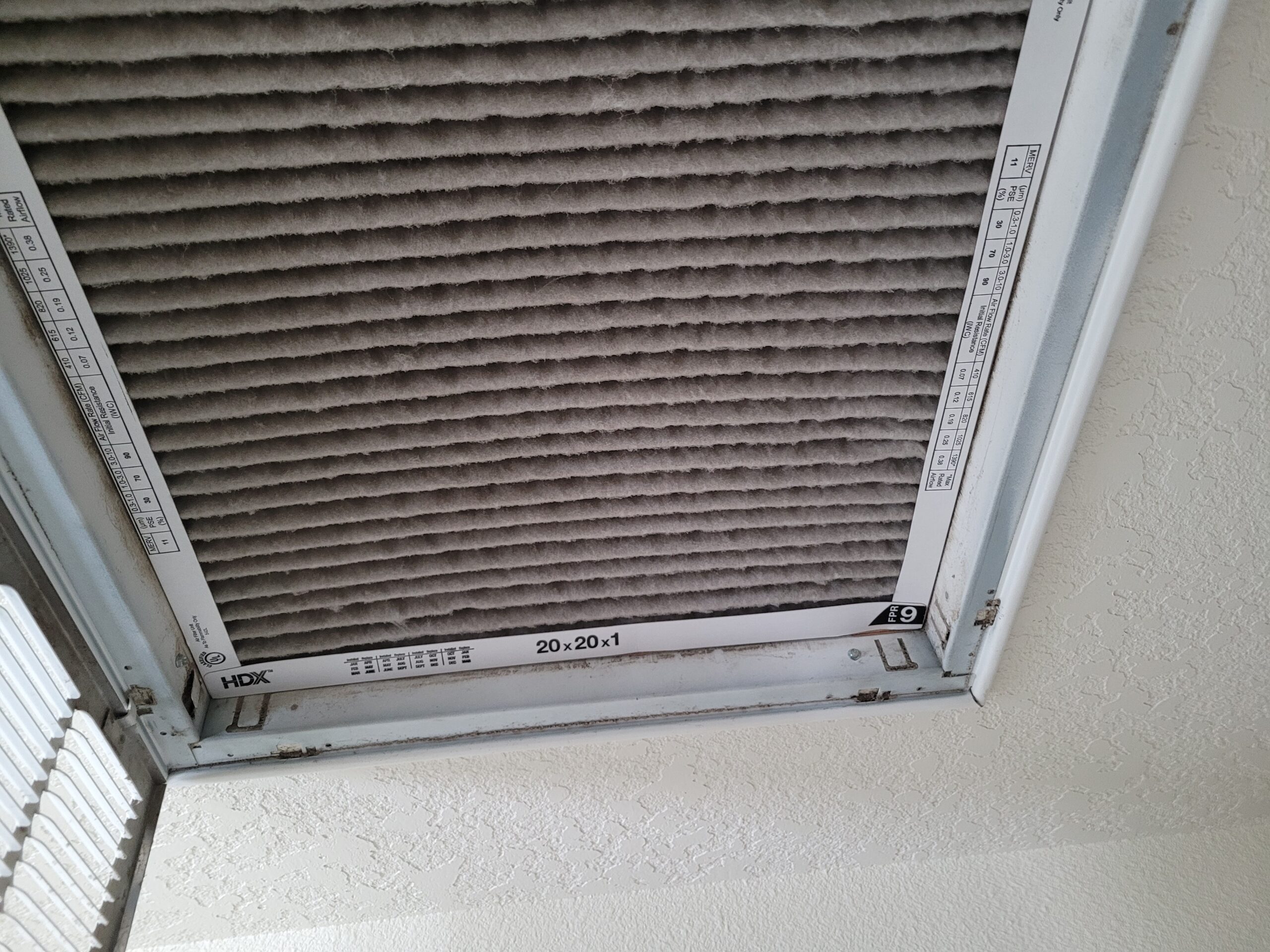
Five Things Your HVAC System Can Do About Smoke
Wildfire smoke is mostly fine particulate — the stuff small enough to get past your nose and into your lungs, and small enough to slip through a cheap filter without slowing down. Here's how to use the equipment you already own to get it out of the air, and what to watch for while you do.
Your Filter Is the Cheapest Upgrade You Own
Filters are rated by MERV, a scale that describes how small a particle the media can catch. The basic fiberglass panel most homes ship with is around MERV 4 — it protects the blower motor and does almost nothing for smoke. For fine particulate, you want MERV 13 or better if your system can move air through it. That's the rating public health agencies point to during smoke events, and it's the single biggest improvement most homeowners can make in an afternoon.
The caveat is real but often overstated. A denser filter is more resistant, and a system that was already struggling — undersized ductwork, a tired blower, a filter slot that's too small for the airflow — can lose enough air to freeze a coil or short-cycle. Most homes we see handle a good pleated MERV 13 without complaint. If you're not sure yours will, that's exactly the sort of thing a technician can measure in one visit rather than guess at. Start by pulling your current filter and reading the size printed on the frame.
"He's down to earth and he always makes sure whatever our system needs is a conversation not just a take it or leave it. When he comes out he always leaves making sure our home is comfortable."
See our profile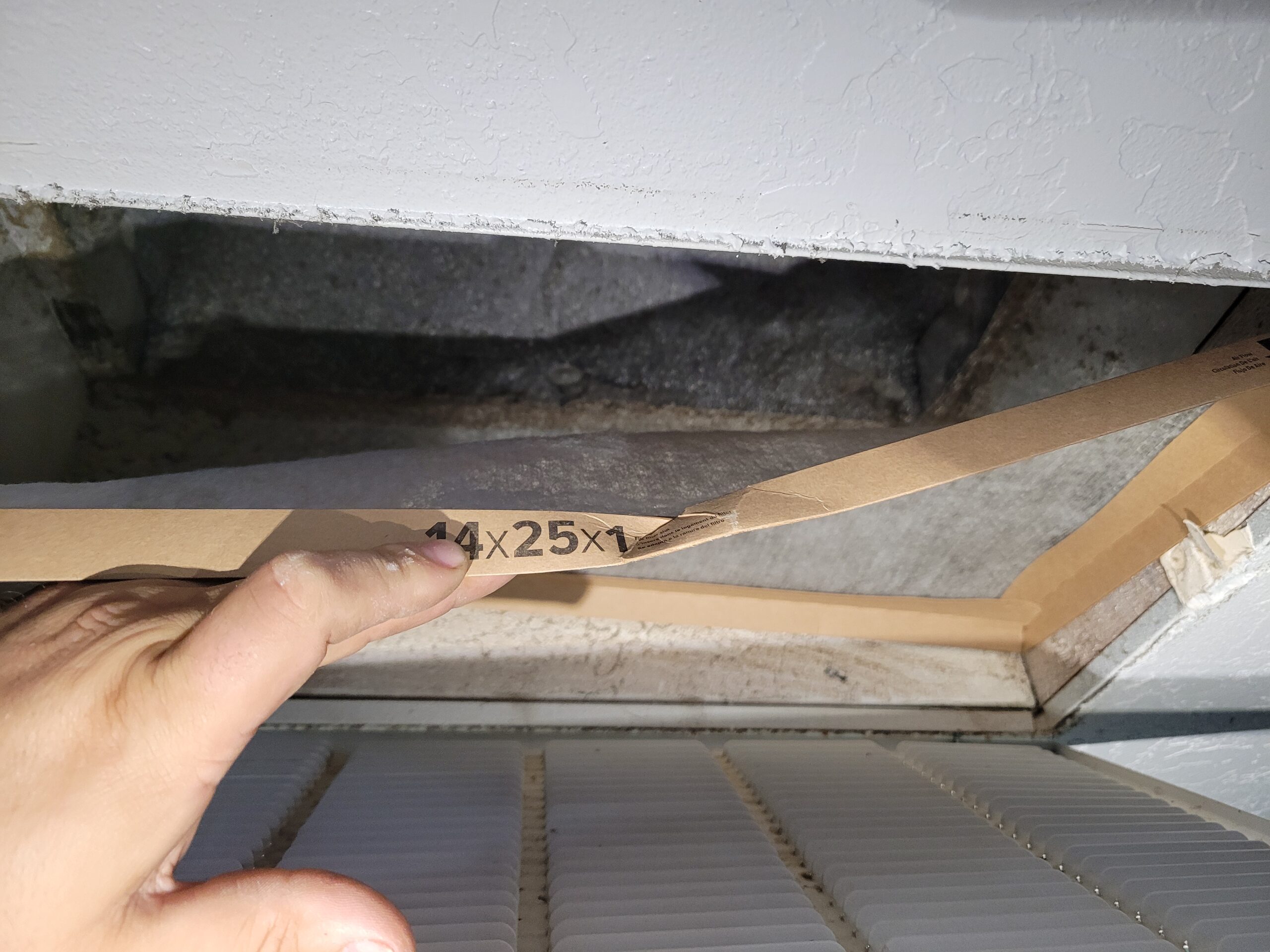
Set the Fan to ON, Not AUTO
A filter only cleans the air that passes through it. On AUTO, your blower runs only when the system is actively heating or cooling, which on a mild smoky morning might be twenty minutes an hour. Switch the thermostat fan to ON during a smoke event and the blower keeps pulling room air through the filter continuously. It costs a few dollars a month in electricity and it's the difference between filtering a fraction of your air and filtering all of it, several times over.
The other half of the job is keeping outdoor air out. Close the windows, including the tempting overnight crack. Skip the whole-house fan and the attic fan entirely — they are designed to pull outdoor air in, which is the last thing you want. If you have a window or portable AC unit, make sure its fresh-air or vent damper is closed so it recirculates. Run bathroom and kitchen exhaust fans only as long as you need them, since every cubic foot they blow out is replaced by outdoor air pulled in through gaps in the building. And if your home has a ventilation system with an outdoor air intake, that's a good thing to have set to recirculate before the smoke arrives, not during.
"Robert came out and checked my furnace, diagnosed and fixed what needed to be fixed. He was quick, knowledgeable, and friendly."
See our profileSmoke Doesn't Stop at the Filter
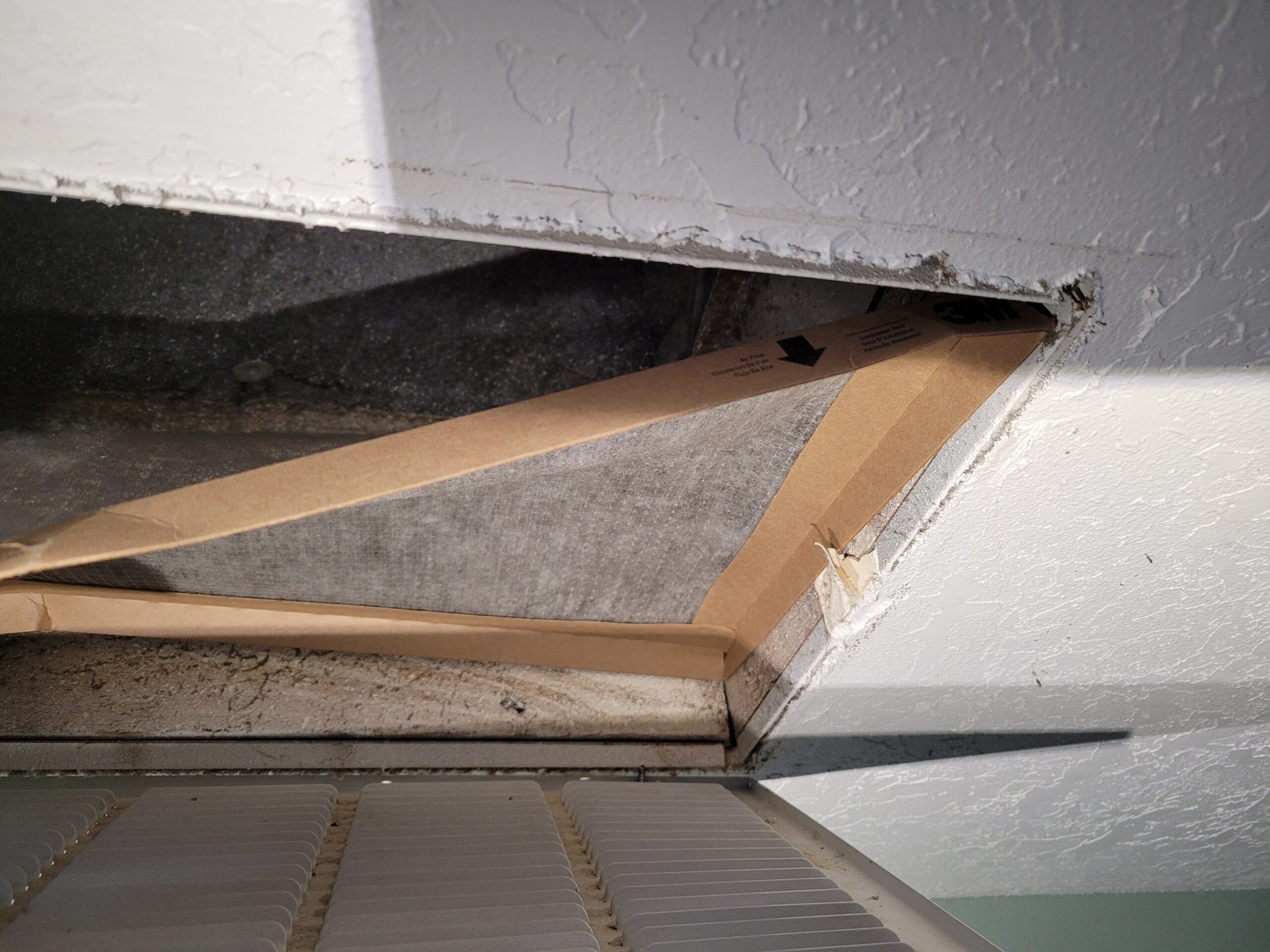
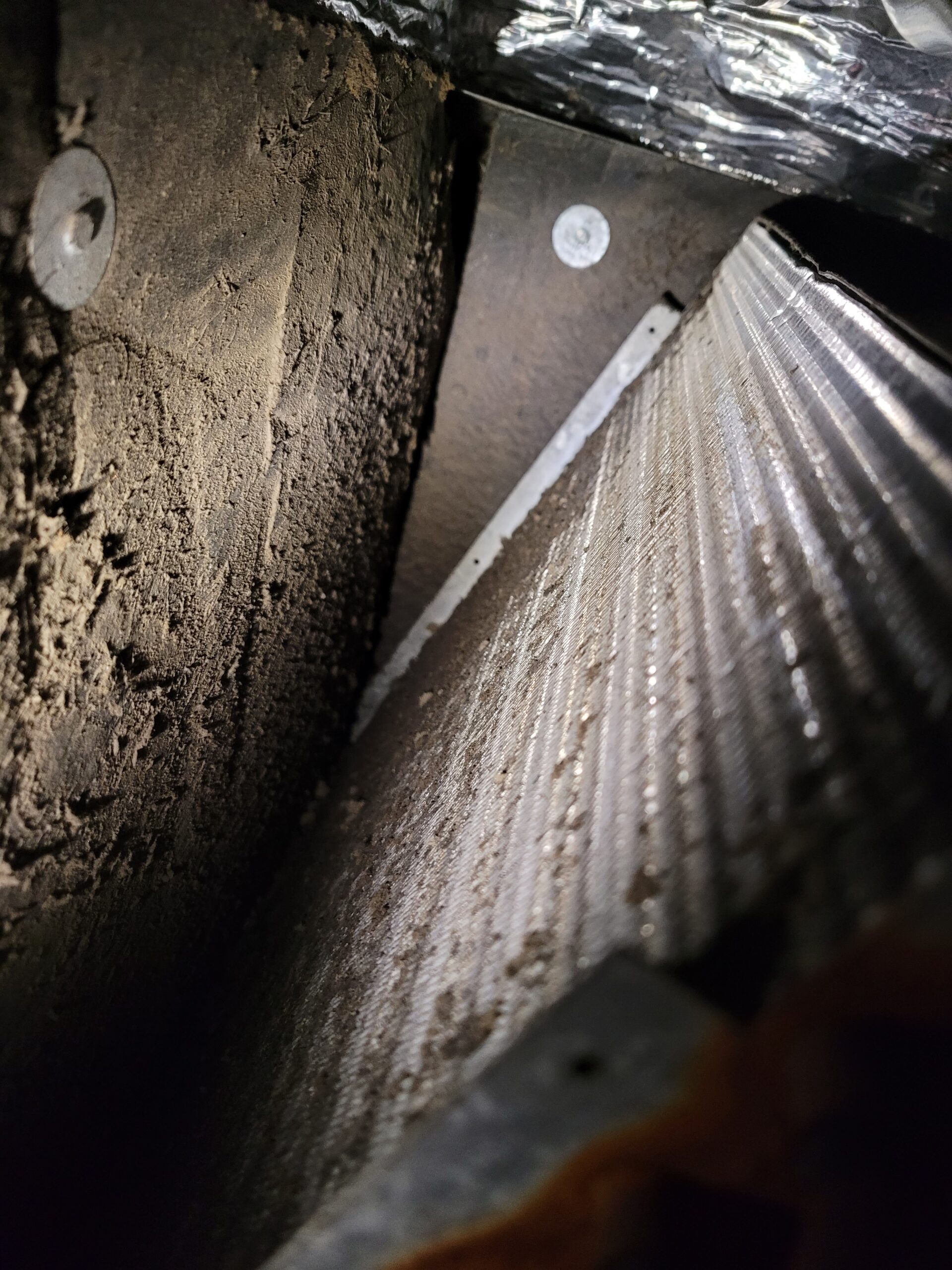
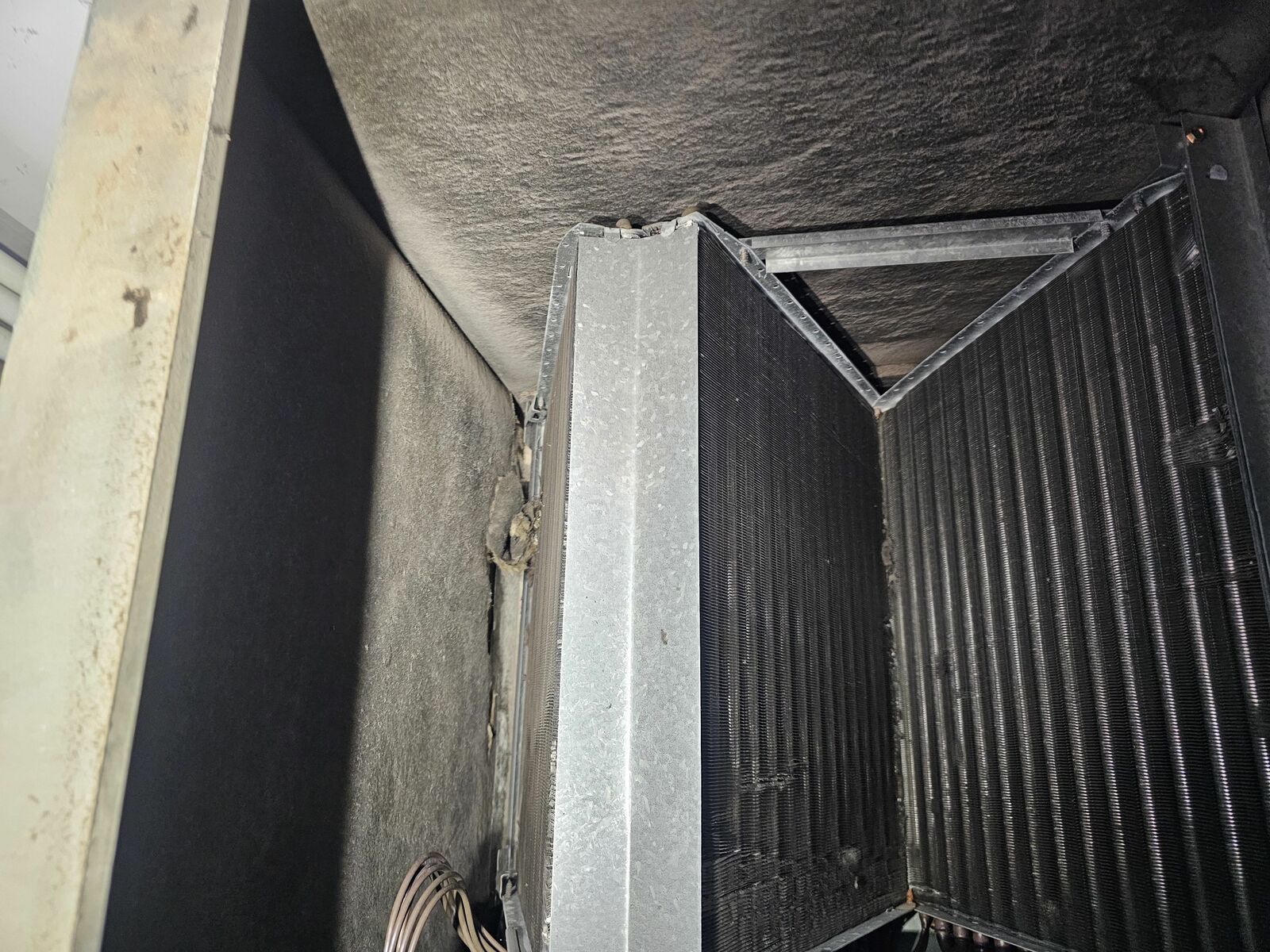
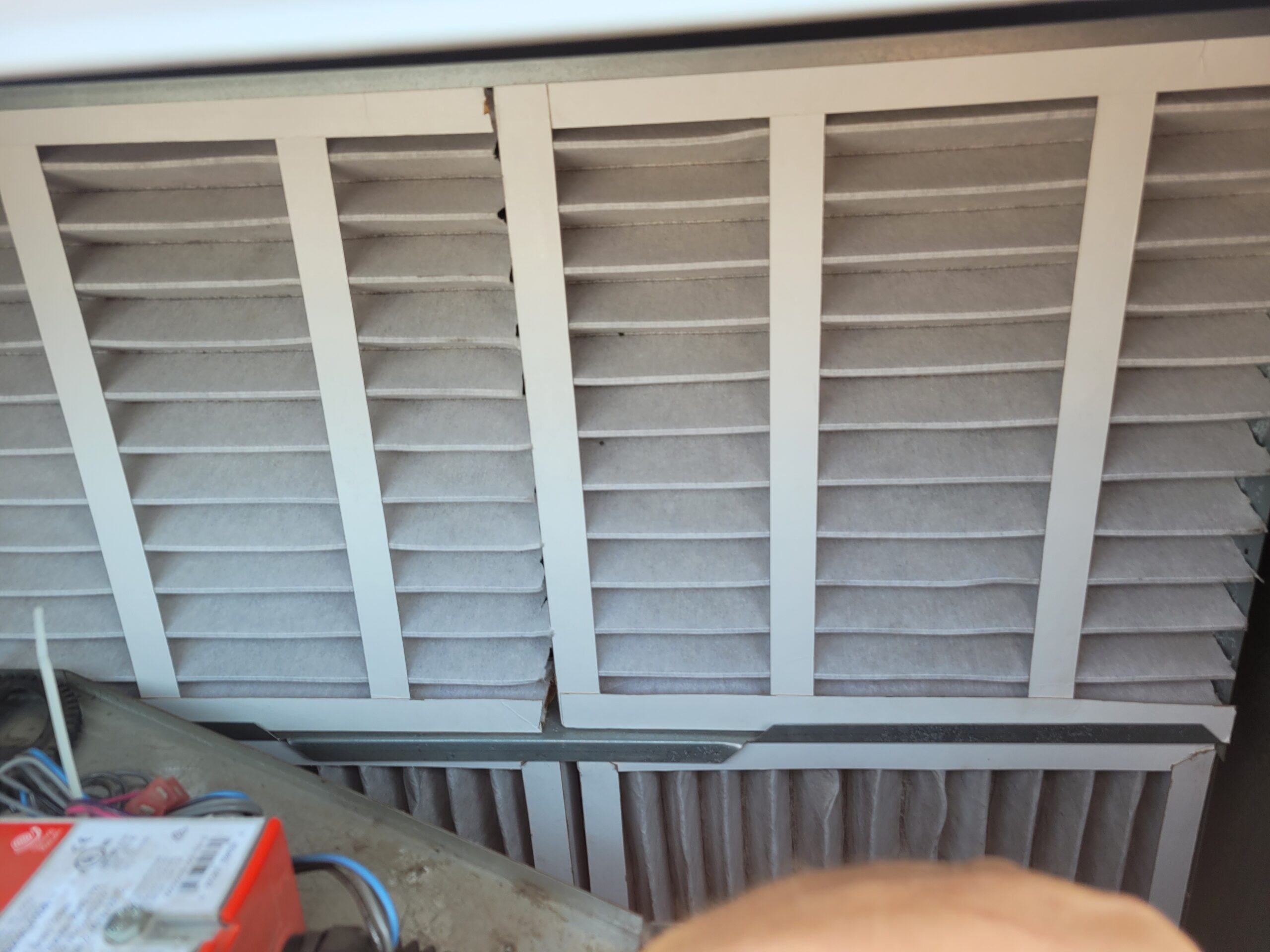
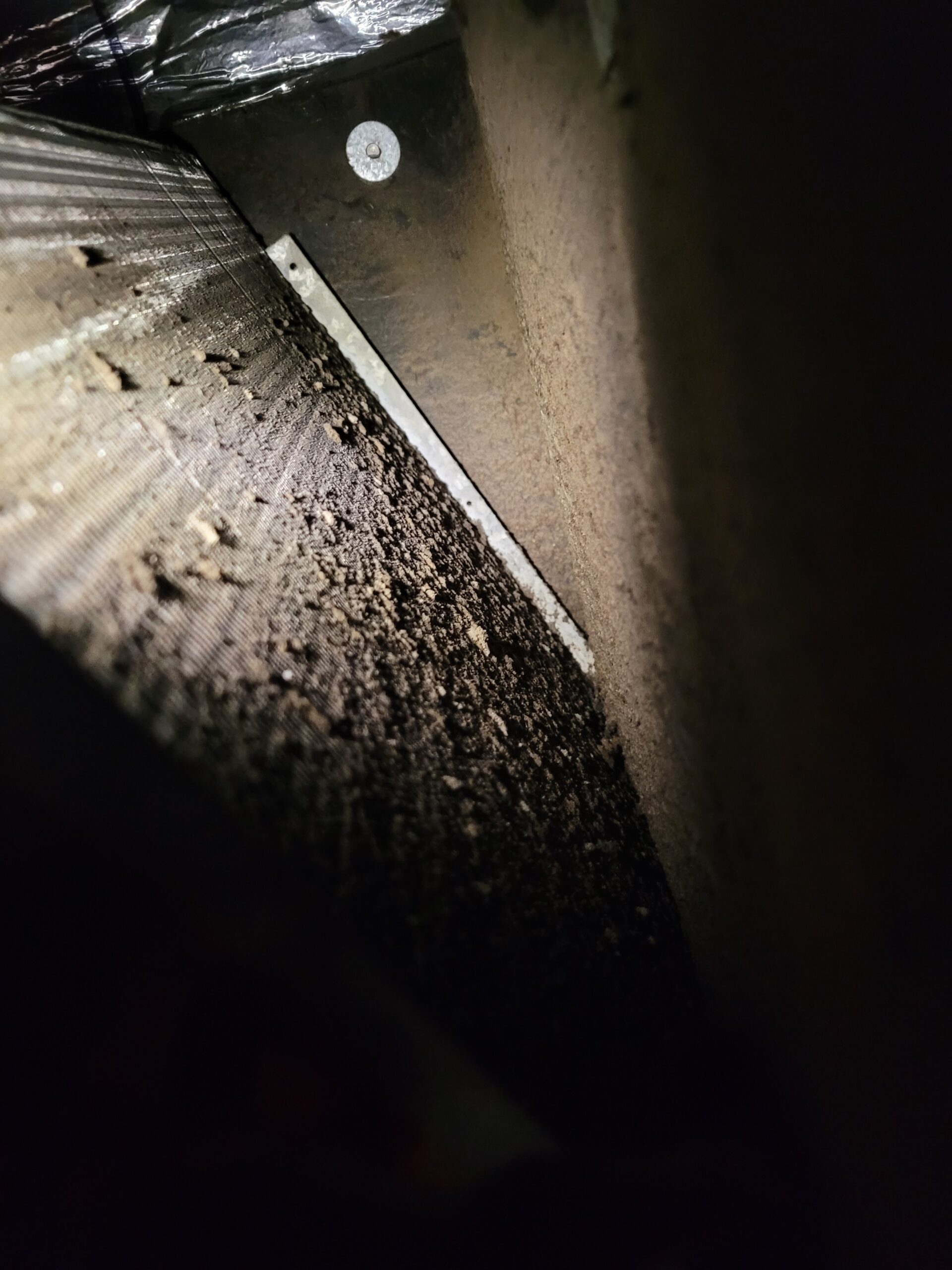
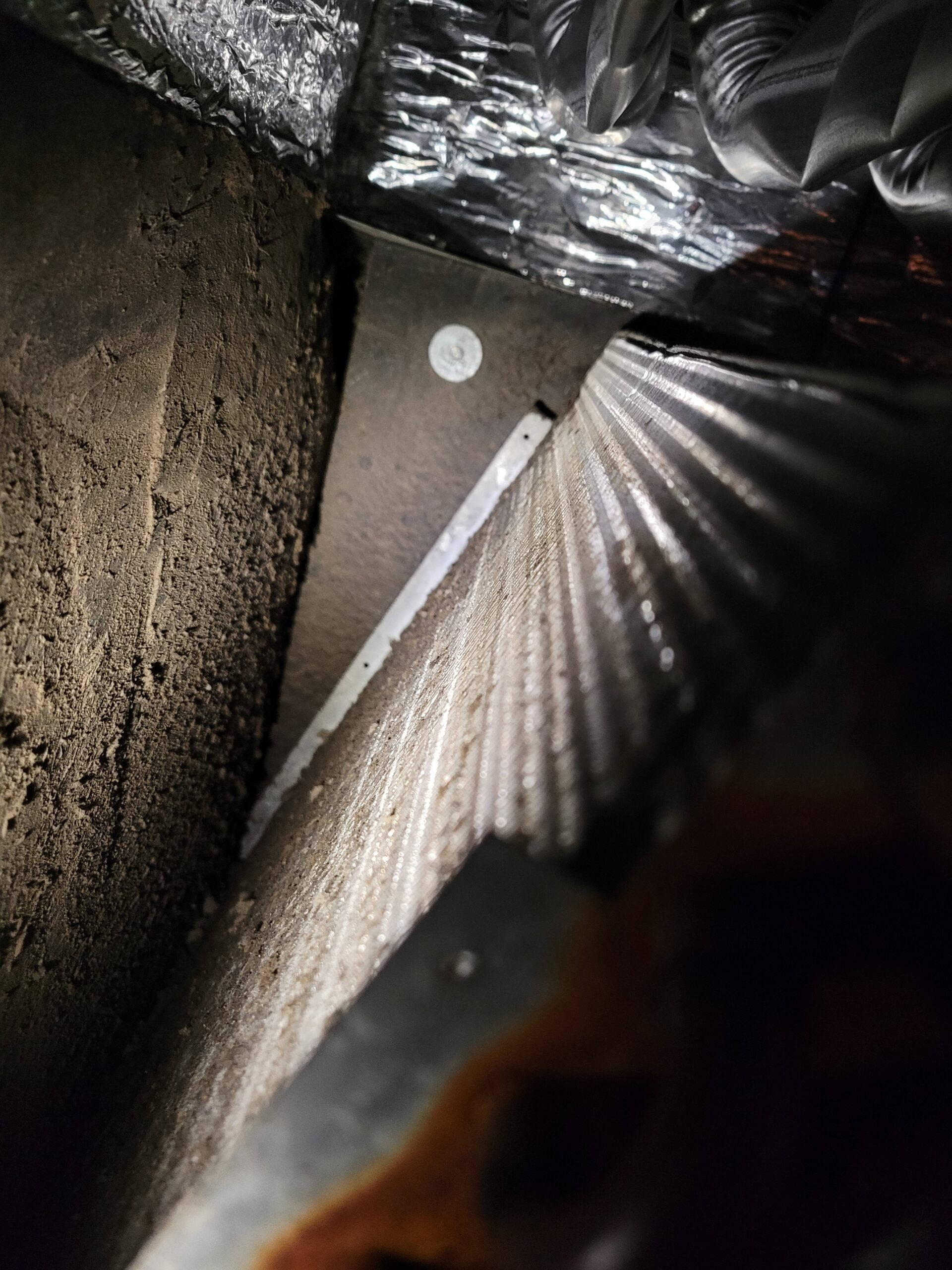
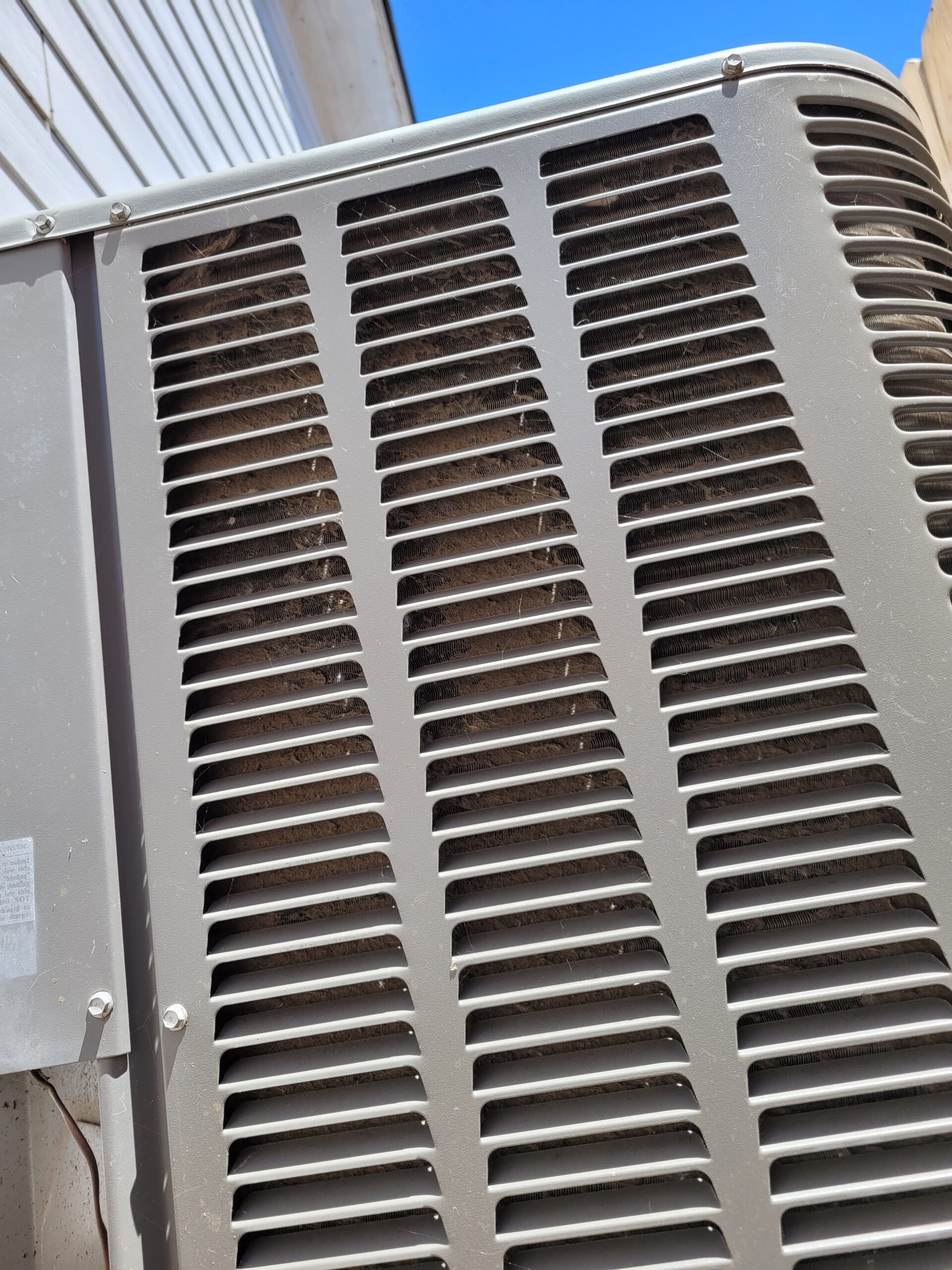
Everything a filter misses ends up somewhere, and these photos are all from real service calls in the metro area. Fine soot settles on the evaporator coil where condensation makes it stick, coats the blower wheel until it moves noticeably less air, and accumulates in duct runs and return grilles. Outside, ash lands on the condenser coil, and a condenser that can't shed heat runs hotter, longer, and less efficiently. None of this fails dramatically. It just quietly costs you capacity until a hot week exposes it.
If your system worked hard through a smoky stretch, it's worth having the coil and blower looked at rather than assuming a new filter resets everything. That's ordinary HVAC maintenance work, and it's also why airflow problems and cooling complaints spike in our area every September. If you want the mechanical version of why a dirty coil costs you so much, we walked through it in how your AC actually works.
"He was able to diagnose our failed motor and capacitor, and was able to locate the parts and complete the repair within a few hours. I have used him twice now both times great service."
See our profile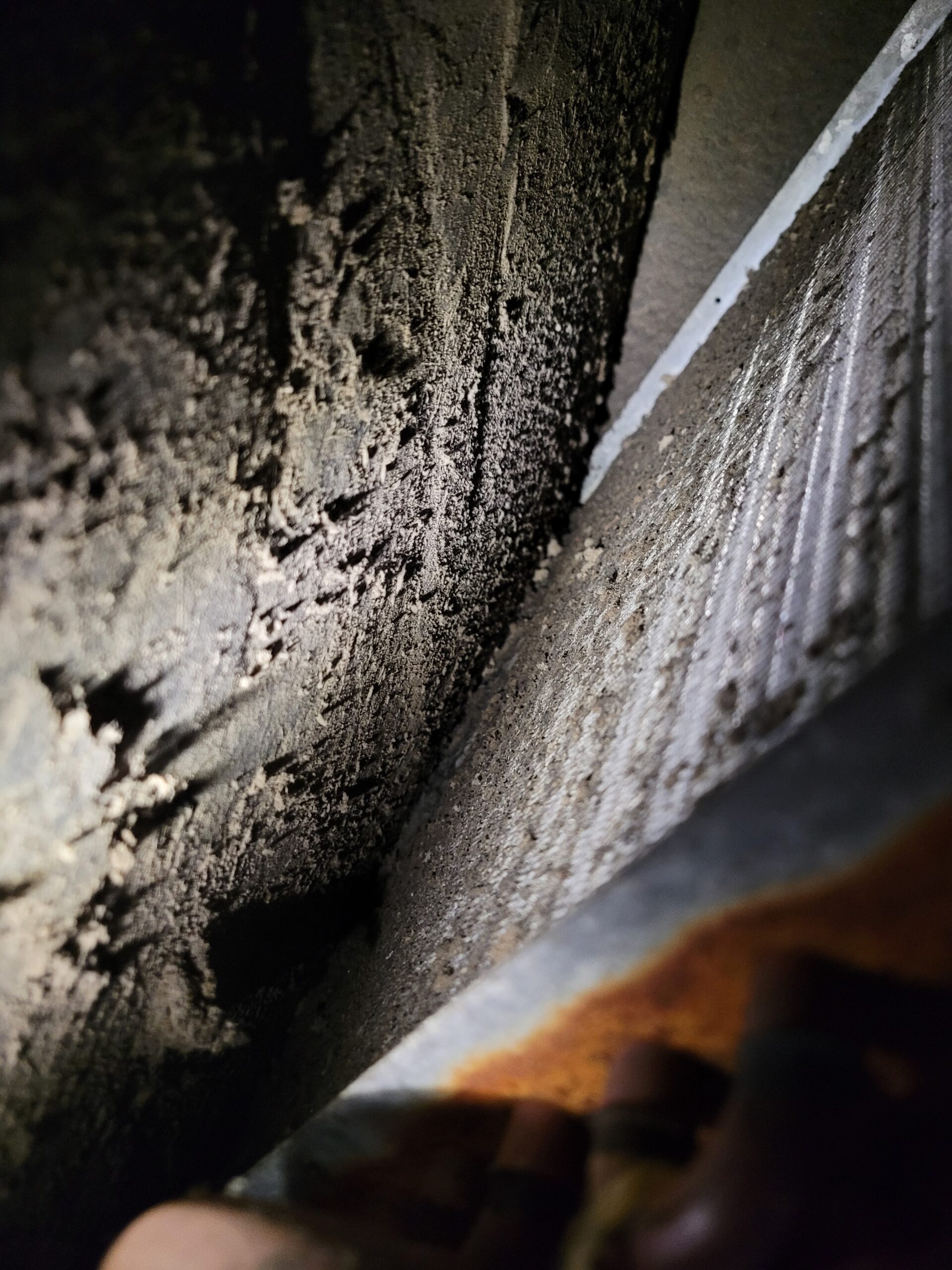
If You Have a Mini-Split, Read This
Ductless systems are everywhere in this metro now, and they have one advantage and one disadvantage during smoke season. The advantage: they recirculate indoor air and don't bring outdoor air in. The disadvantage: the washable mesh screen behind the front panel is there to protect the coil from lint, not to capture fine particulate. It will not clean smoke out of your air no matter how often you rinse it, and there's no filter slot to upgrade.
That makes a portable air cleaner the right tool for ductless homes — and for any bedroom you want to keep clean overnight. Look for true HEPA media and match it to the room: a common rule of thumb is a clean-air delivery rate of at least two-thirds the room's square footage. One properly sized unit in the bedroom beats three undersized ones scattered around the house. Do keep rinsing those mesh screens monthly while it's smoky, because a loaded screen chokes airflow and hurts cooling. If a mini-split starts icing over or blowing weak, don't wait that one out — it's exactly what AC repair in Gresham is for.
"He was extremely professional and communicative about the issues with my mini-split unit. He also provided instruction for me on how to maintain my mini-split more effectively going forward."
See our profile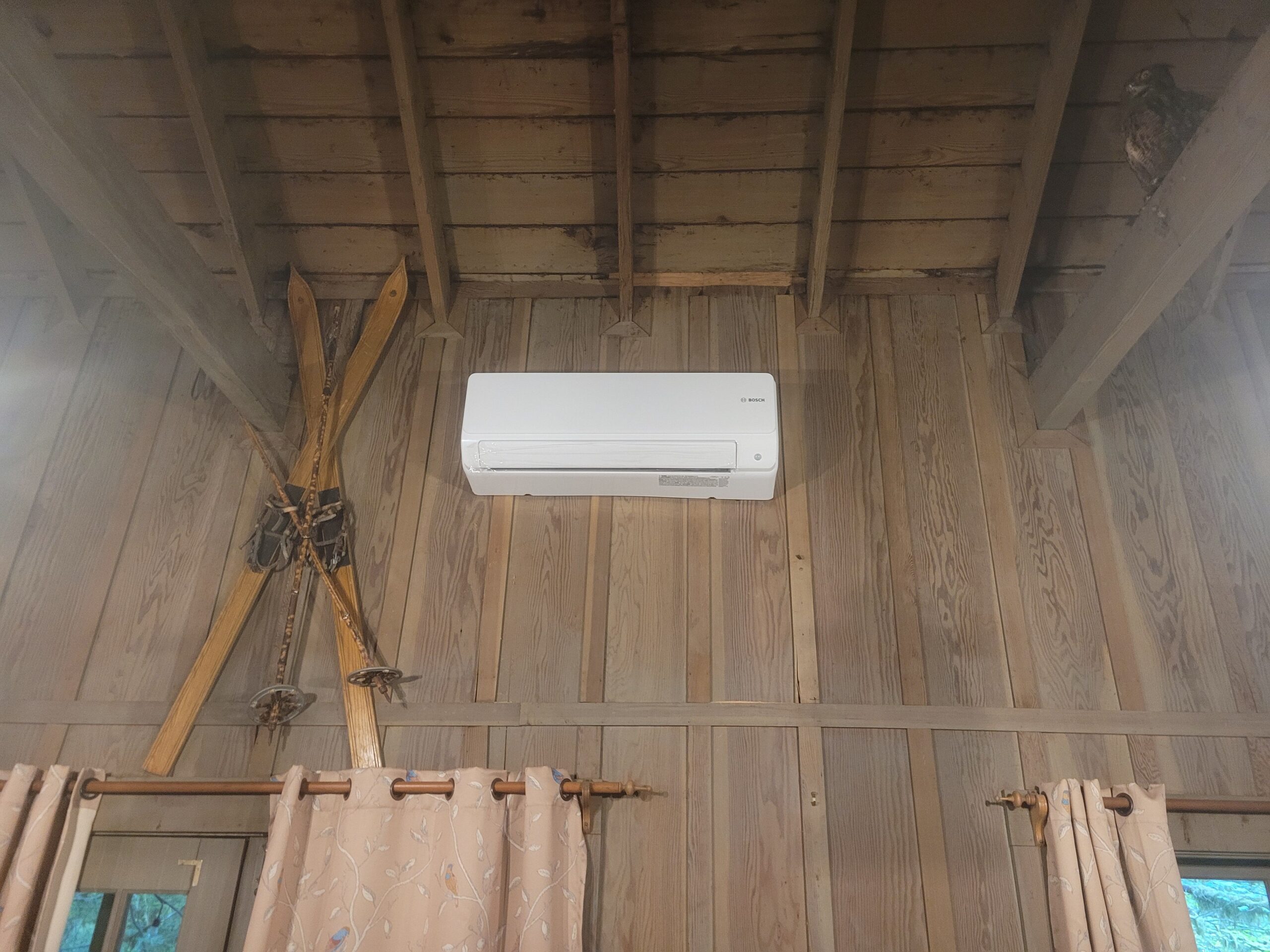
We Live Under the Same Smoke You Do
Talon Mechanical is owner-operated out of Gresham, and Robert is the one who shows up. That matters most in the weeks when the whole metro calls at once — smoke usually arrives alongside heat, and the two together are what pushes a marginal system over the edge. Every job starts with a free onsite diagnostic and a phone conversation first, so you know what you're dealing with before anyone quotes a number.
If the air in your house feels worse than it should and the system is running, we can measure it rather than guess: filter loading, airflow, static pressure, coil condition. When something has already failed on a hot smoky afternoon, that's what emergency HVAC service is for, and it's also worth knowing that commercial HVAC buildings have their own smoke problem — outdoor air economizers that will happily pull haze into a full office unless someone changes the settings.
"Robert is very knowledgeable and is willing to give you the unvarnished opinion to solve your issue - so you understand the pros and cons of each option."
See our profileWhat to Do When the Haze Arrives
Six steps, in order, from the moment you see the forecast turn. None of them take longer than a few minutes.
Check the Air Quality
Look up the current AQI for your zip code before you decide anything. Conditions here can swing hard between morning and evening.
Pull Your Filter
Hold it up to a light. If you can't see through it, replace it now — and note the size printed on the frame so you can stock a spare.
Switch the Fan to ON
Continuous circulation puts every cubic foot of indoor air through the filter repeatedly instead of only during cooling cycles.
Close the House Up
Windows shut, whole-house and attic fans off, portable AC vent dampers closed, exhaust fans used sparingly.
Add a Portable Cleaner
Put a properly sized HEPA unit in the room where you sleep. That single room matters more than the whole rest of the house.
Call If Airflow Drops
Weak vents, ice on the lines, or a system that runs without cooling means stop and get it looked at before something else fails.
Smoke, Filters & Your System
For most residential systems in good shape, no — a quality pleated MERV 13 is fine. The risk is real only where airflow is already marginal: undersized returns, a small filter slot, a tired blower, or ductwork that was never right to begin with. The honest answer is that it's measurable rather than guessable, and a technician can check static pressure in a single visit.
Yes. A central AC or heat pump cools the air already inside your house — it isn't pulling smoke in from outside. Running it lets you stay cool without opening windows, which is exactly the bind smoke season puts people in. Just make sure any fresh-air intake, whole-house fan, or window-unit vent damper is closed.
Check it every two to four weeks instead of the usual three months, and change it whenever it looks loaded. Filters trap far more during smoke, and running the fan continuously loads them faster still. Buy a couple of spares before the season rather than during it — that's when the shelves at the hardware store empty out.
Usually not, and we'll tell you so. Routine duct cleaning hasn't been shown to do much for air quality in a normal home, and it gets sold aggressively after smoke events. What genuinely matters is the coil, the blower wheel, and the filter, because those directly affect airflow and capacity. If your ducts are visibly contaminated or damaged, that's a different conversation.
Particle filters catch particles, not gases, and the smell comes largely from gases and volatile compounds that pass straight through. Activated carbon media helps with odor somewhat but is a consumable that saturates quickly. No house is airtight either, so some outdoor air always finds its way in through gaps — that's normal, not a failure of your system.
They do different jobs, and the best setup is usually both. A good filter in a ducted system treats the whole house whenever the blower runs; a portable HEPA unit treats one room very well and works during power-friendly hours when you'd rather not run the blower. If you have a ductless system and no ductwork at all, portable units are the main option available to you.
This guy is the best not only did he do a great job but he also gave me lots of options to work with. He is really knowledgeable and passionate about his work. As someone who doesn't know much about HVAC it was nice to have options and the availability to save some money on the stuff I could take care myself. At the end I'm super happy with my installation and guidance I received.
How We Can Help
HVAC Maintenance
Airflow, coil condition, and filter fit checked and documented — the work that keeps a system honest through smoke and heat.
Learn MoreAC Repair
Weak airflow, icing, or a system running without cooling. Free onsite diagnostic and a 30-day guarantee on qualifying repairs.
Learn MoreCommercial HVAC
Rooftop units, economizer settings, and filtration for offices and shops that can't just close a window and wait it out.
Learn MoreStraight Answers, Local Crew
Free Onsite Diagnostic
We look at the system in person before quoting anything, so the number you get is based on what's actually wrong.
30-Day Guarantee
Qualifying repairs carry a 30-day guarantee. If the fix doesn't hold, we come back and make it right.
Owner-Operated
Robert answers the phone and does the work. No call center, no rotating subcontractors, no handoffs.
Nine Years in the Trade
Residential and commercial work across the Portland metro, on everything from mini-splits to rooftop units.
5.0 Google Rating
Every review on our profile came from a job in this area. Read them and see what the pattern is.
No Commission Bias
We aren't tied to one manufacturer's sales targets, so repair-versus-replace advice stays about your equipment.
Areas We Serve
Get Your System Checked Before September
The best time to find out whether your system can handle a better filter is on a clear day, not during an advisory. It starts with a conversation and a free onsite look — no obligation attached.
Tell Us What's Going On
A short phone conversation first so we arrive knowing your system and your symptoms.
Free Onsite Diagnostic
Airflow, filter fit, coil and blower condition — measured, then explained in plain language.
Fix It and Stand Behind It
Transparent pricing up front, and a 30-day guarantee on qualifying repairs once the work is done.