Understand Your Heating Options
Choosing the right heating system for your Portland or Gresham home is crucial for maintaining year-round comfort in our unique Pacific Northwest climate. The right system can significantly reduce your energy bills, provide reliable warmth during our wet winters, and even help reduce your environmental impact—something we know matters to our community.
With over 9 years of HVAC experience and certification from Portland Community College, Talon Mechanical has installed, repaired, and maintained heating systems throughout Multnomah County since August 2023. As an owner-operated business, we take pride in understanding how different heating solutions work in our mild but damp climate, where winter temperatures rarely drop below 23°F but moisture management is critical.
In this comprehensive guide, you’ll learn about:
- The most popular heating systems for Portland homes (spoiler: heat pumps lead the way!)
- How each system performs in our 4,792 heating degree day climate
- The pros and cons of each heating option for Pacific Northwest conditions
- Which homes—including older Portland homes without ductwork and ADUs—are best suited for each system
- Cost comparisons with Energy Trust of Oregon rebate considerations
- Maintenance requirements specific to our humid environment
Whether you’re converting from oil heat (common in older Portland homes), installing a system in your ADU, or simply trying to understand your current heating setup, this guide will help you make an informed decision tailored to Portland’s unique heating needs.
📍Portland Climate Context: Portland’s climate requires moderate heating for about 6-7 months per year. While our winters are mild (rarely below 23°F), the consistent cool temperatures from October through April mean efficient heating is essential. Our summers are also changing – we now experience 20-25 days above 90°F compared to just 9-10 days historically, making dual-purpose systems like heat pumps increasingly valuable for both heating and cooling needs.
Considering and Upgrade?
...take the 2 minute quiz!
Which Heating System is Right for Your Portland Home?
Get a personalized recommendation for Pacific Northwest winters
✓ Your Recommended System:
Heat Pumps (Popular in Portland!)
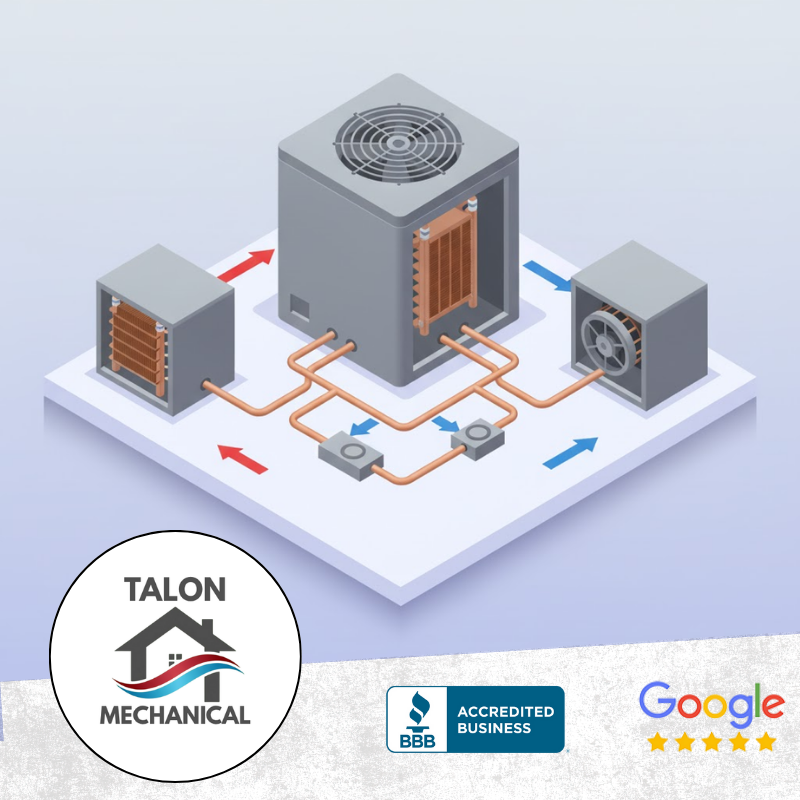
Heat pumps are the #1 choice for Portland homeowners, and for good reason. These systems don’t create heat—they move it. In winter, they extract heat from outdoor air (yes, even when it’s cold!) and transfer it inside. In summer, they reverse the process to provide cooling. This makes them perfect for our mild Pacific Northwest climate where winter temperatures rarely drop below our 23°F design temperature.
Portland’s increasing focus on electrification and carbon reduction has made heat pumps the go-to solution for both new construction and retrofits. With our relatively mild winters compared to the Midwest or East Coast, heat pumps maintain excellent efficiency year-round.
Best For:
- Most Portland homes—our climate is ideal for heat pump efficiency
- Homeowners looking to reduce carbon footprint
- Properties converting from oil heating
- Homes wanting both heating and cooling capabilities
- New ADUs (Accessory Dwelling Units) needing efficient, compact systems
Heat Pump Pros
- Exceptional efficiency: 300-400% efficient in Portland’s climate
- Year-round comfort: Heating and cooling in one system—crucial as Portland sees more 90°F+ days
- Environmentally friendly: No fossil fuel combustion, supporting Portland’s climate goals
- Lower operating costs: Especially effective in our mild climate
- Quiet operation: Modern units are whisper-quiet
- Excellent incentives: Federal tax credits and potential utility rebates
Heat Pump Cons
- Higher upfront cost: More expensive initial investment than furnaces
- May need backup heat: For those rare Portland cold snaps below 20°F
- Requires electricity: Won’t work during power outages without backup
- Professional installation crucial: Proper sizing essential for efficiency
Ductless Mini-Split Systems
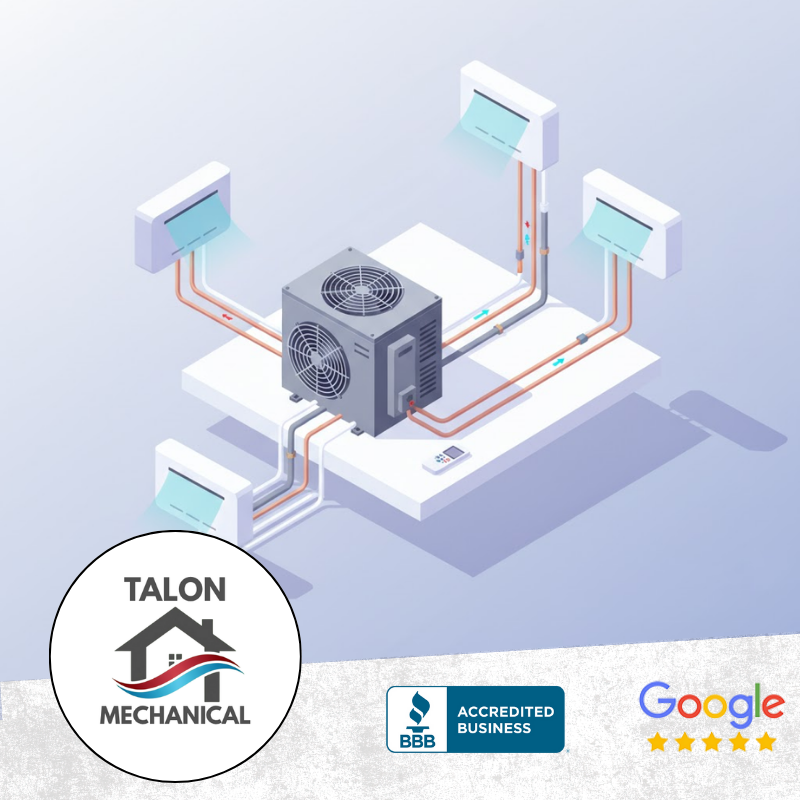
Ductless mini-splits are essentially heat pumps without the ductwork, making them the #2 choice for Portland homes. These systems are perfect for our many older homes built without central ductwork, ADUs, and room additions. Each indoor unit can be controlled independently, providing personalized comfort zones throughout your home.
Portland’s boom in ADU construction has made mini-splits increasingly popular. They’re also ideal for the many pre-1950s homes in neighborhoods like Laurelhurst, Irvington, and Montavilla that lack existing ductwork.
Best For:
- Older Portland homes without existing ductwork
- ADUs and mother-in-law suites
- Home additions and converted spaces (garages, basements)
- Homes wanting room-by-room temperature control
- Supplemental heating/cooling for problem areas
Ductless Mini-Split Pros
- No ductwork needed: Perfect for Portland’s older homes
- Zone control: Heat only occupied rooms, saving energy
- High efficiency: Similar efficiency to ducted heat pumps
- Quiet operation: Indoor units are nearly silent
- Quick installation: Less invasive than adding ductwork
- Ideal for ADUs: Compact and efficient for small spaces
Ductless Mini-Split Cons
- Aesthetic considerations: Wall-mounted units are visible
- Higher upfront cost per zone: Multiple units can add up
- Regular filter cleaning: More maintenance points than central systems
- Not ideal for whole-home heating: Better for targeted zones
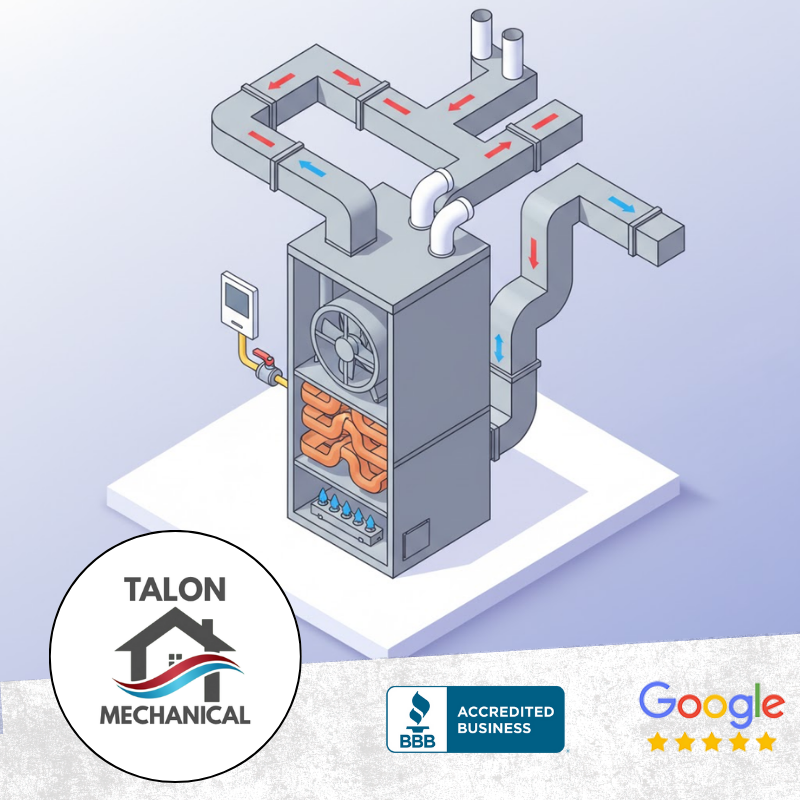
Gas Furnace Systems
Gas furnaces remain popular in Portland, especially in newer homes with existing ductwork or those built after 1970. These systems heat air in a combustion chamber and distribute it through ductwork. While not as efficient as heat pumps in our mild climate, modern high-efficiency furnaces can still be a good choice, particularly as backup heat for dual-fuel systems.
Natural gas is readily available throughout most of Portland and Gresham, making gas furnaces a reliable heating option. Talon Mechanical recommends Goodman furnaces for their reliability and excellent 10-year warranties.
Best For:
- Homes with existing ductwork in good condition
- Backup heat in dual-fuel heat pump systems
- Homeowners prioritizing lower upfront costs
- Properties needing guaranteed heat during ice storms
Gas Furnace Pros
- Quick heating: Rapidly warms your home
- Lower upfront cost: Less expensive than heat pumps initially
- Works in any weather: Consistent heat output regardless of outdoor temperature
- Can add AC: Same ducts work for central air conditioning
- Reliable technology: Proven, well-understood systems
Gas Furnace Cons
- Lower efficiency than heat pumps: 80-98% AFUE vs 300%+ for heat pumps
- Requires ductwork: Expensive to add if not existing
- Fossil fuel use: Not aligned with Portland’s climate goals
- Can dry indoor air: May need humidification
- No cooling capability: Requires separate AC system
Hot Water Boiler Systems
Hot water (hydronic) boilers circulate heated water through radiators, baseboard heaters, or radiant floor systems. While less common in new Portland construction, many older homes in established neighborhoods still use these systems. They provide comfortable, even heat without the air movement of forced-air systems.
These systems work well in Portland’s damp climate because they don’t dry out indoor air like forced-air systems can. Modern high-efficiency boilers can be an excellent choice for homes with existing hydronic infrastructure.
Best For:
- Older Portland homes with existing radiators
- Homeowners who prefer radiant heat comfort
- Properties considering radiant floor heating
- Those sensitive to forced-air allergies
Hot Water Boiler Pros
- Even, comfortable heat: No cold spots or drafts
- Quiet operation: Nearly silent compared to forced air
- Doesn’t dry air: Maintains comfortable humidity
- Zone control possible: Different areas at different temperatures
- Long lifespan: Can last 20-30 years with maintenance
Hot Water Boiler Cons
- Higher installation cost: Expensive if adding new piping
- No cooling option: Heating only
- Slower temperature response: Takes time to heat up/cool down
- Freezing risk: Pipes can freeze in power outages
- Space requirements: Radiators or baseboards take up room
Combination (Combi) Boilers
Combination boilers are gaining popularity in Portland, especially in smaller homes and ADUs where space is at a premium. These units provide both space heating and on-demand hot water from a single appliance, eliminating the need for a separate water heater. This is particularly valuable in Portland’s competitive housing market where every square foot counts.
Talon Mechanical has seen increased interest in combi boilers for ADUs and smaller Portland homes where maximizing living space is crucial.
Best For:
- ADUs and small homes (under 2,000 sq ft)
- Condos and townhomes with limited mechanical space
- Energy-conscious homeowners
- Properties with 1-3 bathrooms
Combi Boiler Pros
- Space-saving: No separate water heater needed
- High efficiency: 90-98% AFUE ratings
- Endless hot water: On-demand heating
- Lower utility bills: Only heats water when needed
- Perfect for small spaces: Ideal for ADUs and condos
Combi Boiler Cons
- Limited capacity: May struggle with multiple simultaneous demands
- Not ideal for large homes: Best for 1-3 bathrooms
- Higher upfront cost: More expensive than traditional boilers
- Complex technology: Requires experienced technicians
Hot Water Boiler Pros
- Even, comfortable heat: No cold spots or drafts
- Quiet operation: Nearly silent compared to forced air
- Doesn’t dry air: Maintains comfortable humidity
- Zone control possible: Different areas at different temperatures
- Long lifespan: Can last 20-30 years with maintenance
Hot Water Boiler Cons
- Higher installation cost: Expensive if adding new piping
- No cooling option: Heating only
- Slower temperature response: Takes time to heat up/cool down
- Freezing risk: Pipes can freeze in power outages
- Space requirements: Radiators or baseboards take up room
Oil Furnace Systems (Less Common)
Oil furnaces are becoming less common in Portland as homeowners convert to cleaner, more efficient options. Many older Portland homes, particularly in outer neighborhoods, still have oil systems, but the trend is strongly toward conversion. Rising oil prices and environmental concerns are driving this shift.
If you have an oil system, Talon Mechanical can help you explore conversion options to heat pumps or natural gas, potentially taking advantage of available incentives.
Best For:
- Homes without natural gas access (though heat pumps are usually better)
- Temporary solution while planning conversion
- Rural properties outside standard utility service areas
Oil Furnace Pros
- Works without gas lines: Option for homes without natural gas
- Powerful heat output: Produces very warm air
- Independent fuel supply: Not reliant on utility pipelines
Oil Furnace Cons
- Highest operating costs: Most expensive fuel option
- Environmental impact: Highest carbon emissions
- Storage requirements: Need space for oil tank
- Delivery dependence: Must schedule oil deliveries
- Declining support: Fewer technicians service oil systems
Comparing Costs: Portland Area Installation and Operating Expenses
Understanding costs in the Portland market requires considering our unique factors: mild climate (lower heating demands), increasing cooling needs, and strong incentive programs for efficient systems. Talon Mechanical provides upfront pricing for all installations, backed by our 30-day guarantee on select repairs.
| Heating System | Installation Cost | Annual Operating Cost* | Efficiency Rating | Typical Lifespan |
|---|---|---|---|---|
| Heat Pump (Air-Source) | $4,500 - $12,000 | $800 - $1,400/year | 8-13 HSPF (300-400% efficient) | 15-20 years |
| Ductless Mini-Split | $3,300 - $8,000 per zone | $750 - $1,200/year | 9-12 HSPF (250-350% efficient) | 15-20 years |
| Gas Furnace | $3,500 - $7,500 + $3,000-$10,000 for ductwork if needed |
$700 - $1,200/year | 80-98% AFUE | 15-20 years |
| Hot Water Boiler (Gas) | $4,800 - $11,000+ | $800 - $1,400/year | 85-95% AFUE | 20-30 years |
| Combi Boiler | $4,500 - $10,000 | $700 - $1,300/year | 90-98% AFUE | 15-20 years |
| Oil Furnace | $4,500 - $8,500 + $3,000-$10,000 for ductwork if needed |
$1,800 - $2,800/year | 80-90% AFUE | 15-20 years |
*Operating costs based on current Portland utility rates (11.91¢/kWh electricity, $1.40/therm natural gas) for a typical 1,500-2,000 sq ft home. Actual costs vary by usage, home insulation, and utility rate changes. Installation costs are estimates for the Portland/Gresham area based on 2024-2025 market data.
💡 Portland Cost Considerations:
- Currently Portland utility rates are amongst the lowest in the nation.
- Operating costs are lower than many regions due to our mild climate (4,792 heating degree days vs 6,000+ in the Midwest)
- Heat pumps excel here because they maintain high efficiency in our typical 30-50°F winter temperatures
- Available incentives: Energy Trust of Oregon offers up to $1,600 for high-efficiency furnaces and up to $4,000 for heat pumps in manufactured homes. Federal tax credits can cover up to 30% of heat pump costs
- Factor in cooling benefits—heat pumps and mini-splits provide both heating and cooling (saves ~$5,500 over 15 years vs separate systems)
Understanding Efficiency Ratings:
- AFUE (Annual Fuel Utilization Efficiency): For furnaces and boilers. 95% AFUE means 95% of fuel becomes usable heat.
- HSPF (Heating Seasonal Performance Factor): For heat pumps. Higher numbers = better efficiency. Portland’s mild climate helps heat pumps achieve their best HSPF ratings.
- Why Heat Pumps Exceed 100%: They move heat rather than create it, delivering 3-4 units of heat for every unit of electricity used.
Portland-Specific HVAC Maintenance
Portland’s humid climate and wet winters create unique maintenance needs:
- Heat Pumps/Mini-Splits: Clean or replace filters monthly during heavy use. Annual professional maintenance essential for managing moisture and maintaining efficiency. Check outdoor units for debris from our frequent storms.
- Gas Furnaces: Change filters every 1-3 months. Annual tune-ups prevent moisture-related issues. Check condensate drains regularly.
- Boilers: Annual maintenance crucial to prevent corrosion in our damp climate. Check for leaks regularly. A common consideration is air bubbles in the system – so check your bleeders regularly.
- All Systems: Consider dehumidification options to manage Portland’s average 70% humidity.
Reviews and Testimonials
Frequently Asked Questions

Which heating system is best for Portland’s climate?
Can I convert from oil heat to something more efficient?
Do heat pumps work when it’s really cold in Portland?
How often should I service my heating system in Portland?
Are there incentives for upgrading to efficient heating in Portland?
What about heating my ADU?
How long do heating systems last in Portland?
Ready to Solve Your Heating Challenges?
Work directly with the owner for personalized, accountable service. We use reliable Goodman products backed by 10-year warranties, providing the best value for Portland homeowners.